
Niacinamide Whitening Toothpaste: Everything you need to know

Niacinamide Whitening Toothpaste: Everything you need to know

Niacinamide Whitening Toothpaste: Benefits, Safety, and Whitening Claims Explained

QUICK ANSWER

Niacinamide whitening toothpaste is a newer oral-care product that combines traditional toothpaste ingredients with niacinamide, a form of vitamin B3. While niacinamide is well-known in skincare for its soothing and barrier-supporting properties, current evidence does not show that niacinamide alone whitens teeth. Whitening effects typically come from other ingredients in the toothpaste formula.

Table of Contents

Consumers in the United States, United Kingdom, Canada, and Australia are increasingly seeking innovative oral-care products that promise cleaner, brighter, and healthier smiles. One emerging trend is the rise of niacinamide whitening toothpaste, a category that combines traditional whitening technologies with niacinamide, a vitamin B3 derivative widely recognized in skincare.

As social media influencers, beauty brands, and oral-care companies introduce products containing niacinamide, many consumers are asking important questions:

  • Does niacinamide whitening toothpaste actually whiten teeth?
  • Is niacinamide toothpaste safe?
  • What do dentists think about these products?
  • Is whitening toothpaste with niacinamide worth the investment?

This evidence-based guide examines the science, benefits, safety profile, and real-world effectiveness of niacinamide toothpaste.

What Is Niacinamide Whitening Toothpaste?

Niacinamide, also known as nicotinamide, is a water-soluble form of vitamin B3. In skincare, it is widely used because of its ability to:

  • Support skin barrier function
  • Reduce redness
  • Improve hydration
  • Calm irritation
  • Help regulate oil production

Recently, some oral-care manufacturers have started incorporating niacinamide into toothpaste formulations. A niacinamide whitening toothpaste generally contains:

  • Niacinamide (Vitamin B3)
  • Fluoride or alternative remineralizing agents
  • Mild abrasives
  • Cleaning agents
  • Flavoring ingredients
  • Whitening compounds

It is important to understand that niacinamide itself is not traditionally classified as a tooth-whitening ingredient.

Why Is Niacinamide Being Added to Toothpaste?

The addition of niacinamide is often linked to its potential supportive role in maintaining healthy oral tissues. Researchers have studied vitamin B3's role in:

  • Cellular health
  • Inflammatory response regulation
  • Tissue maintenance
  • Mucosal health

Some brands market niacinamide toothpaste as helping support overall oral wellness rather than directly whitening teeth. Potential proposed benefits include:

  • Supporting gum comfort
  • Reducing oral irritation
  • Promoting healthier-looking gums
  • Enhancing overall oral-care formulations

However, more research is needed specifically on niacinamide-containing toothpaste products.

Understanding How Teeth Become Stained
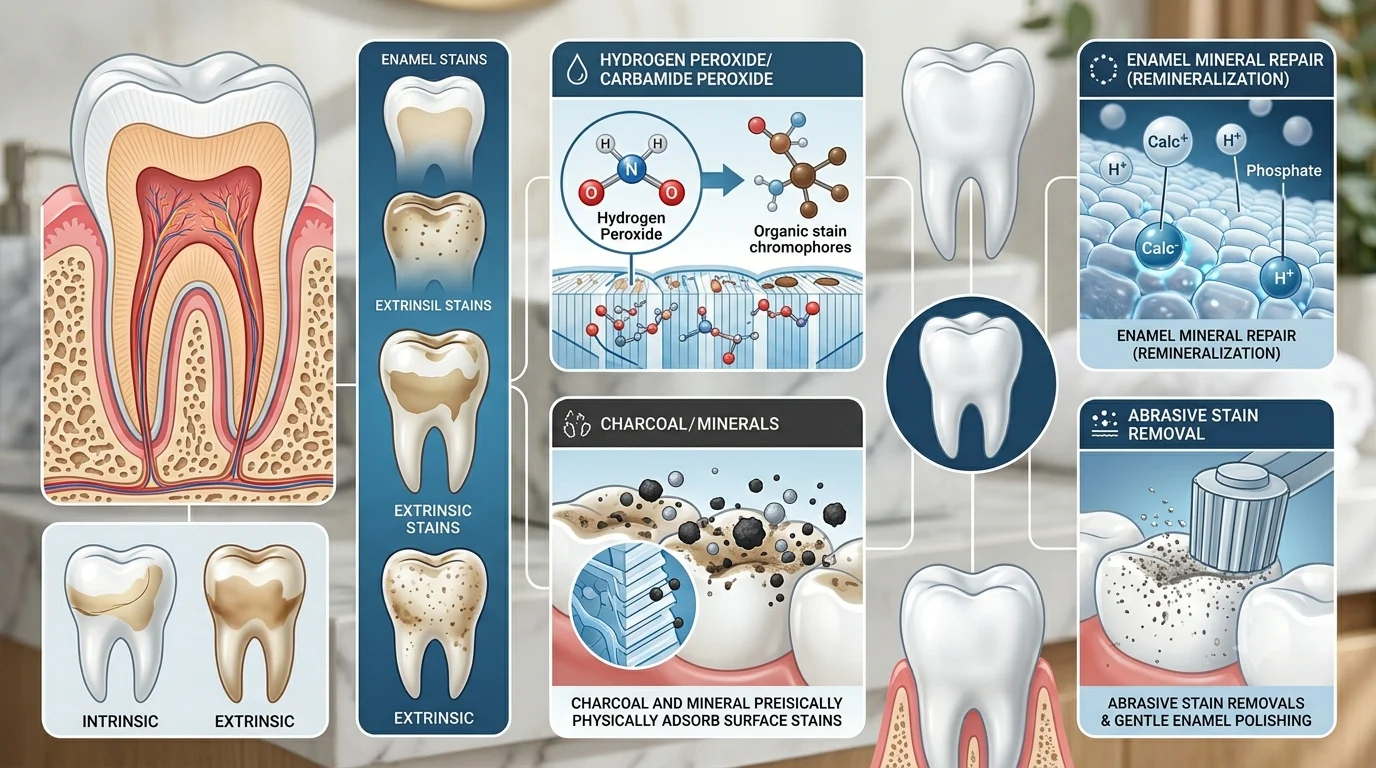
Enamel repair and Whitening Toothpaste

To understand whitening claims, it helps to understand why teeth become discolored.

Extrinsic Stains

These occur on the tooth surface. Common causes:

  • Coffee
  • Tea
  • Red wine
  • Tobacco
  • Colored beverages
  • Certain foods

Intrinsic Stains

These occur within the tooth structure. Possible causes:

  • Aging
  • Trauma
  • Certain medications
  • Excess fluoride exposure during childhood

Different whitening technologies target these stains differently.

Does Niacinamide Whitening Toothpaste Work?

This is one of the most searched questions online.

Current Scientific Evidence

At present, there is limited direct evidence showing that niacinamide itself has significant tooth-whitening properties. Most whitening results associated with niacinamide whitening toothpaste likely come from other ingredients such as:

  • Hydrated silica
  • Calcium carbonate
  • Hydrogen peroxide
  • Carbamide peroxide
  • Optical brightening agents

Therefore:

What Niacinamide May Do

  • Support oral tissue health
  • Contribute to overall formula quality
  • Potentially reduce irritation from aggressive whitening ingredients

What Niacinamide Does Not Appear to Do

  • Directly bleach teeth
  • Remove deep stains independently
  • Replace clinically proven whitening agents

Consumers should carefully examine the entire ingredient list rather than focusing only on niacinamide.

Is Niacinamide Toothpaste Safe?

Safety Overview: One of the most common search queries is:

"Is niacinamide toothpaste safe?"

Based on current scientific understanding, niacinamide has a strong safety profile when used appropriately. Niacinamide is already widely used in:

  • Cosmetics
  • Dietary supplements
  • Medical products
  • Personal care formulations

When included in toothpaste formulations at appropriate concentrations, it is generally considered safe.

Potential Advantages

  • Low irritation potential
  • Good stability
  • Well-established safety history
  • Compatible with many oral-care ingredients

Potential Considerations

Some individuals may experience sensitivity to other ingredients within the toothpaste formula, including:

  • Flavoring agents
  • Essential oils
  • Surfactants
  • Whitening compounds

In most cases, any adverse reaction is more likely to be related to these ingredients rather than niacinamide itself.

Niacinamide Toothpaste Dentist Review
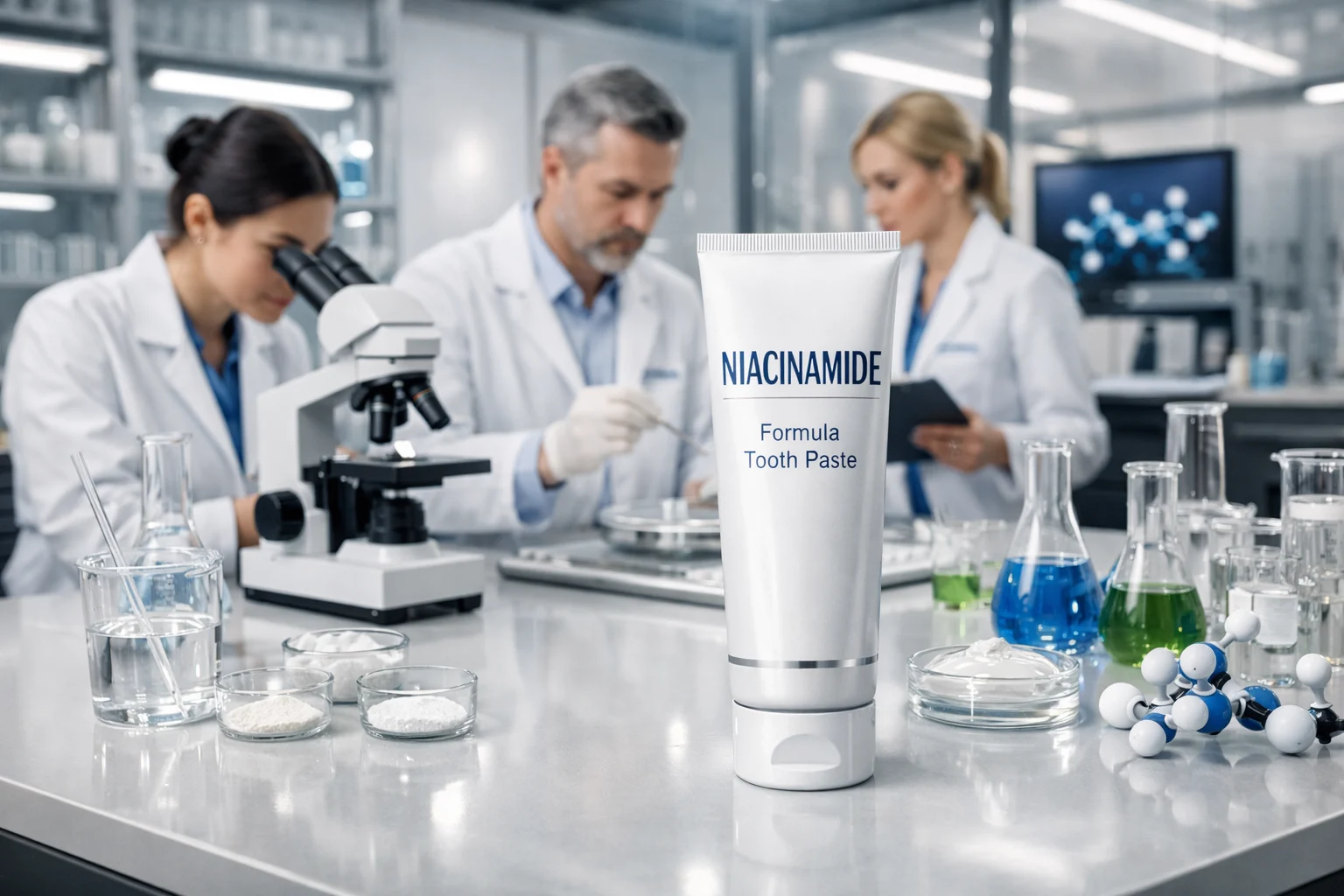
Research on Niacinamide Whitening Toothpaste in Lab-A

What Dentists Typically Look For

When evaluating a toothpaste, dental professionals focus on:

  • Fluoride content
  • Enamel protection
  • Plaque control
  • Cavity prevention
  • Clinical evidence
  • Safety profile

Most dentists do not currently consider niacinamide a primary whitening ingredient.

Professional Perspective

A typical dentist review of niacinamide toothpaste would likely conclude:

  • Niacinamide appears safe.
  • It may offer supportive benefits.
  • Whitening effectiveness depends on the complete formula.
  • Fluoride remains one of the most important ingredients for cavity prevention.
  • Consumers should not expect dramatic whitening from niacinamide alone.

In other words, niacinamide may be a useful supplementary ingredient, but it is not a substitute for evidence-based oral-care technologies.

Benefits of Whitening Toothpaste With Niacinamide

Potentially Gentler Whitening Experience

Some formulations combine niacinamide with less aggressive whitening systems, potentially making them suitable for sensitive users.

Multi-Benefit Formulations

Manufacturers often market these products as combining:

  • Whitening
  • Cleaning
  • Fresh breath
  • Gum support

Modern Cosmetic Appeal

Consumers familiar with niacinamide from skincare often appreciate seeing scientifically recognized ingredients incorporated into oral-care products.

Potential Oral Tissue Support

Although more research is needed, niacinamide's role in cellular health makes it an interesting addition to next-generation oral-care formulations.

Limitations and Potential Drawbacks

Limited Whitening Evidence

Current research does not support niacinamide as a standalone whitening agent.

Marketing Confusion

Many consumers incorrectly assume that niacinamide is responsible for whitening effects.

Product Variability

Different brands use vastly different formulations.

Two products labeled as niacinamide whitening toothpaste may perform very differently.

Cost Considerations

Some niacinamide toothpastes are priced higher than conventional products despite limited evidence of additional whitening benefits.

Best Ingredients for Teeth Whitening

IngredientPrimary BenefitScientific Support
Hydrogen PeroxideWhiteningStrong
Carbamide PeroxideWhiteningStrong
Hydrated SilicaSurface stain removalStrong
FluorideCavity protectionStrong
HydroxyapatiteRemineralizationModerate-Strong
Potassium NitrateSensitivity reliefStrong
Calcium CarbonateCleaningModerate
NiacinamideSupportive ingredientEmerging

Myths vs Facts About Niacinamide Brihtening Toothpaste

Myth

Fact

Niacinamide directly bleaches teeth

No strong evidence supports this

Niacinamide toothpaste is unsafe

It generally has a good safety profile

Whitening toothpaste permanently whitens teeth

Results require ongoing maintenance

Natural ingredients are always safer

Safety depends on formulation

All whitening toothpastes work equally

Formulations vary greatly

Niacinamide replaces fluoride

It does not

Expensive toothpaste always works better

Effectiveness depends on ingredients

Whitening damages all teeth

Properly formulated products can be safe

One week is enough for dramatic whitening

Results vary

All stains respond equally

Different stains require different approaches

Frequently Asked Questions

Is niacinamide toothpaste safe for daily use?

Current evidence suggests that niacinamide itself has a favorable safety profile. Daily use safety depends largely on the complete toothpaste formulation and adherence to manufacturer instructions.

Does niacinamide whitening toothpaste actually whiten teeth?

Any whitening effects are most likely due to established whitening ingredients within the formula rather than niacinamide itself.

Is niacinamide safe for sensitive teeth?

Niacinamide itself is generally considered well tolerated. Sensitivity risk usually comes from whitening agents rather than niacinamide.

Does niacinamide help gums?

Some manufacturers suggest oral tissue support benefits, but more clinical research is needed.

How long does whitening toothpaste take to work?

Most whitening toothpastes require several weeks of consistent use before visible improvements appear.

Should I choose niacinamide toothpaste for whitening?

Choose products based on their overall formulation, scientific evidence, fluoride content, and dental needs rather than marketing claims alone.

Can niacinamide remove deep tooth stains?

There is currently no strong evidence showing that niacinamide alone removes deep intrinsic stains.

What do dentists say about niacinamide toothpaste?

Most dentists view niacinamide as a potentially supportive ingredient rather than a primary whitening ingredient.

Is whitening toothpaste with niacinamide better than regular toothpaste?

Not necessarily. Overall effectiveness depends on the full ingredient profile, fluoride content, and clinical evidence.

Can children use niacinamide toothpaste?

Parents should follow product-specific recommendations and consult a dental professional when needed.

Conclusion

The growing popularity of niacinamide whitening toothpaste reflects a broader trend toward multifunctional personal-care products. While niacinamide is an intriguing ingredient with a strong safety profile and potential supportive benefits, current evidence does not justify viewing it as a breakthrough whitening technology.

For consumers in the US, UK, Canada, and Australia, the smartest approach is to evaluate toothpaste based on proven oral-health benefits, clinically supported whitening ingredients, and recommendations from qualified dental professionals. When used as part of a complete oral-care routine, a well-formulated toothpaste may contribute to a healthier and brighter smile, but realistic expectations remain essential.

Scientific References

  1. National Institutes of Health (NIH) – Niacin (Vitamin B3) Fact Sheet.
  2. National Library of Medicine (PubMed) – Oral Health and Nutritional Factors.
  3. American Dental Association (ADA) – Tooth Whitening Overview.
  4. Mayo Clinic – Teeth Whitening: Benefits and Risks.
  5. Cleveland Clinic – Tooth Discoloration and Whitening Treatments.
  6. Journal of Clinical Dentistry – Whitening Toothpaste Research.
  7. International Dental Journal – Tooth Whitening Mechanisms.
  8. FDA Guidance on Oral-Care Products.

What are Skin Tags: Causes, and How to Remove?

What are Skin Tags: Causes, and How to Remove?

QUICK ANSWER

Skin tags (acrochordons) are benign, small skin-colored growths that commonly develop in skin folds such as the neck, axilla, and eyelids, affecting 50% to 60% of adults equally across genders. While harmless, their prevalence increases with age and is significantly higher in individuals with obesity, diabetes, metabolic syndrome, or a genetic predisposition. Although typically painless, these lesions can become irritated, itch, or bleed due to constant friction from clothing or jewelry. Ultimately, they serve as key cutaneous markers often linked to systemic metabolic conditions and specific genetic disorders.

What Is a Skin Tag?

A skin tag is a small, non-cancerous growth of skin that typically hangs from the surface by a thin stalk. Skin tags are common in adults and often develop in areas exposed to friction, such as the neck, underarms, eyelids, and groin.

What Causes Skin Tags?

Skin tags are believed to develop due to a combination of skin friction, genetics, hormonal influences, aging, and metabolic factors. They often occur in areas where skin folds repeatedly rub together.

How Are Skin Tags Removed?

Skin tags can be removed through professional treatments such as cryotherapy, surgical excision, electrocautery, or ligation. The most appropriate method depends on the location, size, and characteristics of the skin tag.

KEY TAKEAWAYS

  • Skin tags are common benign skin growths.
  • They are medically known as acrochordons.
  • Most skin tags are harmless and non-cancerous.
  • Skin friction appears to play a significant role in their development.
  • Neck skin tags and eyelid skin tags are among the most common locations.
  • Professional removal methods are generally safer than home removal techniques.
  • Any changing or unusual skin growth should be evaluated by a healthcare professional.

Table of Contents

What Are Skin Tags?

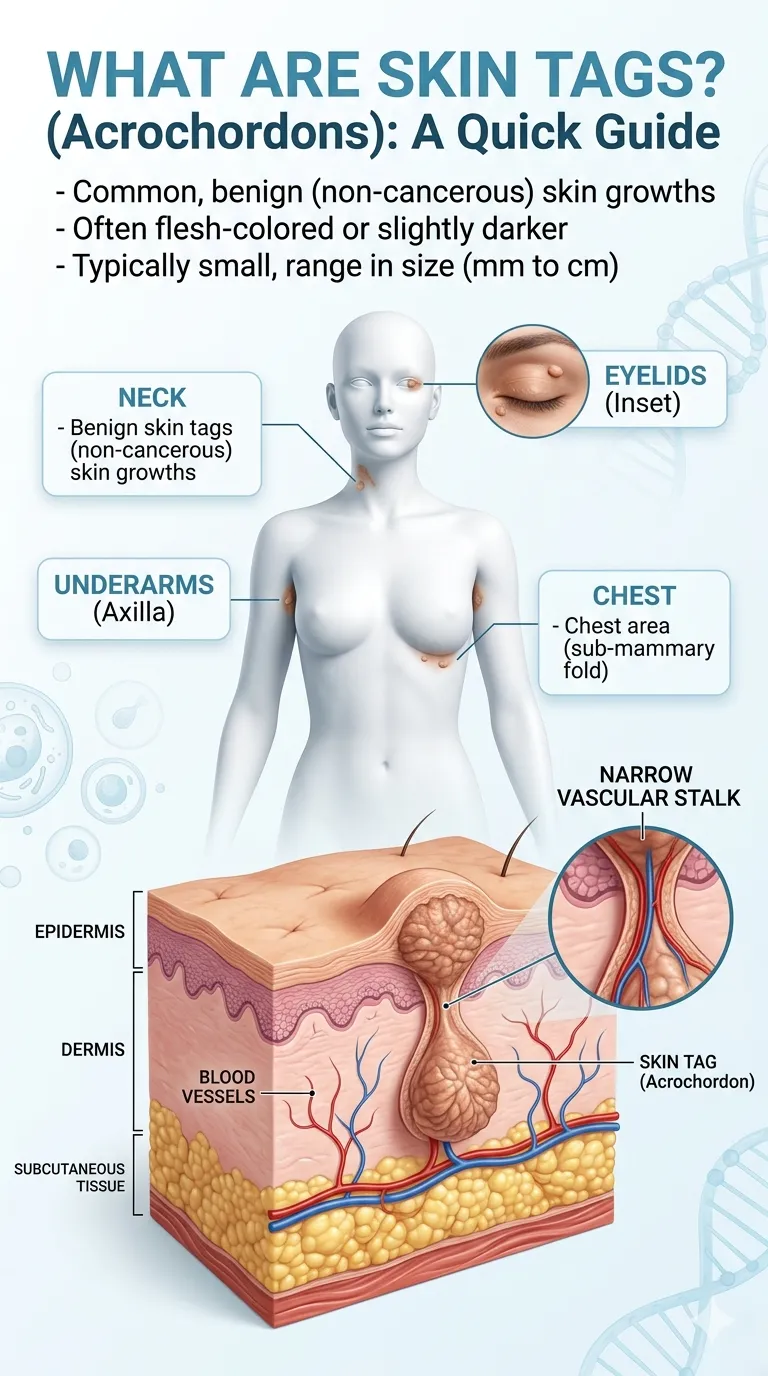
Skin tags are one of the most common benign skin growths seen in dermatology. The medical term for a skin tag is:

“Acrochordon” These growths develop on the skin surface and are attached by a narrow stalk of tissue. Skin tags can appear:

  • Individually
  • In small groups
  • In clusters

They may range from:

  • A few millimeters in size
  • Several centimeters in larger cases

Most skin tags are:

  • Soft
  • Flexible
  • Flesh-colored
  • Painless
  • Non-cancerous

Because they are so common, skin tags account for a significant number of routine dermatology consultations.

What Is a Skin Tag Made Of?

Understanding the structure of a skin tag helps explain why it behaves differently from other skin growths. A typical skin tag contains:

  • Collagen fibers
  • Blood vessels
  • Loose connective tissue
  • Epidermal skin cells

These components are covered by normal skin tissue. Unlike cancers or infections, skin tags do not typically invade surrounding tissues.

Why Do Skin Tags Hang From the Skin?

Most skin tags are connected to the skin by a narrow stalk called a peduncle. This characteristic appearance often helps healthcare professionals distinguish skin tags from other lesions.

Who Gets Skin Tags?

Skin tags are extremely common. Research suggests that many adults will develop at least one skin tag during their lifetime.

Age: Skin tags become more common with increasing age. Although they can occur in younger individuals, they are more frequently observed in middle-aged and older adults.

Genetics: Family history appears to influence susceptibility. Some individuals naturally develop more skin tags than others.

Men and Women: Skin tags affect both men and women. Current evidence suggests they occur in both sexes at relatively similar rates.

Pregnancy: Some individuals notice increased skin tag development during pregnancy.

Hormonal changes may contribute to this tendency.

What Causes Skin Tags?

One of the most frequently searched questions is:

"What causes skin tags?"

Although researchers do not fully understand every mechanism involved, several contributing factors have been identified.

Friction and Skin Rubbing

The strongest evidence supports friction as a major contributing factor. Skin tags commonly occur in areas where:

  • Skin touches skin
  • Clothing repeatedly rubs against skin
  • Moisture accumulates

Examples include:

This explains why skin tags often develop in high-friction locations.

Hormonal Influences

Hormones may influence skin tag development. This may help explain why skin tags sometimes appear during:

  • Pregnancy
  • Hormonal fluctuations
  • Certain metabolic conditions

Evidence Strength: Grade C

Skin Tags and Genetics

Some people appear genetically predisposed to developing skin tags. A family history of multiple skin tags may increase likelihood. Evidence Strength:

Grade C

Skin Tags and Aging

Skin tags become more common as skin changes over time. Age-related alterations in skin structure may contribute to their development. Evidence Strength:

Grade B

Metabolic Associations

Research has identified associations between skin tags and:

  • Obesity
  • Insulin resistance
  • Metabolic syndrome
  • Type 2 diabetes

However, it is important to understand that having a skin tag does not automatically mean an individual has an underlying medical condition. Evidence Strength:

Grade B

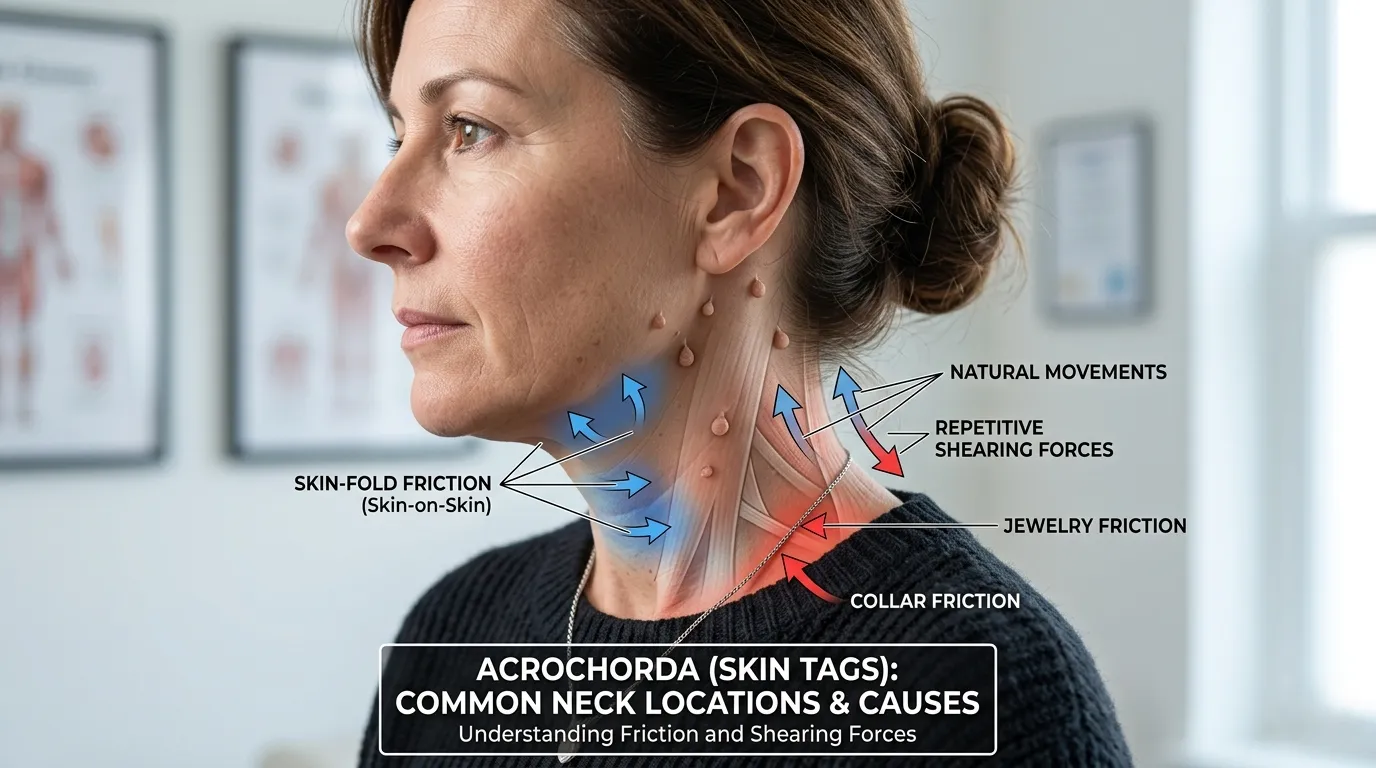
Why Do Skin Tags Develop on the Neck?

Educational visualization explaining what skin tags are and where they commonly develop on the body.

Another highly searched topic is: "What causes skin tags on the neck?" The neck is one of the most common locations for skin tags.

Constant Friction

The neck experiences repeated movement and skin contact throughout the day.

Potential contributors include:

  • Skin folds
  • Shirt collars
  • Jewelry
  • Neck movement

Moisture and Heat

Warm and moist environments may increase friction and irritation.

Weight-Related Skin Folds

Additional skin folds can increase contact between skin surfaces, potentially contributing to skin tag formation.

Skin Tags on the Neck

Neck skin tags often appear as:

  • Small flesh-colored bumps
  • Hanging skin growths
  • Soft, movable lesions

Most are:

  • Benign
  • Painless
  • Slow-growing

However, irritation may occur when they catch on:

  • Clothing
  • Chains
  • Razors

Skin Tag on Eyelid

Eyelid skin tags are another common reason people seek dermatological advice. Because the eyelid is a highly visible area, even small lesions can cause concern.

What Does an Eyelid Skin Tag Look Like?

Common characteristics include:

  • Tiny soft growths
  • Skin-colored appearance
  • Smooth surface
  • Narrow stalk attachment

Why Do Eyelid Skin Tags Develop?

Potential contributing factors include:

  • Friction from blinking
  • Aging
  • Genetics
  • Individual skin characteristics

Special Considerations

The eyelid is a delicate anatomical structure. For this reason, self-removal of eyelid skin tags is generally discouraged. Professional assessment is often the safest approach.

Common Locations of Skin Tags

Although neck and eyelid skin tags receive significant search interest, skin tags can occur almost anywhere. Common locations include:

  • Neck
  • Eyelids
  • Underarms
  • Groin
  • Under the breasts
  • Upper chest
  • Back
  • Around the anus
  • Genital region

Different locations may influence treatment options and removal methods.

Symptoms and Appearance

Most skin tags produce no symptoms. Common features include:

  • Soft texture
  • Flesh-colored appearance
  • Small stalk attachment
  • Slow growth

Possible symptoms include:

  • Irritation from clothing
  • Twisting discomfort
  • Cosmetic concerns
  • Snagging during shaving

Skin tags usually do not cause:

  • Significant pain
  • Ulceration
  • Persistent bleeding
  • Systemic symptoms

These findings may indicate a different condition and warrant medical evaluation.

Educational visualization explaining what skin tags are and where they commonly develop on the body.

Are Skin Tags Dangerous?

One of the most common concerns people have after discovering a skin tag is whether it could be dangerous. In most cases, skin tags are:

  • Benign
  • Non-cancerous
  • Harmless
  • Slow growing

Most skin tags do not become cancerous.

When a Skin Tag May Need Medical Evaluation

Although typical skin tags are harmless, professional assessment is recommended if a growth:

  • Changes rapidly
  • Develops irregular coloring
  • Becomes painful
  • Bleeds repeatedly
  • Ulcerates
  • Has an unusual appearance

A healthcare professional can determine whether the lesion is truly a skin tag or another skin condition.

Clinical Perspective

The greatest risk associated with skin tags is often misdiagnosis rather than the skin tag itself.

Skin Tags vs Other Skin Growths

Many skin conditions can resemble skin tags. Accurate identification is important because treatment recommendations vary.

Skin Tags vs Warts

Skin Tags Typically:

  • Soft
  • Smooth
  • Attached by a stalk
  • Flesh-colored

Key Difference: Skin tags are not caused by a viral infection.

Warts Typically:

  • Rough
  • Raised
  • Irregular surface
  • Caused by Human Papillomavirus (HPV)


Skin Tags vs Moles

Skin Tags Usually:

  • Soft
  • Hanging
  • Skin-colored

Moles Usually:

  • Flat or raised
  • Pigmented
  • Contain clusters of melanocytes

Key Difference: Moles often contain pigment while skin tags generally do not.

Skin Tags vs Seborrheic Keratoses

Seborrheic keratoses may appear:

  • Waxy
  • Raised
  • Brown or black

Unlike skin tags, they typically do not hang from a stalk.

Skin Tags vs Skin Cancer

Skin cancer lesions may demonstrate:

  • Irregular borders
  • Color variation
  • Ulceration
  • Bleeding
  • Rapid growth

Because visual appearance can sometimes overlap, uncertain lesions should be evaluated professionally.

How Doctors Diagnose Skin Tags

Diagnosis is often straightforward.

Medical History

Healthcare professionals may ask:

  • When the growth appeared
  • Whether it has changed
  • Associated symptoms
  • Previous skin conditions

Physical Examination

Most skin tags can be identified through clinical examination.

Dermoscopy

Some dermatologists use dermoscopy to examine skin structures more closely.

Biopsy

A biopsy may be recommended if:

  • Diagnosis is uncertain
  • Cancer is suspected

The lesion appears atypical

Skin Tag Removal

Another high-volume search topic is: "Skin tag removal" Most skin tags do not require removal for medical reasons. However, treatment may be considered if:

  • Irritation occurs
  • Bleeding develops
  • Clothing catches the lesion

Cosmetic concerns exist

Professional Skin Tag Removal Methods

Medical comparison of cryotherapy, electrocautery, surgical excision, and ligation for skin tags removal.

One of the most searched removal methods is Cryogenic skin tag removal or cryotherapy.

How It Works: Cryotherapy uses extremely cold temperatures, usually liquid nitrogen, to freeze the skin tag. The treated tissue eventually shrinks and detaches.

Advantages:

  • Fast procedure
  • Office-based treatment
  • Minimal downtime

Limitations:

  • Temporary blistering may occur
  • Multiple treatments may occasionally be required

Evidence Strength

Grade A

Surgical Excision

How It Works: The skin tag is removed using sterile surgical instruments.

Advantages

  • Immediate removal
  • Often suitable for larger skin tags

Evidence Strength

Grade A

Electrocautery

How It Works: Controlled electrical energy removes the skin tag.

Advantages

  • Precise removal
  • Often minimizes bleeding

Evidence Strength

Grade A

How to Remove Skin Tags Safely

Another common search query is: "How to remove skin tags"

The safest answer is: Accurate diagnosis should occur before removal.

Before Considering Removal

Ask:

  • Is it definitely a skin tag?
  • Has it been evaluated?
  • Is the location safe for treatment?

This is particularly important for:

  • Eyelids
  • Face
  • Genitals
  • Anal region

Why Diagnosis Matters?

Many individuals incorrectly assume:

  • Warts
  • Moles
  • Skin cancers

are skin tags. Proper diagnosis helps prevent inappropriate treatment.

Home Remedies vs Professional Treatment

Internet searches frequently reveal numerous home-removal suggestions. However, evidence supporting many home remedies remains limited.

Common Home Approaches

Examples include:

  • Over-the-counter skin tag products
  • Ligation kits
  • Topical solutions

Potential Risks

Home treatment may increase:

  • Infection risk
  • Scarring
  • Bleeding
  • Delayed diagnosis

Professional Treatment Advantages

Professional care offers:

  • Accurate diagnosis
  • Controlled removal
  • Lower complication risk
  • Appropriate follow-up

For eyelid skin tags and facial skin tags, professional treatment is generally preferred.

Recovery and Healing Expectations

Recovery depends on:

  • Removal method
  • Size of the skin tag
  • Body location

Typical Recovery

Many individuals experience:

  • Mild redness
  • Temporary tenderness
  • Minor scabbing

Healing Timeline

Small skin tags often heal within:

  • Several days
  • One to two weeks

Larger lesions may require longer healing periods.

Side Effects and Risks

Professional removal procedures are generally safe. Potential side effects include:

Temporary Pain: Usually mild and short-lived.

Bleeding: Minor bleeding may occur.

Infection: Rare but possible.

Pigment Changes: Some individuals may experience:

  • Temporary darkening
  • Temporary lightening of the treated area.

Scarring: Small scars may occasionally develop.

Can Skin Tags Be Prevented?

Complete prevention is not always possible. However, certain strategies may reduce contributing factors.

Minimize Friction: Helpful approaches include:

  • Comfortable clothing
  • Managing skin chafing
  • Maintaining healthy skin folds

Weight Management: Maintaining a healthy weight may reduce skin-to-skin friction.

Monitor Skin Changes: Early evaluation of new growths helps ensure appropriate diagnosis.

Comparison Table

FeatureSkin TagWartMoleSeborrheic Keratosis
TextureSoftRoughVariableWaxy
Stalk PresentUsuallyRarelyRarelyRarely
Viral CauseNoYesNoNo
PigmentationUsually minimalVariableOften presentOften present
Cancer RiskVery lowVery lowVariableVery low

Decision Table

SituationRecommended ActionReasonEvidence Strength
Small Stable Skin TagObservationUsually harmlessGrade A
Cosmetic ConcernDiscuss removal optionsQuality-of-life benefitGrade B
Eyelid Skin TagProfessional assessmentSensitive locationGrade A
Rapid GrowthMedical evaluationExclude other conditionsGrade A
Bleeding LesionMedical evaluationRequires diagnosisGrade A
Uncertain DiagnosisDermatology reviewConfirm identityGrade A

Clinical Insight Boxes

Clinical Perspective

Most skin tags are medically harmless and require treatment only when symptoms, irritation, or cosmetic concerns occur.

Patient Consideration

The desire for removal is often driven more by comfort and appearance than by medical necessity.

Dermatology Insight

Neck skin tags and eyelid skin tags are among the most frequently treated locations because friction and visibility often make them bothersome.

Consumer Takeaway

Any new or changing skin growth should be correctly identified before attempting treatment.

Frequently Asked Questions (FAQs)

What is a skin tag?

A skin tag is a small, benign growth of skin that commonly develops in areas exposed to friction.

Are skin tags dangerous?

Most are harmless and non-cancerous.

Can skin tags appear on eyelids?

Yes. Eyelid skin tags are common and often evaluated because of their visible location.

Can I remove a skin tag at home?

Home removal methods carry risks and should be approached cautiously.

Will a removed skin tag grow back?

The treated skin tag usually does not return, but new ones may develop elsewhere.

What causes skin tags?

Factors may include friction, genetics, aging, hormonal influences, and certain metabolic associations.

Do skin tags hurt?

Most are painless unless irritated or twisted.

When should I see a doctor?

Seek medical evaluation if a lesion changes, bleeds, becomes painful, or appears unusual.

Why do skin tags form on the neck?

Repeated friction, skin folds, and clothing contact may contribute.

What is cryotherapy for skin tags?

Cryotherapy uses liquid nitrogen to freeze and remove the skin tag.

Conclusion

Skin tags are among the most common benign skin growths encountered in dermatology. They frequently develop on the neck, eyelids, underarms, and other friction-prone areas. Although their exact cause is not fully understood, friction, genetics, aging, and hormonal influences appear to contribute to their formation.
Most skin tags are harmless and require no treatment. However, professional removal options such as cryotherapy, electrocautery, ligation, and surgical excision are available when symptoms, irritation, or cosmetic concerns arise. Because other skin conditions can resemble skin tags, accurate diagnosis remains an important first step before considering treatment.

Explore "thelunariaorganics.com" for evidence-based educational content covering skin health, dermatology topics, common skin conditions, skincare science, and medically reviewed wellness information.

Medical Disclaimer

This article is for educational and informational purposes only and is not intended to diagnose, treat, cure, or prevent any disease. Consult a qualified healthcare professional for personalized medical advice.

Scientific References