
Niacinamide Whitening Toothpaste: Benefits, Safety, and Whitening Claims Explained
QUICK ANSWER
Niacinamide whitening toothpaste is a newer oral-care product that combines traditional toothpaste ingredients with niacinamide, a form of vitamin B3. While niacinamide is well-known in skincare for its soothing and barrier-supporting properties, current evidence does not show that niacinamide alone whitens teeth. Whitening effects typically come from other ingredients in the toothpaste formula.
Table of Contents
Consumers in the United States, United Kingdom, Canada, and Australia are increasingly seeking innovative oral-care products that promise cleaner, brighter, and healthier smiles. One emerging trend is the rise of niacinamide whitening toothpaste, a category that combines traditional whitening technologies with niacinamide, a vitamin B3 derivative widely recognized in skincare.
As social media influencers, beauty brands, and oral-care companies introduce products containing niacinamide, many consumers are asking important questions:
- Does niacinamide whitening toothpaste actually whiten teeth?
- Is niacinamide toothpaste safe?
- What do dentists think about these products?
- Is whitening toothpaste with niacinamide worth the investment?
This evidence-based guide examines the science, benefits, safety profile, and real-world effectiveness of niacinamide toothpaste.
What Is Niacinamide Whitening Toothpaste?
Niacinamide, also known as nicotinamide, is a water-soluble form of vitamin B3. In skincare, it is widely used because of its ability to:
- Support skin barrier function
- Reduce redness
- Improve hydration
- Calm irritation
- Help regulate oil production
Recently, some oral-care manufacturers have started incorporating niacinamide into toothpaste formulations. A niacinamide whitening toothpaste generally contains:
- Niacinamide (Vitamin B3)
- Fluoride or alternative remineralizing agents
- Mild abrasives
- Cleaning agents
- Flavoring ingredients
- Whitening compounds
It is important to understand that niacinamide itself is not traditionally classified as a tooth-whitening ingredient.
Why Is Niacinamide Being Added to Toothpaste?
The addition of niacinamide is often linked to its potential supportive role in maintaining healthy oral tissues. Researchers have studied vitamin B3's role in:
- Cellular health
- Inflammatory response regulation
- Tissue maintenance
- Mucosal health
Some brands market niacinamide toothpaste as helping support overall oral wellness rather than directly whitening teeth. Potential proposed benefits include:
- Supporting gum comfort
- Reducing oral irritation
- Promoting healthier-looking gums
- Enhancing overall oral-care formulations
However, more research is needed specifically on niacinamide-containing toothpaste products.
Understanding How Teeth Become Stained
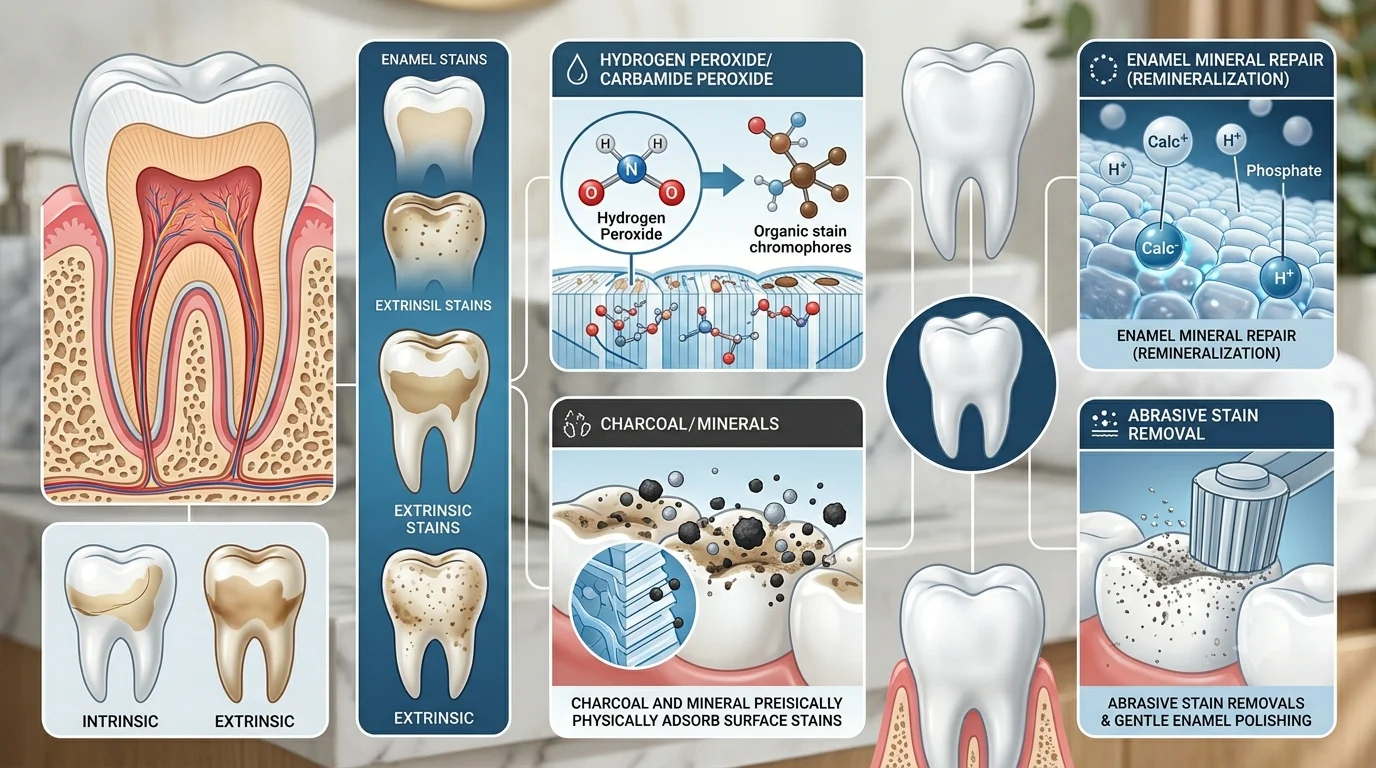
To understand whitening claims, it helps to understand why teeth become discolored.
Extrinsic Stains
These occur on the tooth surface. Common causes:
- Coffee
- Tea
- Red wine
- Tobacco
- Colored beverages
- Certain foods
Intrinsic Stains
These occur within the tooth structure. Possible causes:
- Aging
- Trauma
- Certain medications
- Excess fluoride exposure during childhood
Different whitening technologies target these stains differently.
Does Niacinamide Whitening Toothpaste Work?
This is one of the most searched questions online.
Current Scientific Evidence
At present, there is limited direct evidence showing that niacinamide itself has significant tooth-whitening properties. Most whitening results associated with niacinamide whitening toothpaste likely come from other ingredients such as:
- Hydrated silica
- Calcium carbonate
- Hydrogen peroxide
- Carbamide peroxide
- Optical brightening agents
Therefore:
What Niacinamide May Do
- Support oral tissue health
- Contribute to overall formula quality
- Potentially reduce irritation from aggressive whitening ingredients
What Niacinamide Does Not Appear to Do
- Directly bleach teeth
- Remove deep stains independently
- Replace clinically proven whitening agents
Consumers should carefully examine the entire ingredient list rather than focusing only on niacinamide.
Is Niacinamide Toothpaste Safe?
Safety Overview: One of the most common search queries is:
"Is niacinamide toothpaste safe?"
Based on current scientific understanding, niacinamide has a strong safety profile when used appropriately. Niacinamide is already widely used in:
- Cosmetics
- Dietary supplements
- Medical products
- Personal care formulations
When included in toothpaste formulations at appropriate concentrations, it is generally considered safe.
Potential Advantages
- Low irritation potential
- Good stability
- Well-established safety history
- Compatible with many oral-care ingredients
Potential Considerations
Some individuals may experience sensitivity to other ingredients within the toothpaste formula, including:
- Flavoring agents
- Essential oils
- Surfactants
- Whitening compounds
In most cases, any adverse reaction is more likely to be related to these ingredients rather than niacinamide itself.
Niacinamide Toothpaste Dentist Review
What Dentists Typically Look For
When evaluating a toothpaste, dental professionals focus on:
- Fluoride content
- Enamel protection
- Plaque control
- Cavity prevention
- Clinical evidence
- Safety profile
Most dentists do not currently consider niacinamide a primary whitening ingredient.
Professional Perspective
A typical dentist review of niacinamide toothpaste would likely conclude:
- Niacinamide appears safe.
- It may offer supportive benefits.
- Whitening effectiveness depends on the complete formula.
- Fluoride remains one of the most important ingredients for cavity prevention.
- Consumers should not expect dramatic whitening from niacinamide alone.
In other words, niacinamide may be a useful supplementary ingredient, but it is not a substitute for evidence-based oral-care technologies.
Benefits of Whitening Toothpaste With Niacinamide
Potentially Gentler Whitening Experience
Some formulations combine niacinamide with less aggressive whitening systems, potentially making them suitable for sensitive users.
Multi-Benefit Formulations
Manufacturers often market these products as combining:
- Whitening
- Cleaning
- Fresh breath
- Gum support
Modern Cosmetic Appeal
Consumers familiar with niacinamide from skincare often appreciate seeing scientifically recognized ingredients incorporated into oral-care products.
Potential Oral Tissue Support
Although more research is needed, niacinamide's role in cellular health makes it an interesting addition to next-generation oral-care formulations.
Limitations and Potential Drawbacks
Limited Whitening Evidence
Current research does not support niacinamide as a standalone whitening agent.
Marketing Confusion
Many consumers incorrectly assume that niacinamide is responsible for whitening effects.
Product Variability
Different brands use vastly different formulations.
Two products labeled as niacinamide whitening toothpaste may perform very differently.
Cost Considerations
Some niacinamide toothpastes are priced higher than conventional products despite limited evidence of additional whitening benefits.
Best Ingredients for Teeth Whitening
| Ingredient | Primary Benefit | Scientific Support |
| Hydrogen Peroxide | Whitening | Strong |
| Carbamide Peroxide | Whitening | Strong |
| Hydrated Silica | Surface stain removal | Strong |
| Fluoride | Cavity protection | Strong |
| Hydroxyapatite | Remineralization | Moderate-Strong |
| Potassium Nitrate | Sensitivity relief | Strong |
| Calcium Carbonate | Cleaning | Moderate |
| Niacinamide | Supportive ingredient | Emerging |
Myths vs Facts About Niacinamide Brihtening Toothpaste
Myth | Fact |
Niacinamide directly bleaches teeth | No strong evidence supports this |
Niacinamide toothpaste is unsafe | It generally has a good safety profile |
Whitening toothpaste permanently whitens teeth | Results require ongoing maintenance |
Natural ingredients are always safer | Safety depends on formulation |
All whitening toothpastes work equally | Formulations vary greatly |
Niacinamide replaces fluoride | It does not |
Expensive toothpaste always works better | Effectiveness depends on ingredients |
Whitening damages all teeth | Properly formulated products can be safe |
One week is enough for dramatic whitening | Results vary |
All stains respond equally | Different stains require different approaches |
Frequently Asked Questions
Is niacinamide toothpaste safe for daily use?
Current evidence suggests that niacinamide itself has a favorable safety profile. Daily use safety depends largely on the complete toothpaste formulation and adherence to manufacturer instructions.
Does niacinamide whitening toothpaste actually whiten teeth?
Any whitening effects are most likely due to established whitening ingredients within the formula rather than niacinamide itself.
Is niacinamide safe for sensitive teeth?
Niacinamide itself is generally considered well tolerated. Sensitivity risk usually comes from whitening agents rather than niacinamide.
Does niacinamide help gums?
Some manufacturers suggest oral tissue support benefits, but more clinical research is needed.
How long does whitening toothpaste take to work?
Most whitening toothpastes require several weeks of consistent use before visible improvements appear.
Should I choose niacinamide toothpaste for whitening?
Choose products based on their overall formulation, scientific evidence, fluoride content, and dental needs rather than marketing claims alone.
Can niacinamide remove deep tooth stains?
There is currently no strong evidence showing that niacinamide alone removes deep intrinsic stains.
What do dentists say about niacinamide toothpaste?
Most dentists view niacinamide as a potentially supportive ingredient rather than a primary whitening ingredient.
Is whitening toothpaste with niacinamide better than regular toothpaste?
Not necessarily. Overall effectiveness depends on the full ingredient profile, fluoride content, and clinical evidence.
Can children use niacinamide toothpaste?
Parents should follow product-specific recommendations and consult a dental professional when needed.
Conclusion
The growing popularity of niacinamide whitening toothpaste reflects a broader trend toward multifunctional personal-care products. While niacinamide is an intriguing ingredient with a strong safety profile and potential supportive benefits, current evidence does not justify viewing it as a breakthrough whitening technology.
For consumers in the US, UK, Canada, and Australia, the smartest approach is to evaluate toothpaste based on proven oral-health benefits, clinically supported whitening ingredients, and recommendations from qualified dental professionals. When used as part of a complete oral-care routine, a well-formulated toothpaste may contribute to a healthier and brighter smile, but realistic expectations remain essential.
Scientific References
- National Institutes of Health (NIH) – Niacin (Vitamin B3) Fact Sheet.
- National Library of Medicine (PubMed) – Oral Health and Nutritional Factors.
- American Dental Association (ADA) – Tooth Whitening Overview.
- Mayo Clinic – Teeth Whitening: Benefits and Risks.
- Cleveland Clinic – Tooth Discoloration and Whitening Treatments.
- Journal of Clinical Dentistry – Whitening Toothpaste Research.
- International Dental Journal – Tooth Whitening Mechanisms.
- FDA Guidance on Oral-Care Products.