Acne vs Pimples: Which Skin Condition Do You Have?

Acne vs Pimples: Which Skin Condition Do You Have?

Table of Contents

Many people use the terms "Acne" and "pimples" interchangeably. While they are closely related, they are not exactly the same thing. This confusion often leads people to misunderstand their skin condition, choose ineffective treatments, or underestimate the seriousness of persistent breakouts.

According to dermatologists, acne is a medical skin condition, while pimples are one of the visible symptoms of that condition. Understanding the difference can help you choose appropriate skincare products, identify potential triggers, and know when professional treatment may be necessary.

Whether you're a teenager experiencing your first breakout, an adult struggling with hormonal acne, or simply trying to improve your skincare knowledge, this scientific guide explains everything you need to know.

What Is Acne?

Scientific Definition

Acne vulgaris is a chronic inflammatory disorder of the pilosebaceous unit, which includes:

  • Hair follicles
  • Sebaceous (oil) glands
  • Hair shafts

Acne develops when pores become blocked by oil, dead skin cells, and debris, creating an environment that promotes inflammation and bacterial overgrowth.

Dermatological Perspective

Dermatologists classify acne as a medical condition that can vary in severity from mild blackheads to severe cystic lesions.

Acne commonly affects:

  • Face
  • Forehead
  • Chin
  • Jawline
  • Chest
  • Back
  • Shoulders

What Are Pimples?

A pimple is an individual skin lesion that develops when a pore becomes clogged and inflamed.

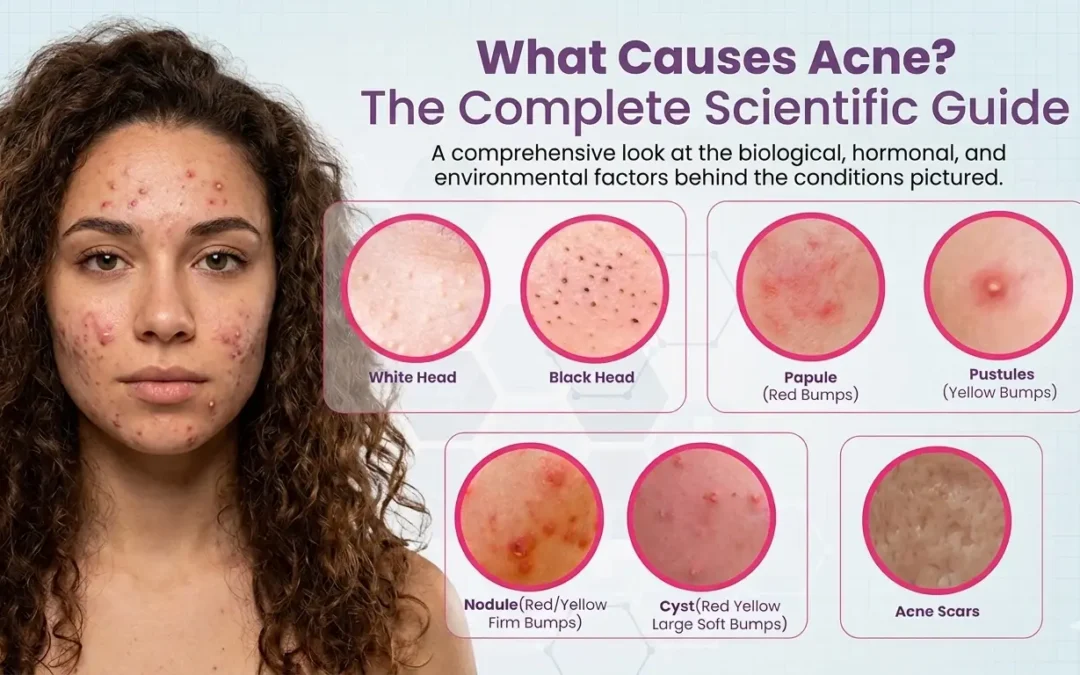
Pimples can appear as:

  • Whiteheads
  • Blackheads
  • Red bumps
  • Pustules
  • Nodules
  • Cysts

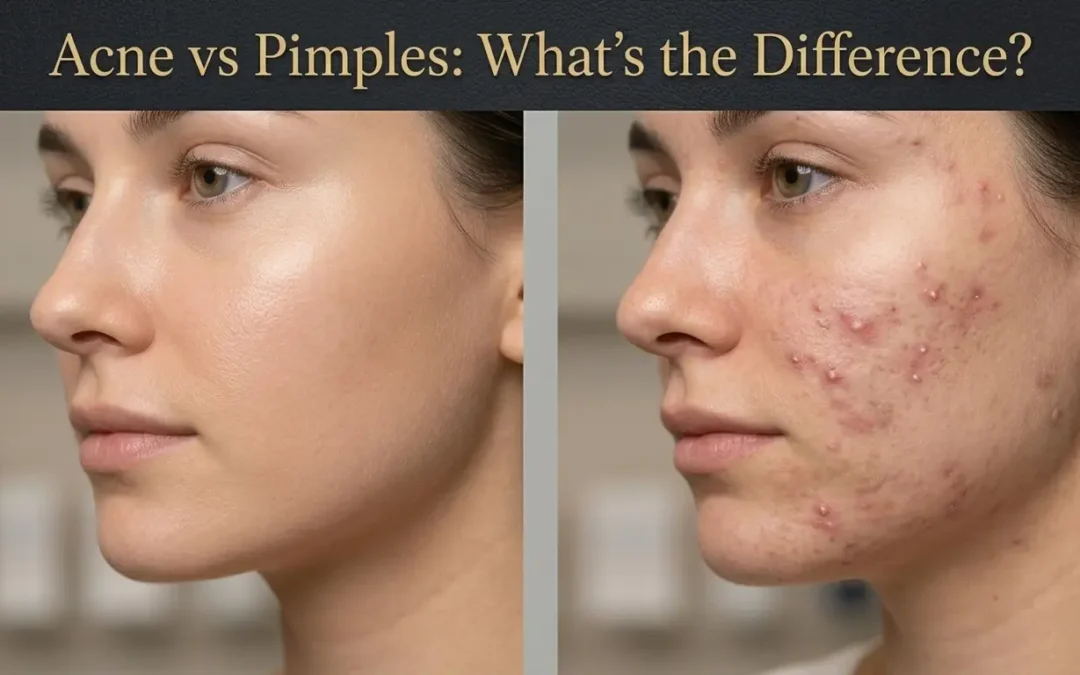
A person may occasionally develop a pimple without having clinical acne. For example, a single breakout caused by stress, hormones, or a cosmetic product does not necessarily mean someone has acne.

Acne vs Pimples: The Main Difference

FeatureAcnePimples
DefinitionMedical skin conditionIndividual skin lesion
DurationOften chronicUsually temporary
ScopeMultiple lesions and recurring breakoutsSingle or few spots
CausesMultifactorial diseaseResult of clogged pore or inflammation
SeverityMild to severeUsually localized
Medical DiagnosisYesSymptom rather than diagnosis
Scarring RiskHigherLower unless severe
TreatmentLong-term managementSpot treatment often sufficient

Simple Explanation

Think of acne as the overall disease process and pimples as one of the visible signs that the condition exists.

Understanding the Science
Skin Biology

Healthy skin naturally sheds dead skin cells while sebaceous glands produce oil to maintain hydration and barrier function.

Problems begin when this balance becomes disrupted.

Excess Sebum Production

Sebaceous glands may become overactive due to hormonal stimulation.

Excess oil mixes with dead skin cells and contributes to pore blockage.

Follicular Hyperkeratinization

Skin cells inside pores fail to shed normally and accumulate.

This process creates microscopic blockages called microcomedones.

Bacterial Activity

The skin naturally contains Cutibacterium acnes bacteria.

When pores become clogged, bacterial populations increase and trigger inflammation.

Inflammation

The body's immune response causes:

  • Redness
  • Swelling
  • Tenderness
  • Pus formation

This is what creates many visible pimples.

Types of Acne and Pimples

Non-Inflammatory Acne

Whiteheads

Closed clogged pores beneath the skin.

Blackheads

Open clogged pores exposed to oxygen.

Inflammatory Acne

Papules: Small red inflamed bumps.

Pustules: Red bumps containing visible pus.

Nodules: Large painful lesions beneath the skin.

Cysts: Deep inflammatory lesions with the highest risk of scarring.

Common Problems Associated with Acne
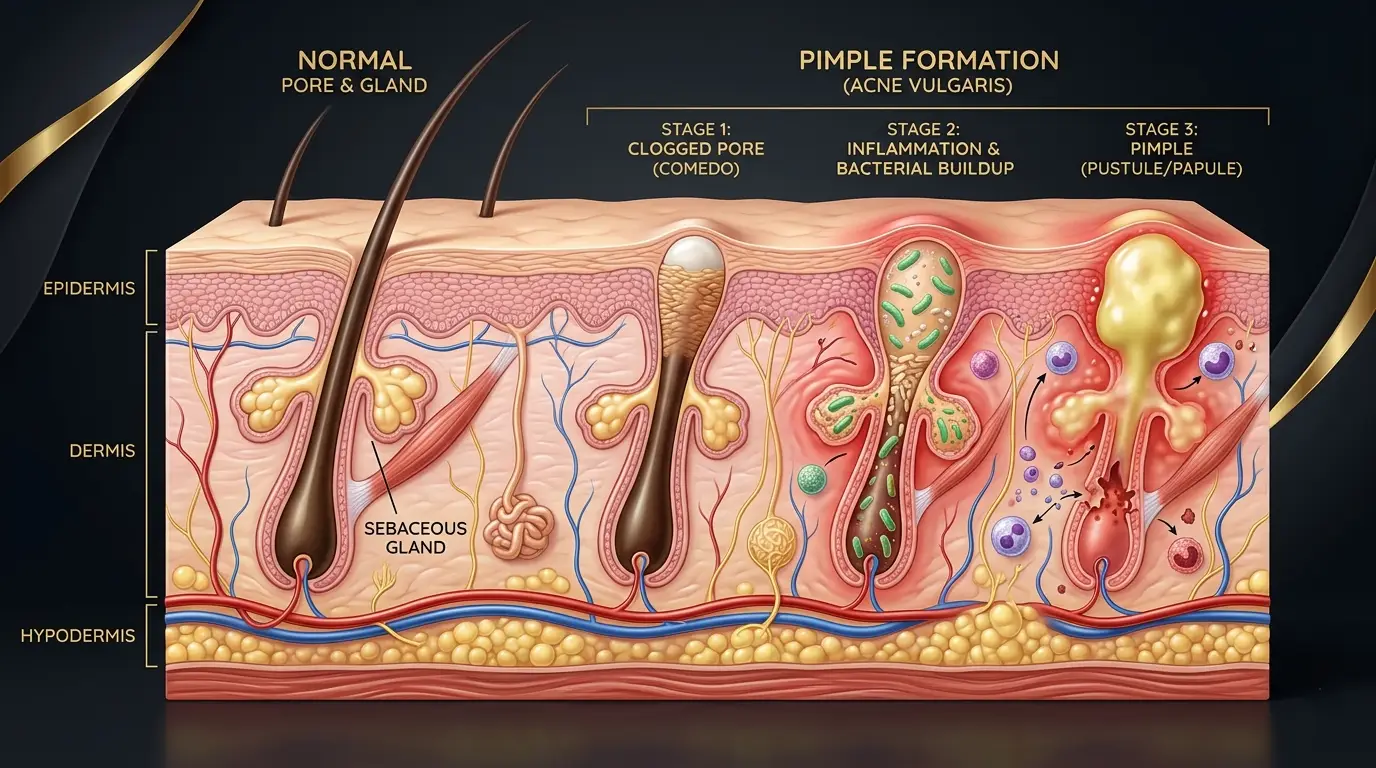
Skin Barrier and Pimple Causes

Visible Symptoms

  • Recurrent breakouts
  • Blackheads
  • Whiteheads
  • Red inflamed lesions
  • Oily skin
  • Enlarged pores

Hidden Effects

  • Chronic inflammation
  • Barrier dysfunction
  • Skin microbiome imbalance

Emotional Impact

Research shows acne can contribute to:

  • Reduced self-confidence
  • Anxiety
  • Social withdrawal
  • Emotional distress

Long-Term Consequences

Untreated acne may lead to:

  • Permanent scarring
  • Post-inflammatory hyperpigmentation
  • Persistent redness
  • Uneven skin texture

Major Causes of Acne and Pimples

Hormonal Factors

Hormones are among the most significant acne triggers.

Common hormonal influences include:

  • Puberty
  • Menstrual cycles
  • Pregnancy
  • Menopause
  • PCOS
  • Testosterone fluctuations

Genetic Factors

Family history strongly influences:

  • Acne susceptibility
  • Severity
  • Scarring risk

Lifestyle Factors

Certain habits may worsen acne:

  • Sleep deprivation
  • Smoking
  • High stress levels
  • Poor skincare routines

Nutritional Factors

Research suggests that some individuals may experience worsening acne from:

  • High-glycemic foods
  • Sugary beverages
  • Excess refined carbohydrates
  • Certain dairy products

Environmental Factors

External contributors include:

  • Pollution
  • Humidity
  • Friction from masks or helmets
  • Sweat accumulation

Cosmetic-Related Factors

Products containing pore-clogging ingredients may contribute to breakouts.

Common concerns include:

  • Heavy oils
  • Thick foundations
  • Comedogenic formulations

Effective Solutions

Medical Solutions - Topical Retinoids

Benefits:

  • Prevent clogged pores
  • Improve cell turnover

Limitations:

  • Potential irritation

Best Practice:

  • Introduce gradually

Dermatologist Recommendations

  • Treat acne early.
  • Avoid squeezing lesions.
  • Follow a consistent routine.
  • Wear sunscreen daily.
  • Seek professional help for persistent breakouts.

Benzoyl Peroxide

Benefits:

  • Reduces acne bacteria
  • Anti-inflammatory

Limitations:

  • Can cause dryness

Best Practice:

  • Use lower strengths initially

Prescription Treatments

For moderate-to-severe acne, dermatologists may prescribe:

  • Topical antibiotics
  • Oral antibiotics
  • Hormonal therapies
  • Isotretinoin

Skincare Solutions

Morning Routine

  1. Gentle cleanser
  2. Antioxidant serum
  3. Lightweight moisturizer
  4. Broad-spectrum SPF 30+

Evening Routine

  1. Cleanser
  2. Acne treatment
  3. Moisturizer

Natural Remedies (Evidence-Based)

Some ingredients show supportive evidence:

  • Green tea extract
  • Aloe vera
  • Colloidal oatmeal
  • Tea tree oil

Natural treatments should complement, not replace, evidence-based care.

Ingredient-Based Solutions

Salicylic Acid

  • Unclogs pores
  • Removes excess oil

Niacinamide

  • Reduces redness
  • Helps regulate oil production

Azelaic Acid: Targets acne and pigmentation

Retinol: Supports skin renewal

Ceramides: Strengthen the skin barrier

Lifestyle Improvements

  • Sleep 7–9 hours nightly
  • Exercise regularly
  • Manage stress
  • Maintain a balanced diet
  • Stay hydrated
  • Avoid smoking

Best Skincare Ingredients for Acne and Pimples

IngredientBenefitsScientific Evidence
Salicylic AcidClears clogged poresStrong
Benzoyl PeroxideReduces acne bacteriaStrong
RetinoidsPrevents comedonesStrong
NiacinamideReduces inflammationModerate-Strong
Azelaic AcidTreats acne and discolorationStrong
CeramidesSupports barrier repairModerate
ZincOil regulationModerate
SulfurHelps reduce blemishesModerate
Green Tea ExtractAntioxidant activityEmerging
Hyaluronic AcidHydration supportModerate

Precautions & Expert Tips

  • Wear SPF daily.
  • Avoid aggressive scrubbing.
  • Don't pop pimples.
  • Use non-comedogenic products.
  • Moisturize consistently.
  • Avoid over-exfoliation.
  • Introduce actives gradually.
  • Patch test new products.
  • Remove makeup before bed.
  • Wash makeup brushes weekly.
  • Change pillowcases regularly.
  • Manage stress levels.
  • Maintain consistent sleep habits.
  • Avoid smoking.
  • Stay hydrated.
  • Don't combine too many actives at once.
  • Monitor skin reactions carefully.
  • Seek treatment for severe acne.
  • Protect the skin barrier.
  • Be patient—results take time.

Myths vs Facts Regarding Acne & Pimples

Myth

Fact

Acne and pimples are the same thing

Pimples are a symptom of acne

Only teenagers get acne

Adults commonly experience acne

Dirty skin causes acne

Acne is multifactorial

Sun exposure cures acne

UV exposure may worsen inflammation

Toothpaste treats pimples

It often irritates skin

Washing more prevents acne

Overwashing can damage the barrier

Makeup always causes acne

Non-comedogenic makeup is generally safe

Oily skin doesn't need moisturizer

Hydration benefits all skin types

Acne is contagious

Acne cannot be spread between people

Stress has no effect on acne

Stress can worsen breakouts

Frequently Asked Questions About Acne & Pimples

Is acne the same as a pimple?

No. Acne is a skin disease, while a pimple is one type of lesion caused by acne or temporary pore blockage.

Can I have pimples without acne?

Yes. Occasional pimples can occur without having chronic acne.

Can acne leave scars?

Yes. Moderate-to-severe inflammatory acne can cause permanent scarring if not treated properly.

Are blackheads considered acne?

Yes. Blackheads are a type of non-inflammatory acne lesion.

Does diet influence acne?

Research suggests high-glycemic diets may worsen acne in some individuals.

Which ingredient is best for clogged pores?

Salicylic acid is one of the most effective ingredients for pore congestion.

What causes pimples?

Pimples develop when pores become blocked with oil, dead skin cells, and debris, leading to inflammation.

Why do adults still get acne?

Hormonal fluctuations, stress, genetics, medications, and lifestyle factors may contribute.

Do hormones affect both acne and pimples?

Yes. Hormonal changes can increase oil production and promote breakouts.

How long does acne treatment take?

Most evidence-based treatments require 6–12 weeks for visible improvement.

Should I pop a pimple?

No. Popping increases inflammation, infection risk, and scarring.

Is sunscreen important for acne-prone skin?

Absolutely. Sunscreen helps prevent pigmentation and protects overall skin health.

Conclusion Acne vs Pimples

Although the terms acne and pimples are often used interchangeably, they represent different aspects of skin health. Acne is a chronic inflammatory disorder involving multiple biological processes, whereas pimples are visible lesions that develop as a result of those processes.

By understanding the causes, symptoms, and treatment options for both acne and pimples, individuals can make informed skincare decisions, reduce the risk of long-term skin damage, and improve overall skin health through evidence-based care.

Scientific References About Acne vs Pimples

  1. American Academy of Dermatology. Acne Resource Center. 2024.
  2. National Institutes of Health. Acne Vulgaris Overview. 2023.
  3. National Library of Medicine (PubMed). Pathogenesis of Acne. 2022.
  4. American Journal of Clinical Dermatology. Advances in Acne Management. 2024.
  5. Journal of Cosmetic Dermatology. Acne and Skincare Research. 2023.
  6. British Journal of Dermatology. Acne Pathophysiology Review. 2022.
  7. Mayo Clinic. Acne Causes and Symptoms. 2024.
  8. Cleveland Clinic. Acne Treatment Overview. 2024.
  9. International Journal of Cosmetic Science. Skin Barrier and Acne Research. 2022.
  10. FDA Acne Treatment Guidance.
What Causes Acne? 7 Scientifically Proven Reasons

What Causes Acne? 7 Scientifically Proven Reasons

Table of Contents

Acne is one of the most common skin conditions in the world, affecting millions of teenagers and adults across the United States, United Kingdom, Canada, and Australia. Despite its prevalence, acne remains widely misunderstood. Many people believe acne is caused by poor hygiene, eating chocolate, or not washing the face enough. Modern dermatological research tells a very different story.

Acne is a complex inflammatory skin condition involving hormones, oil production, pore blockage, bacteria, genetics, immune responses, and environmental influences. Understanding what truly causes acne is essential for choosing effective treatments and avoiding common mistakes that may worsen breakouts.

In this evidence-based guide, we will explore the science behind acne formation, the major causes of acne, risk factors, treatment approaches, and dermatologist-backed strategies for healthier skin.

Quick Answer

Acne develops when hair follicles become clogged with excess oil (sebum), dead skin cells, and debris. Hormonal changes increase oil production, while inflammation and the overgrowth of Cutibacterium acnes bacteria contribute to visible pimples, blackheads, whiteheads, and cysts. Genetics, stress, diet, medications, and skincare habits can also influence acne severity.

What Is Acne?

Acne vulgaris is a chronic inflammatory skin disorder that affects the pilosebaceous unit, which consists of:

  • Hair follicle
  • Sebaceous gland
  • Hair shaft

Acne typically appears on areas with a high concentration of sebaceous glands, including:

  • Face
  • Forehead
  • Nose
  • Chin
  • Chest
  • Back
  • Shoulders

Acne can range from mild blackheads and whiteheads to severe cystic lesions that may result in permanent scarring.

Dermatological Perspective

Dermatologists classify acne as a multifactorial inflammatory disease. This means multiple biological processes work together to produce breakouts.

The four primary mechanisms include:

  1. Excess sebum production
  2. Follicular hyperkeratinization
  3. Bacterial proliferation
  4. Inflammation

These processes interact continuously, leading to visible acne lesions.

Cosmetic Industry Perspective

From a cosmetic science standpoint, acne affects not only skin health but also skin appearance, texture, pigmentation, and aging outcomes.

Persistent acne can contribute to:

  • Post-inflammatory hyperpigmentation
  • Acne scars
  • Uneven texture
  • Enlarged pores
  • Reduced skin confidence

This is why acne management often combines medical treatments with supportive skincare.

Understanding the Science of Acne

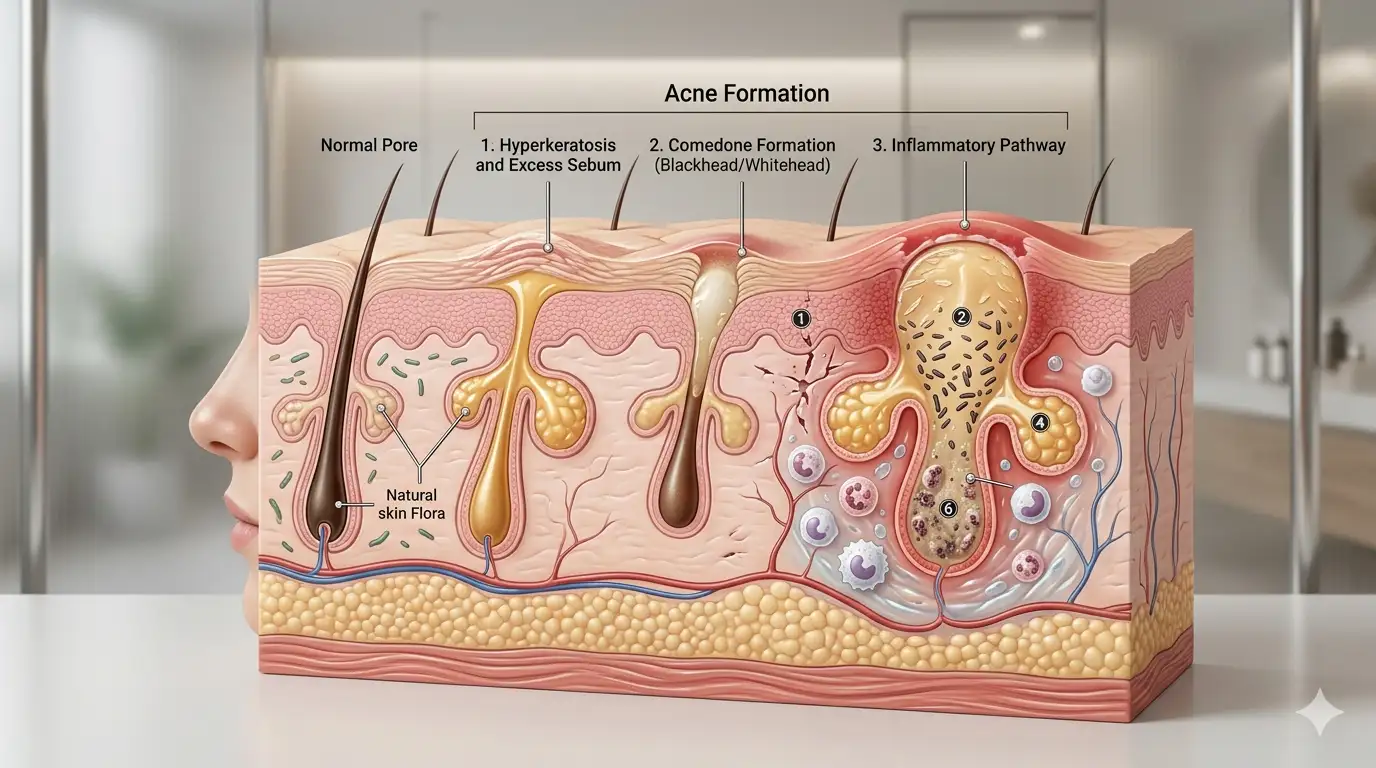
Acne Formation Image for Awareness

Skin Biology

Healthy skin constantly renews itself. Dead skin cells shed naturally from pores while sebaceous glands produce oil that lubricates the skin.

Problems begin when this process becomes disrupted.

Follicular Hyperkeratinization

Skin cells inside pores may fail to shed properly.

These trapped cells combine with oil and create microcomedones—the earliest stage of acne.

Inflammation

The immune system responds to bacterial activity and pore blockage.

This inflammatory response produces:

  • Redness
  • Swelling
  • Tenderness
  • Pus formation

Sebum Production

Sebaceous glands produce sebum to protect the skin barrier.

When too much sebum is produced:

  • Pores become congested
  • Oil accumulates
  • Acne risk increases

Bacterial Overgrowth

Cutibacterium acnes naturally lives on healthy skin.

When pores become clogged, this bacteria multiplies rapidly and triggers inflammation.

Common Problems Related to Acne

Visible Symptoms

  • Whiteheads
  • Blackheads
  • Papules
  • Pustules
  • Nodules
  • Cysts

Hidden Effects

  • Chronic inflammation
  • Barrier dysfunction
  • Pigmentation changes

Emotional Impact

Research consistently shows acne may contribute to:

  • Reduced self-confidence
  • Social anxiety
  • Emotional distress
  • Lower quality of life

Long-Term Consequences

Untreated acne may lead to:

  • Permanent scarring
  • Hyperpigmentation
  • Enlarged pores
  • Persistent redness

Major Causes of Acne

1. Hormonal Factors

Hormones are among the strongest acne triggers. Androgens stimulate sebaceous glands and increase oil production. Hormonal fluctuations occur during:

  • Puberty
  • Menstrual cycles
  • Pregnancy
  • Perimenopause
  • Polycystic Ovary Syndrome (PCOS)

2. Genetic Factors

Genetics significantly influence acne risk.

Individuals with a family history of acne often experience:

  • Earlier onset
  • More severe acne
  • Greater likelihood of scarring

3. Dietary Factors

Research suggests certain dietary patterns may worsen acne in susceptible individuals. Potential contributors include:

  • High-glycemic foods
  • Sugary beverages
  • Excess refined carbohydrates
  • Some dairy products

These foods may increase insulin and IGF-1 activity, stimulating oil production.

4. Stress

Stress does not directly cause acne but can worsen existing breakouts.

Increased cortisol levels may:

  • Stimulate inflammation
  • Influence hormone balance
  • Delay healing

5. Environmental Factors

External exposures may aggravate acne.

Examples include:

  • Air pollution
  • Humidity
  • Occlusive clothing
  • Sweat accumulation

6. Cosmetic-Related Factors

Certain products may contribute to acne. Potential culprits include:

  • Heavy oils
  • Comedogenic ingredients
  • Thick makeup
  • Fragranced products that irritate skin

7. Medications

Certain medications may trigger acne-like eruptions:

  • Corticosteroids
  • Testosterone therapy
  • Lithium
  • Some anticonvulsants

Effective Solutions of Acne

Medical Solutions (Topical Retinoids)

Benefits:

  • Prevent clogged pores
  • Improve cell turnover

Limitations:

  • Initial irritation

Best Practices:

  • Introduce gradually

BENZOYL PEROXIDE

Benefits:

  • Reduces acne bacteria
  • Anti-inflammatory

Limitations:

  • Dryness

Best Practices:

  • Use appropriate concentration

Prescription Therapies

Dermatologists may prescribe:

  • Topical antibiotics
  • Oral antibiotics
  • Hormonal treatments
  • Isotretinoin

Natural Remedies (Evidence-Based)

Some ingredients demonstrate limited supportive evidence:

  • Green tea extract
  • Tea tree oil
  • Colloidal oatmeal
  • Aloe vera

Natural does not automatically mean safer or more effective.

Dermatologist Recommendations

  • Use evidence-based treatments consistently.
  • Avoid picking pimples.
  • Protect skin with sunscreen.
  • Seek professional help for persistent acne.

SKINCARE SOLUTIONS

An effective routine should include:

Morning:

  • Gentle cleanser
  • Antioxidant serum
  • Moisturizer
  • Broad-spectrum SPF

Evening:

  • Cleanser
  • Acne treatment
  • Moisturizer

INGREDIENT BASED SOLUTIONS

Salicylic Acid: Penetrates pores and removes debris.

NiacinamideReduces redness and oiliness.

Azelaic Acid: Improves acne and pigmentation.

Retinol: Enhances cell turnover.

Ceramides: Support barrier repair.

Lifestyle Improvements

  • Prioritize sleep
  • Manage stress
  • Exercise regularly
  • Eat balanced meals
  • Stay hydrated
  • Avoid smoking

Best Skincare Ingredients for Acne

Ingredient

Benefits

Scientific Evidence

Salicylic Acid

Unclogs pores

Strong

Benzoyl Peroxide

Reduces bacteria

Strong

Retinoids

Prevent comedones

Strong

Niacinamide

Reduces inflammation

Moderate-Strong

Azelaic Acid

Treats acne and pigmentation

Strong

Ceramides

Barrier support

Moderate

Zinc

Oil regulation

Moderate

Sulfur

Anti-acne activity

Moderate

Green Tea Extract

Antioxidant benefits

Emerging

Hyaluronic Acid

Hydration support

Moderate

Myths vs Facts About Acne


Myth

Fact

Acne is caused by dirty skin

Acne is a complex inflammatory disease

Washing more cures acne

Overwashing may worsen irritation

Only teenagers get acne

Adults frequently develop acne

Sun exposure cures acne

UV exposure may worsen inflammation

Makeup always causes acne

Non-comedogenic products are generally safe

Stress has no effect

Stress can worsen acne

Toothpaste treats pimples

It often irritates skin

Acne disappears overnight

Treatment requires consistency

Oily skin does not need moisturizer

All skin types need hydration

Acne is purely genetic

Multiple factors contribute

Frequently Asked Questions

What is the main cause of acne?

Acne develops through a combination of excess oil production, clogged pores, bacterial activity, and inflammation.

Can stress cause acne?

Stress can worsen existing acne by influencing inflammatory pathways and hormonal responses.

How long does acne treatment take?

Visible improvement typically requires 6–12 weeks of consistent treatment.

Can acne scars be prevented?

Early treatment and avoiding picking significantly reduce scar risk.

Can oily skin cause acne?

Excess sebum increases the likelihood of clogged pores and acne formation.

What causes cystic acne?

Excess sebum increases the likelihood of clogged pores and acne formation.

Should I moisturize acne-prone skin?

Yes. Moisturizers support barrier function and reduce irritation.

Is sunscreen important for acne-prone skin?

Absolutely. Sunscreen prevents post-inflammatory pigmentation and protects skin health.

Expert Insights for Acne

Current dermatology research confirms that acne is not simply a hygiene problem. Instead, it is a chronic inflammatory disorder involving hormonal regulation, immune responses, genetics, and skin microbiome interactions.

Research Summary

Evidence consistently supports the role of:

  • Androgen hormones
  • Sebum overproduction
  • Follicular blockage
  • Cutibacterium acnes activity
  • Inflammation

as the central drivers of acne development.

Safety Considerations

  • Avoid self-prescribing strong medications.
  • Follow dermatologist guidance for persistent acne.
  • Use sunscreen daily when using active treatments.
  • Discontinue products causing severe irritation.

Expert Summary

Your content goes here. Edit or remove this text inline or in the module Content settings. You can also style every aspect of this content in the module Design settings and even apply custom CSS to this text in the module Advanced settings.

Conclusion

Understanding what causes acne is the foundation of effective skin health management. Modern research shows that acne results from a complex interaction between hormones, excess oil production, clogged pores, inflammation, bacterial activity, genetics, and environmental influences. Because acne is multifactorial, there is rarely a single cause or solution.

By identifying individual triggers, following a science-backed skincare routine, protecting the skin barrier, and seeking professional guidance when necessary, individuals can significantly improve acne outcomes and reduce the risk of long-term complications such as scarring and hyperpigmentation.

Scientific References

  1. American Academy of Dermatology. Acne: Causes and Treatment. 2024.
  2. National Institutes of Health. Acne Vulgaris: Pathogenesis and Treatment. 2023.
  3. National Library of Medicine (PubMed). Acne Pathophysiology Review. 2022.
  4. Journal of Cosmetic Dermatology. Advances in Acne Management. 2023.
  5. British Journal of Dermatology. Acne and Hormonal Influences. 2022.
  6. American Journal of Clinical Dermatology. Current Concepts in Acne. 2024.
  7. Mayo Clinic. Acne Overview and Risk Factors. 2024.
  8. Cleveland Clinic. Acne Causes and Prevention. 2024.
  9. International Journal of Cosmetic Science. Skin Barrier and Acne. 2022.
  10. FDA. Acne Treatment Products Guidance.