Silicone-Free Hair Serum: How to Restore Damaged Hair Naturally?
Beyond Silicone: The Science-Backed Guide to Restoring Damaged Hair Naturally
The modern hair care landscape is experiencing a massive paradigm shift. Consumers are moving away from superficial, quick-fix cosmetic coatings and moving toward long-term molecular health. According to global consumer search trends extracted from digital forums, queries like the ordinary hair serum reddit underscore a growing public desire to dissect ingredient lists, compare clinical brands, and find formulas that actually penetrate the damaged hair shaft rather than just smoothing it over temporarily.
For conscious consumers aiming to build an authentic, biology-driven hair care routine, navigating the noise can be difficult. This comprehensive guide breaks down the science of hair damage, exposes the hidden truth behind synthetic coaters, and explores how to utilize clean, nature-driven chemistry to achieve resilient, vibrant hair.
The Biology of Hair Damage: What Happens at the Molecular Level?
To understand how to repair hair, we must first look at its structural anatomy. A single strand of hair consists of three primary layers:
The Medulla: The innermost, fragmented core (often absent in fine hair).
The Cortex: The thickest middle layer, comprised of tightly packed keratin proteins bound by disulfide, hydrogen, and ionic bonds. This layer dictates hair strength, elasticity, and color.
The Cuticle: The outermost protective layer, composed of overlapping, scale-like cells pointing downward toward the hair tip.
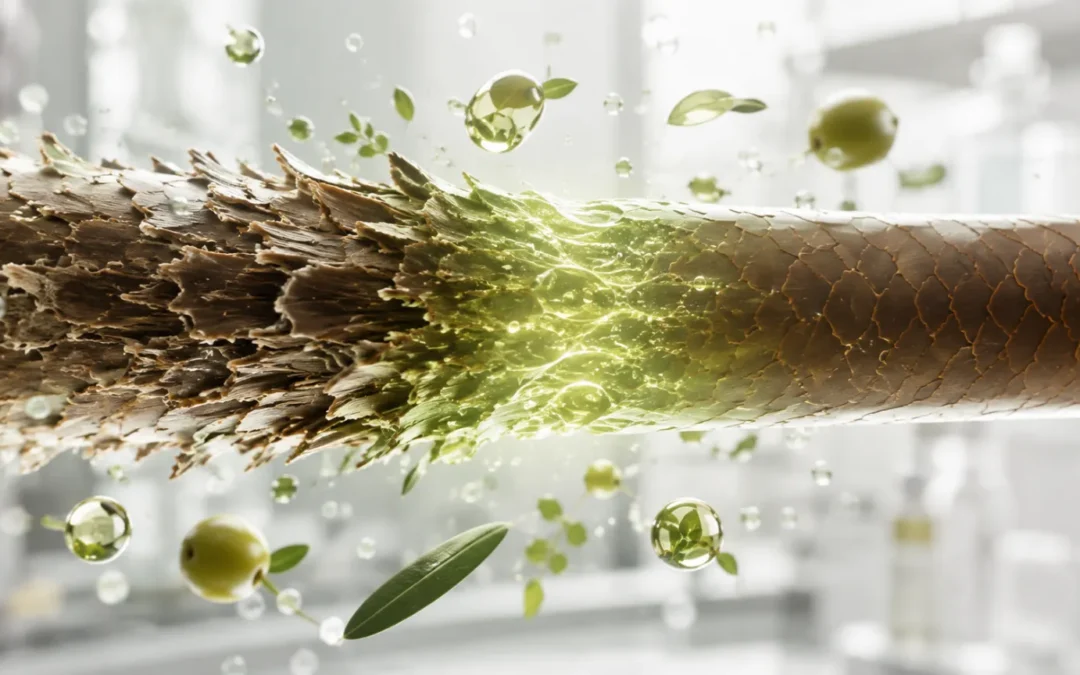
Healthy hair owes its smooth texture and shine to a well-aligned cuticle laydown and a naturally occurring lipid layer known as the 18-MEA (18-Methyleicosanoic acid) layer. This hydrophobic lipid barrier repels moisture from the environment, ensuring the cortex retains its internal hydration without swelling.
When hair undergoes chemical processing (bleaching, perms, or structural straightening), mechanical stress (aggressive brushing), or thermal styling over $180^\circ\text{C}$, this crucial 18-MEA lipid layer is completely stripped away.
According to a comprehensive study published in the International Journal of Trichology, when the cuticle scales are forced open or completely eroded by external stressors, the inner cortex becomes exposed. This structural vulnerability leads to a massive loss of internal proteins, resulting in porous, brittle strands that snap under minimal tension. This is precisely why finding a targeted, high-performance hair serum for damaged hair is essential to reconstruct this broken barrier.
The Silicone Myth: Why Temporary Shine Leads to Long-Term Distress
For decades, the commercial beauty market has relied heavily on synthetic silicones (such as Dimethicone, Cyclomethicone, and Amodimethicone) to deliver instant shine and slip. While these polymers excel at sealing the hair cuticle externally to mimic a healthy shine, they do not repair structural damage.
The Build-Up Cycle
Silicones act like a plastic wrap around the hair strand. Because many common silicones are non-soluble in water, they resist standard washing, leading to heavy build-up over time. This synthetic coating creates an impenetrable barrier that prevents genuine hydrating agents, amino acids, and essential micronutrients from reaching the cortex.
The Dehydration Trap
As the silicone layer thickens, it seals out environmental moisture while trapping internal dryness underneath. The hair becomes heavy, loses its natural bounce, and grows increasingly brittle. To break this destructive cycle, a shift toward a silicone free hair serum is necessary. By stripping away heavy synthetic coatings, you allow the hair fiber to breathe, accept hydration, and absorb genuine nutritive compounds that build long-term strength from the inside out.
Bridging Ancient Wisdom and Modern Trichology: The Rise of Ayurvedic Hair Care
While modern clean beauty emphasizes the omission of harmful synthetics, historical traditions have long understood how to preserve hair density and vitality through bio-active botanicals.
Integrating an ayurvedic hair serum into your ritual combines ancient botanical wisdom with contemporary green chemistry. Ayurveda views hair health as a reflection of internal balance (Doshas), specifically targeting excess heat or systemic stress that compromises the hair follicle.
Core Ayurvedic Bio-Actives for Hair Longevity
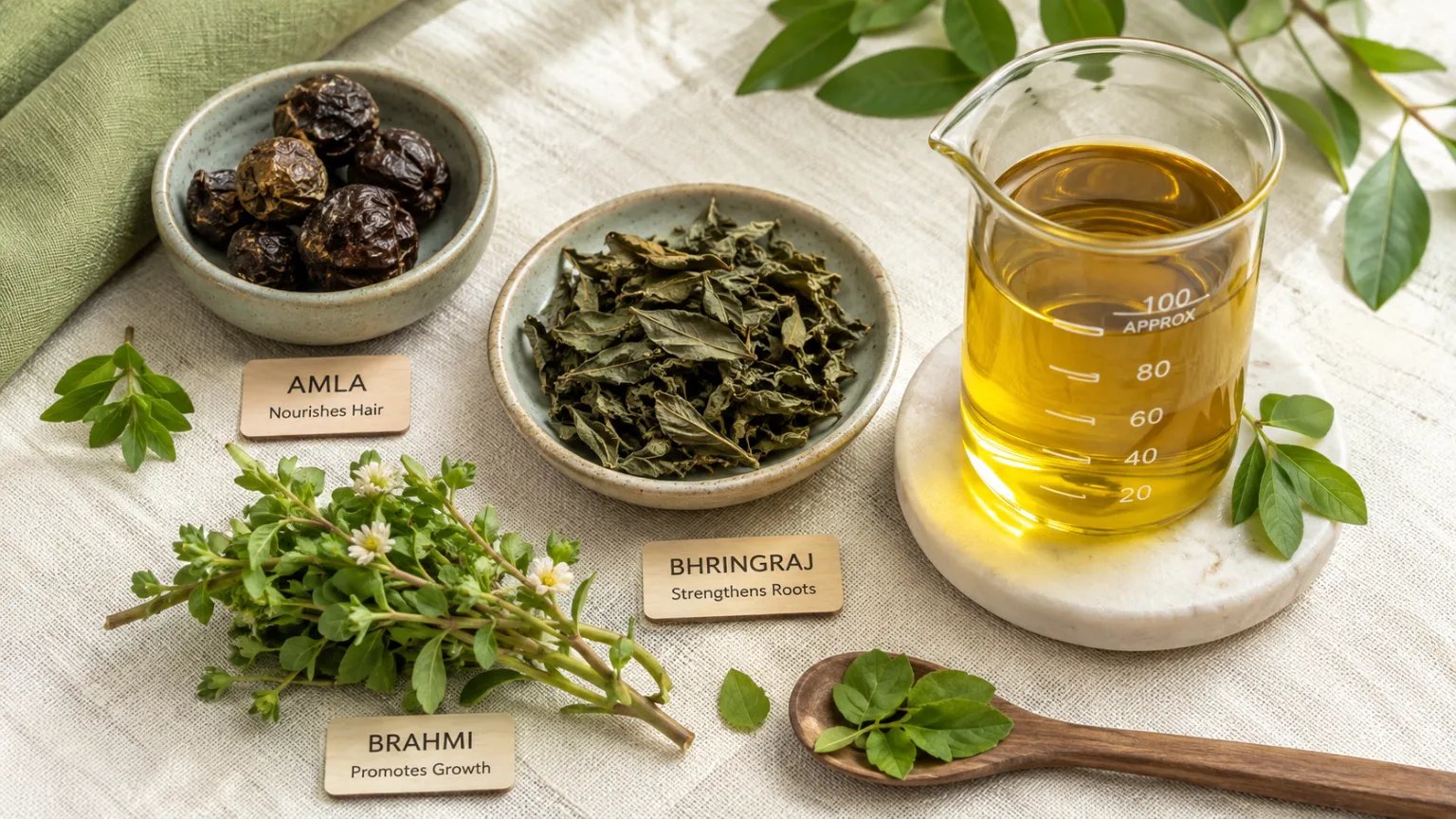
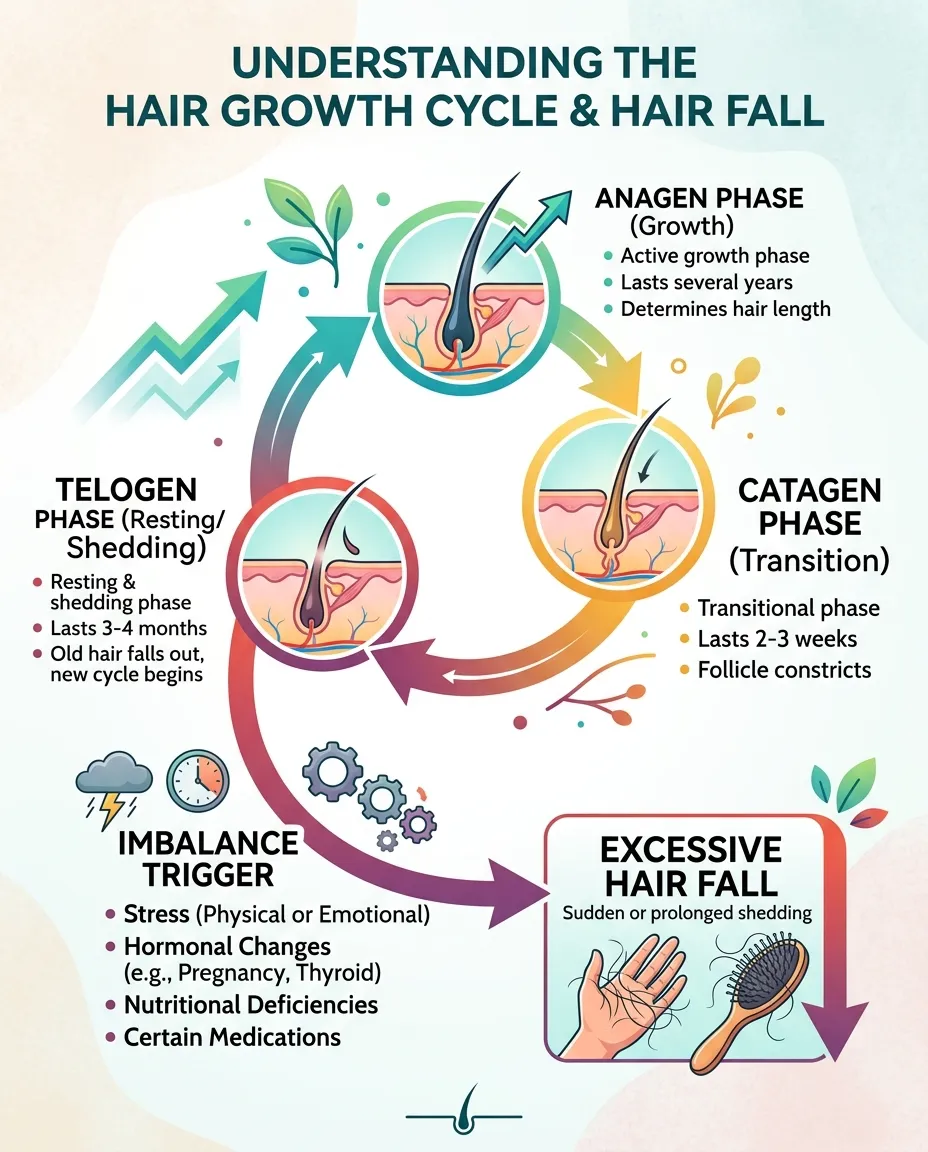
Bhringraj (Eclipta prostrata): Known culturally as the "King of Hair," scientific reviews in the Journal of Ethnopharmacology demonstrate that Bhringraj extracts significantly accelerate follicle transition from the resting (telogen) phase to the active growth (anagen) phase.
Amla (Phyllanthus emblica): An exceptional source of Vitamin C and powerful polyphenols, Amla serves as a potent antioxidant network. It neutralizes free radicals generated by UV radiation and pollution, protecting follicle cells from oxidative stress.
Brahmi (Bacopa monnieri): Extensively used to calm the nervous system, Brahmi forms a protective thermogenic layer around the hair follicles, reducing split ends and soothing micro-inflammation across the scalp.
By isolating these botanical extracts and delivering them in lightweight, fast-absorbing botanical oil bases, modern formulations help manage chronic thinning and support structural repair without leaving greasy residues.
Addressing True Hair Thinning: How to Combat Excessive Shedding
There is a distinct functional difference between breakage along the hair shaft and shedding directly from the root. True hair fall is typically triggered by hormonal fluctuations, nutritional deficiencies, or high environmental stress, which prematurely push hair follicles into the shedding phase.
When targeting shedding, an effective hair serum for hair fall must perform two critical functions:
Vasodilation: It must gently stimulate localized blood microcirculation around the dermal papilla, ensuring a steady delivery of oxygen and essential amino acids to the hair matrix.
DHT Modulation: It should incorporate natural blockers of Dihydrotestosterone (DHT)—the hormone primarily responsible for follicle miniaturization and progressive thinning.
Botanical compounds such as Rosemary oil, Pumpkin Seed extract, and Caffeine have shown remarkable efficacy in clinical trials, rivaling synthetic alternatives by extending the active growth phase of the hair follicle without causing scalp irritation or rebound shedding.
The Alchemy of DIY Clean Beauty: Crafting an Advanced Homemade Hair Serum
For those who prefer total control over their ingredient integrity, formulating a custom, bio-active treatment at home provides an incredibly pure, additive-free solution. A thoughtfully constructed homemade hair serum allows you to completely bypass synthetic preservatives, artificial fragrances, and fillers.
When designing a clean formulation specifically aimed at structural repair and follicle stimulation, your base oil selection is crucial.
The Optimal Botanical Carrier Base
Organic Jojoba Oil: Structurally mimicking human sebum, jojoba oil penetrates the hair cuticle deeply without leaving a heavy, suffocating layer on the scalp or strands.
Argan Oil: Rich in oleic and linoleic fatty acids, argan oil replenishes the vital lipid layer lost to heat styling and environmental exposure.
The Bio-Active Growth Accelerator
To transform a simple nourishing oil into a targeted homemade hair serum for hair growth, integrate specific botanical essential oils known for follicular stimulation:
$$\text{Growth Formula} = \text{Jojoba Base} + \text{Argan Base} + \text{Rosemary Oil Extract} + \text{Peppermint Essential Oil}$$
According to clinical evaluations published in Phytotherapy Research, topically applied Rosemary essential oil functions effectively to improve localized blood flow within the scalp. Peppermint oil provides a cooling sensory experience that further activates follicular vitality.
Step-by-Step Advanced Formulation Guide
Ingredients:
- 30 ml Pure Organic Jojoba Oil
- 20 ml Cold-Pressed Argan Oil
- 8 drops Premium Rosemary Essential Oil
- 5 drops Pure Peppermint Essential Oil
Instructions:
1. Sterilize a 50ml amber glass dropper bottle to preserve the delicate, light-sensitive botanical structures.
2. Pour in the Jojoba and Argan carrier oils using a small funnel.
3. Carefully add the exact drops of Rosemary and Peppermint essential oils.
4. Close the bottle tightly and roll it gently between your palms for 60 seconds to fully integrate the active molecules without creating excessive air bubbles.
Application: Apply 4–6 drops to clean, damp hair lengths for structural defense, or massage directly into the scalp two hours before washing to stimulate optimal root vitality.
Choosing Your Daily Ritual: A Comparative Analytical Overview
To help you choose the best approach for your specific hair goals, this table compares different serum strategies based on their primary benefits and ideal use cases:
| Serum Category | Primary Active Mechanism | Target Hair Concern | Best Suited For |
| Silicone-Free Repair Serum | Biomimetic lipids, plant ceramides, hydrolyzed proteins. | Porosity, cuticle erosion, structural snapping. | Daily heat protection and styling defense. |
| Ayurvedic Botanical Complex | Deeply infused adaptogenic herbs (Bhringraj, Amla, Brahmi). | Follicle weakness, premature graying, scalp inflammation. | Overnight scalp rejuvenation and holistic root care. |
| Targeted Anti-Hair Fall Solution | Natural DHT blockers, cellular vasodilators (Caffeine, Rosemary). | Premature shedding, telogen effluvium, thinning parts. | Focused daily scalp application for density enhancement. |
| Artisanal Homemade Blend | Cold-pressed pure botanical oils infused with targeted essential oils. | Dryness, minor breakage, lack of organic shine. | Customized, completely clean weekly deep-conditioning rituals. |
Final Thoughts: Designing a Holistic, Science-Driven Hair Care Ritual
True hair rehabilitation requires patience and a commitment to ingredient integrity. By replacing heavy synthetic silicones with biomimetic plant lipids, clean botanicals, and scientifically validated Ayurvedic extracts, you stop masking damage and begin actively repairing it.
Whether you choose a finely tuned clinical formula or craft a fresh, homemade blend, prioritizing the structural health of your hair cuticle and scalp ecosystem will reward you with lasting strength, brilliant natural shine, and optimal growth.
References & Scientific Literature
International Journal of Trichology (2015): The Anatomy of Hair Damage and the Role of Hydrophobic Lipid Barriers in Cuticle Preservation. A clinical examination of the 18-MEA lipid layer and the structural impact of chemical processing on the hair cortex.
Journal of Ethnopharmacology (2011): In Vivo Alteration of Hair Growth Phases via Eclipta Prostrata (Bhringraj) Botanical Extracts. A study demonstrating how traditional Ayurvedic herbs trigger the transition from the telogen to the anagen growth phase.
Phytotherapy Research (2013): Microvascular Vasodilation and Follicular Activation Properties of Topically Applied Rosmarinus Officinalis. Clinical research verifying the performance of rosemary essential oil in improving localized circulation and encouraging hair density.