

QUICK ANSWER
Genital and anal skin tags are small, soft, benign growths that can develop around the vagina, penis, scrotum, vulva, or anus. They are usually harmless and non-cancerous, but they can sometimes be confused with genital warts, hemorrhoids, or other skin conditions. A healthcare professional can help confirm the diagnosis and recommend treatment if necessary.
Table of Contents
What Are Genital and Anal Skin Tags?
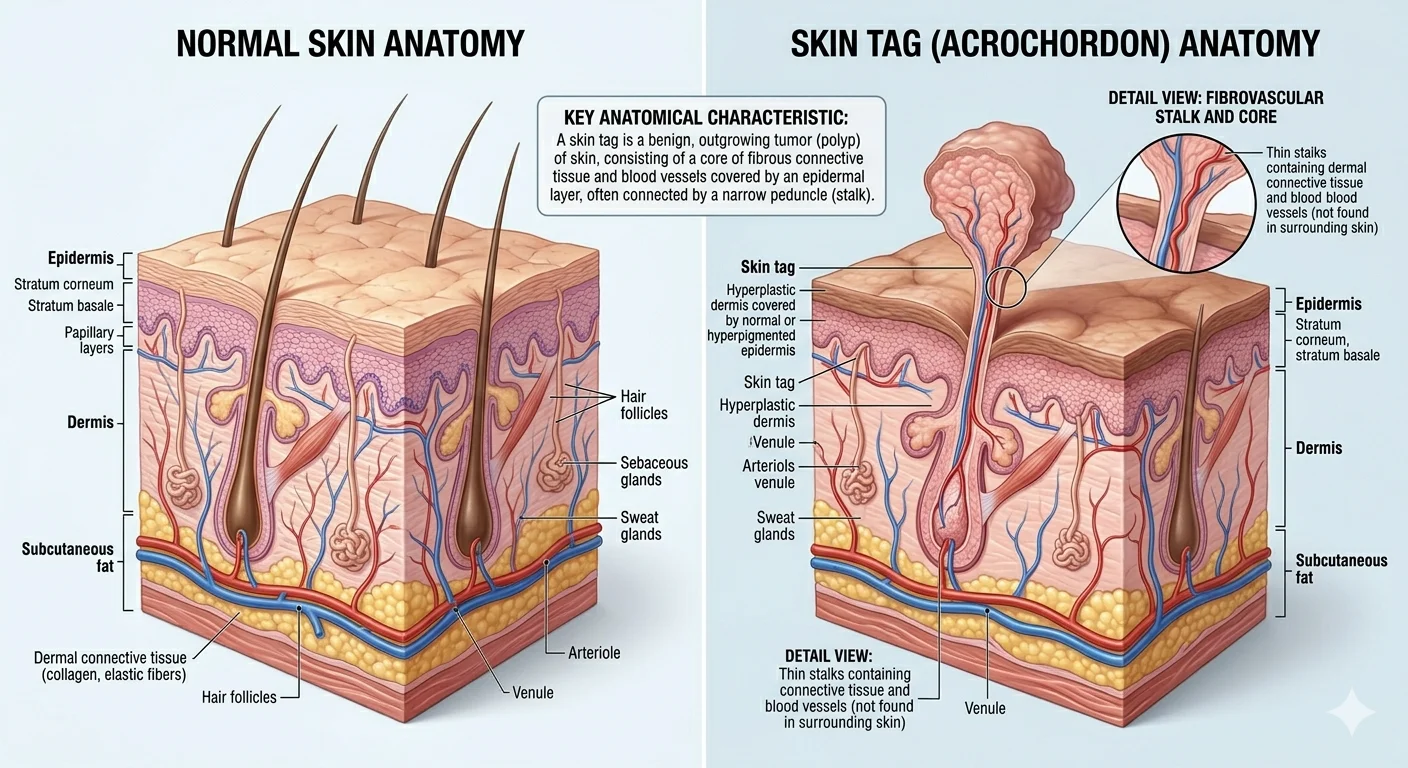
Skin tags are small, soft growths that hang from the skin by a thin stalk known as a peduncle. They are medically referred to as: “Acrochordons” Skin tags commonly develop in areas where skin experiences friction. Examples include:
- Neck
- Underarms
- Groin
- Inner thighs
- Genital region
- Around the anus
Most skin tags are:
- Benign
- Non-infectious
- Non-cancerous
- Painless
Although harmless in most cases, growths in intimate areas often cause anxiety because they may resemble sexually transmitted infections or other medical conditions.
Skin Tags on the Vagina and Vulvate
One of the highest-volume search topics is "skin tags on vagina" or "vaginal skin tags." In reality, skin tags are more commonly found on the:
- Vulva
- Labia
- Surrounding groin skin, rather than inside the vaginal canal itself.
What Do Vaginal Skin Tags Look Like?
They often appear as:
- Small flesh-colored growths
- Soft skin projections
- Smooth surface bumps
- Tiny hanging pieces of skin
They may be:
- Single
- Multiple
- Very small
- Several millimeters in size
Why Do They Occur?
Potential contributing factors include:
- Skin friction
- Hormonal changes
- Weight gain
- Pregnancy
- Genetics
Skin Tags on the Penis and Scrotum
Another common search query is:
- Skin tags on penis
- Skin tag on penis
Skin tags can occasionally develop on:
- Penile shaft
- Base of the penis
- Scrotum
- Groin folds
Are Penile Skin Tags Dangerous?
Most penile skin tags are benign. However, because genital warts may appear similar, professional evaluation is often recommended when:
- A growth is new
- Multiple growths develop
- The appearance changes
- There is uncertainty regarding diagnosis
Common Characteristics
Skin tags on the penis are often:
- Soft
- Skin-colored
- Smooth
- Mobile when touched
These characteristics may help distinguish them from other lesions, although self-diagnosis can be unreliable.
Anal Skin Tags
Search terms such as:
- Anal skin tags
- Skin tag on anus
- Skin tag anus, are also very common.
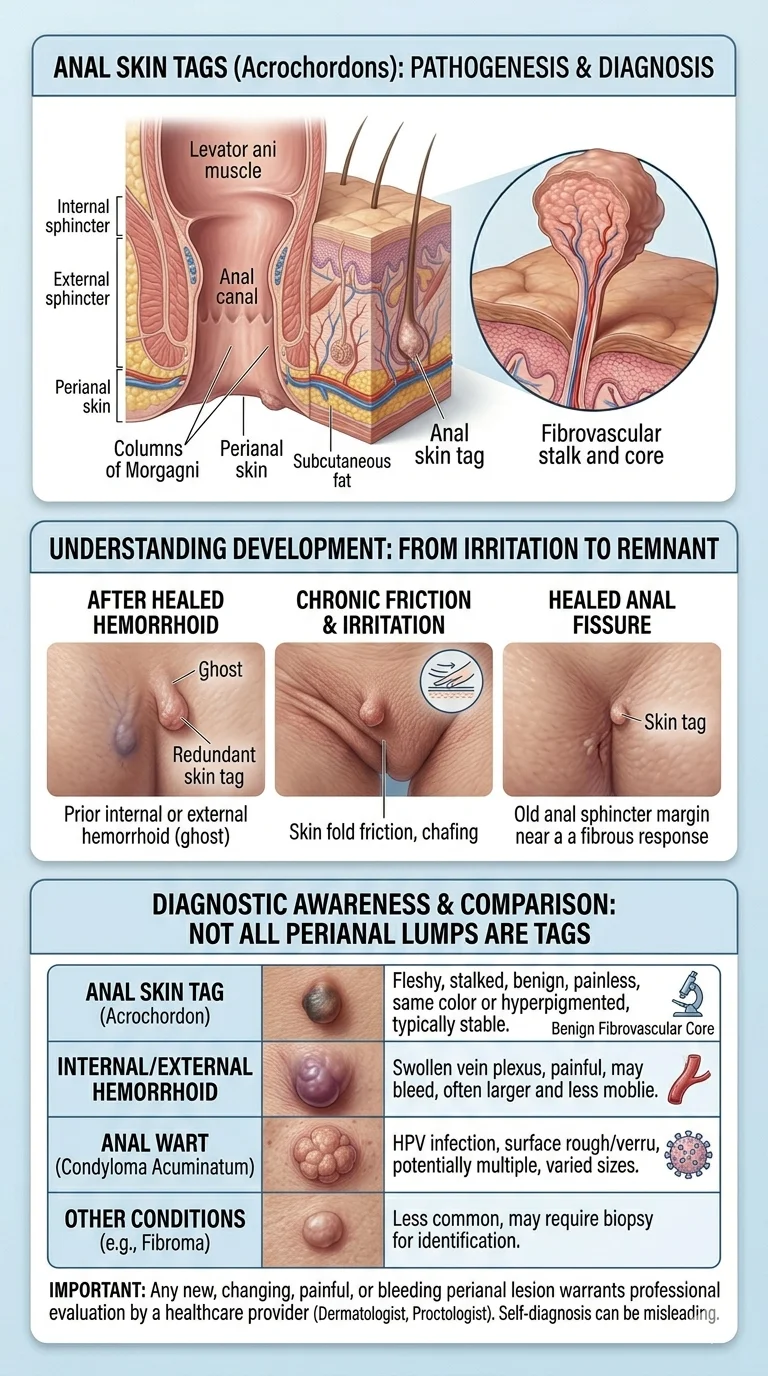
Anal skin tags are small folds of excess skin that develop around the anal opening. They are usually harmless but can sometimes cause discomfort.
Common Causes of Anal Skin Tags
Anal skin tags may develop after:
- Healed hemorrhoids
- Chronic constipation
- Repeated irritation
- Pregnancy
- Anal fissures
- Excess friction
SYMPTOMS
Many anal skin tags cause no symptoms. Others may lead to:
- Difficulty cleaning the area
- Mild irritation
- Hygiene concerns
- Cosmetic concerns
What Causes Genital and Anal Skin Tags?
The exact cause is not always known. However, several risk factors have been identified.
Friction
Skin rubbing against skin is considered one of the strongest contributing factors.
Examples include:
- Groin folds
- Tight clothing
- Obesity-related skin folds
Hormonal Influences
Hormonal changes may contribute to increased skin tag development.
This may explain why skin tags sometimes appear during:
- Pregnancy
- Hormonal fluctuations
Genetics
Some individuals appear more prone to developing skin tags than others.
Family history may play a role.
Metabolic Factors
Research has identified associations between skin tags and certain metabolic conditions.
However, having a skin tag does not automatically indicate an underlying health problem.
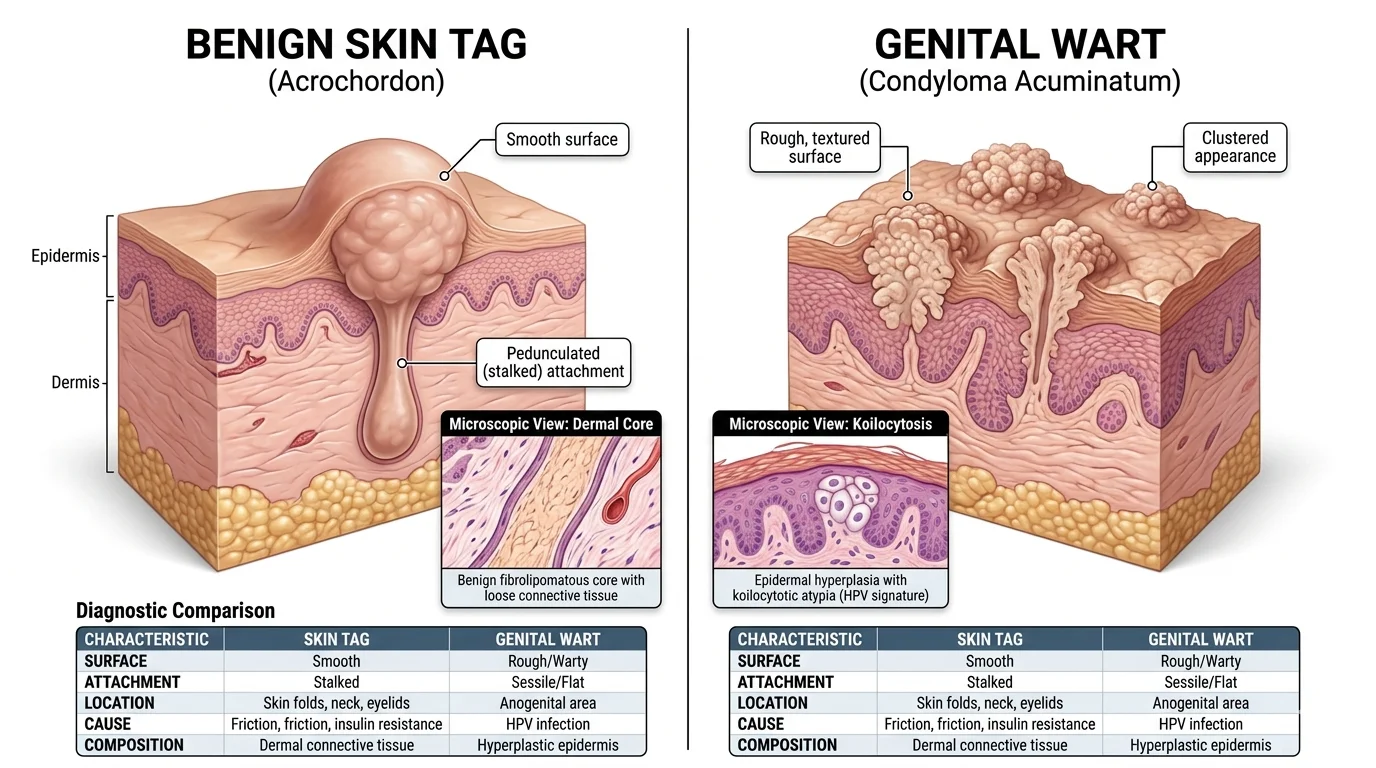
Skin Tags vs Genital Warts
One of the most important sections of this article involves differentiating skin tags from genital warts.
Skin Tags
Typical characteristics:
- Soft texture
- Smooth surface
- Skin-colored appearance
- Attached by a thin stalk
Genital Warts
Typical characteristics:
- Rough texture
- Cluster formation
- Cauliflower-like appearance
- Association with Human Papillomavirus (HPV)
Important Medical Point
Visual appearance alone is not always sufficient for diagnosis. Any uncertain genital growth should be evaluated by a qualified healthcare professional.
Symptoms of Genital and Anal Skin Tags
Most skin tags are asymptomatic. When symptoms occur, they may include:
- Irritation from clothing
- Friction discomfort
- Cosmetic concerns
- Hygiene challenges
- Occasional tenderness if twisted
Skin tags generally do not cause:
- Fever
- Significant pain
- Ulceration
- Systemic illness
The presence of these symptoms may suggest another condition and warrants medical evaluation.
How Doctors Diagnose Skin Tags
Diagnosis is often straightforward.
Medical History
A healthcare provider may ask about:
- Duration
- Growth pattern
- Symptoms
- Previous skin conditions
Physical Examination
Most skin tags can be identified through visual inspection.
Biopsy
In unusual cases, a biopsy may be recommended if:
- The lesion appears atypical
- Cancer is suspected
- The diagnosis remains uncertain
Treatment and Skin Tags Removal Options
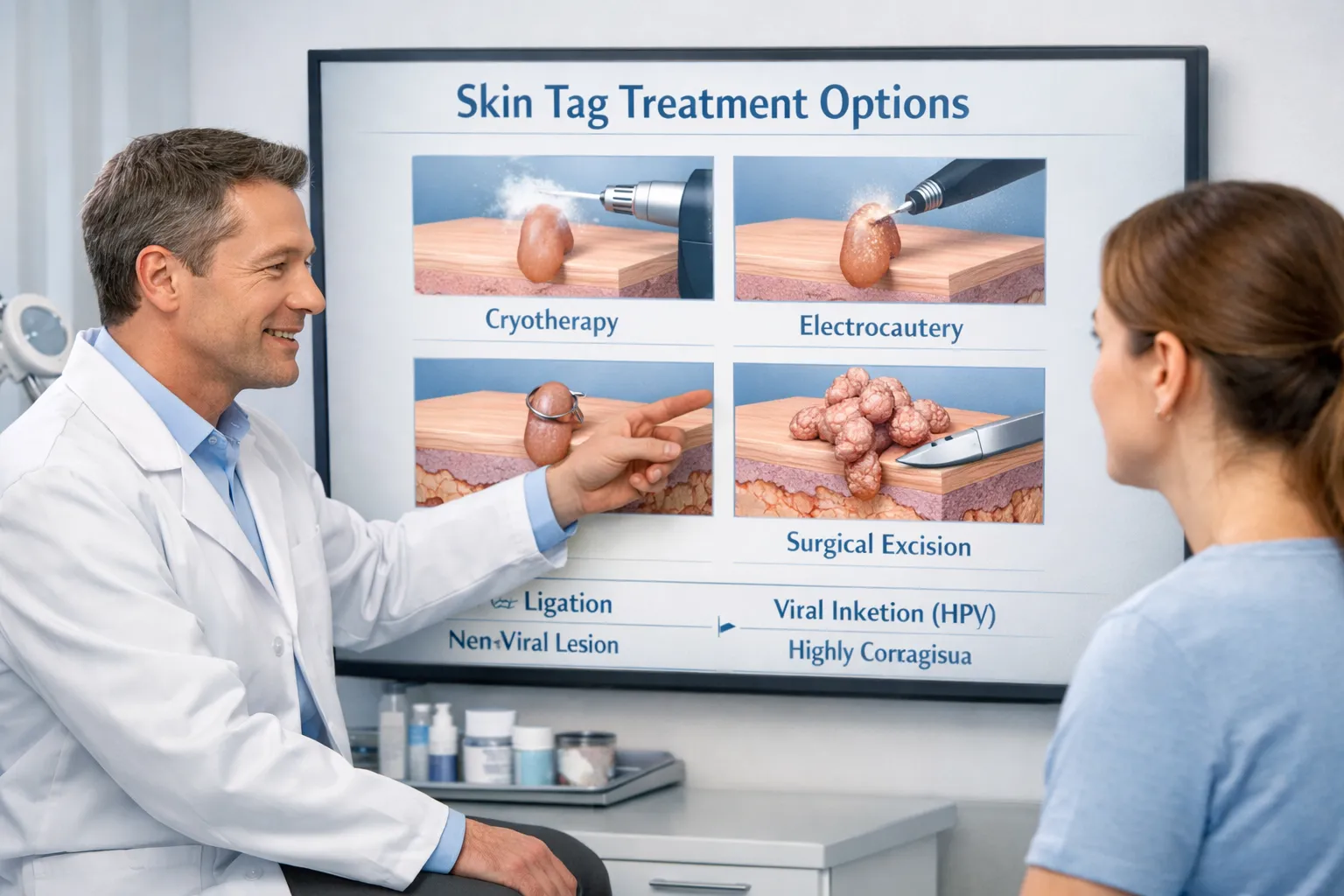
Most genital and anal skin tags do not require treatment. Removal is generally considered when:
- Symptoms occur
- Irritation develops
- Hygiene becomes difficult
- Cosmetic concerns arise
Professional Removal Methods
Common options include:
Cryotherapy: Freezing the skin tag.
Electrocautery: Removal using controlled heat.
Surgical Excision: Minor office-based removal.
Ligation: Cutting off blood supply to the tag.
Why Self-Removal Is Not Recommended?
Home removal methods may increase the risk of:
- Infection
- Bleeding
- Scarring
- Misdiagnosis
This is particularly important in genital and anal regions.
Can Genital and Anal Skin Tags Be Prevented?
It is not always possible to prevent skin tags entirely. However, certain lifestyle measures may help reduce contributing factors.
Reduce Friction
Because skin tags often develop in areas where skin rubs together, reducing friction may be beneficial. Examples include:
- Wearing breathable clothing
- Avoiding excessively tight underwear
- Managing skin chafing
- Maintaining proper hygiene
Maintain a Healthy Weight
Excess skin folds can increase friction and moisture retention.
Maintaining a healthy body weight may reduce some risk factors associated with skin tag formation.
Manage Constipation
For anal skin tags, preventing chronic constipation may help reduce irritation and straining. Helpful strategies include:
- Adequate fiber intake
- Hydration
- Regular physical activity
Monitor Skin Changes
Early evaluation of new growths may help distinguish harmless skin tags from other conditions.
Results and Recovery Expectations
Many people seek removal because of discomfort, hygiene concerns, or anxiety about the appearance of the growth.
If No Treatment Is Performed
Most skin tags:
- Remain stable
- Cause no health problems
- Do not become cancerous
After Professional Removal
Recovery is usually straightforward.
Many individuals experience:
- Mild tenderness
- Temporary redness
- Minor irritation, depending on the removal technique used.
Healing Timeline
Small skin tags often heal within:
- Several days
- One to two weeks, although recovery varies.
Side Effects and Safety Considerations
Removal procedures are generally considered low risk when performed by qualified healthcare professionals.
Possible Side Effects
Mild Pain: Temporary discomfort may occur after removal.
Bleeding: Minor bleeding is possible, particularly in highly vascular areas.
Infection: Rare but possible.
Scarring: Small scars may occasionally occur.
Recurrence: A removed skin tag usually does not grow back, but new skin tags can develop elsewhere.
When Should You See a Doctor?
Medical evaluation is recommended if a growth:
- Appears suddenly
- Changes rapidly
- Bleeds frequently
- Causes significant pain
- Has irregular coloring
- Develops ulceration
- Is difficult to identify
Prompt evaluation is particularly important for lesions in the genital region because several conditions can appear similar.
Comparison Table: Skin Tags vs Similar Conditions
| Condition | Appearance | Cause | Pain Level | Infectious | Medical Evaluation Recommended |
| Skin Tag | Soft, smooth, flesh-colored growth | Friction and other factors | Usually none | No | Sometimes |
| Genital Wart | Rough, cauliflower-like growth | HPV infection | Usually none | Yes | Yes |
| Hemorrhoid | Swollen blood vessel | Increased rectal pressure | Variable | No | Often |
| Anal Fissure | Small tear in tissue | Trauma or constipation | Often painful | No | Often |
| Mole | Pigmented skin growth | Melanocyte activity | Usually none | No | If changing |
| Skin Cancer Lesion | Variable appearance | Multiple factors | Variable | No | Always |
How to Remove Skin Tags? Decision Table
Concern | Recommended Action | Reason | Evidence Strength | Medical Review Needed |
Small Stable Skin Tag | Observation | Usually harmless | Grade A | Usually No |
Cosmetic Concern | Discuss removal options | Quality of life consideration | Grade B | Optional |
Bleeding Growth | Medical evaluation | Requires diagnosis | Grade A | Yes |
Painful Anal Lesion | Medical evaluation | May not be a skin tag | Grade A | Yes |
Suspected Genital Wart | Professional assessment | Different treatment needed | Grade A | Yes |
Rapidly Changing Growth | Prompt examination | Exclude other conditions | Grade A | Yes |
Clinical Insight Boxes
Clinical Perspective
Most genital & anal skin tags are benign & do not require treatment. However, professional diagnosis remains important because other conditions may resemble skin tags.
Patient Consideration
Many patients seek evaluation primarily for reassurance rather than because the skin tag is causing symptoms.
Dermatology Insight
The greatest clinical challenge is often distinguishing skin tags from genital warts, particularly in intimate areas where visual similarities can create confusion.
Consumer Takeaway
New growths in the genital or anal area should not automatically be assumed to be skin tags. Accurate diagnosis is more important than self-treatment.
Myth vs Reality About Skin Tags
| # | Myth | Reality | Practical Takeaway |
| 1 | Every Genital Growth Is a Sexually Transmitted Infection (STI) | Many genital growths are benign and unrelated to STIs. | Professional diagnosis is the best way to determine the cause. |
| 2 | Skin Tags Are Contagious | Skin tags are not contagious. | They cannot be transmitted through sexual contact or casual contact. |
| 3 | Skin Tags Always Need Removal | Most skin tags are medically harmless. | Removal is often optional unless symptoms occur. |
| 4 | Home Removal Is Safe for Genital Skin Tags | Home treatments can increase risks of bleeding, infection, and misdiagnosis. | Professional evaluation is usually the safest approach. |
| 5 | Anal Skin Tags Are Always Hemorrhoids | Anal skin tags and hemorrhoids are different conditions. | A medical examination may be needed for accurate identification. |
Frequently Asked Questions (FAQs)
Are skin tags on the vagina normal?
Skin tags can occur on the vulva and surrounding genital skin. They are generally benign but should be evaluated if the diagnosis is uncertain.
Are genital skin tags sexually transmitted?
No. Skin tags are not considered sexually transmitted infections.
Do anal skin tags go away on their own?
Many remain stable and do not disappear spontaneously.
Are skin tags cancerous?
Many remain stable and do not disappear spontaneously.
Can skin tags come back after removal?
A removed skin tag usually does not regrow, but new skin tags may develop elsewhere.
Can skin tags develop on the penis?
Yes. Skin tags may occasionally appear on the penile shaft, scrotum, or nearby groin skin.
How can I tell if a growth is a skin tag or a wart?
Skin tags are usually soft and smooth, while genital warts often have a rough or cauliflower-like appearance. Professional diagnosis is recommended.
Can pregnancy cause skin tags?
Hormonal changes and increased skin friction during pregnancy may contribute to skin tag development.
Is removal painful?
Removal methods vary, but discomfort is generally mild and temporary when performed by a healthcare professional.
When should I seek medical attention?
Seek medical evaluation if a lesion changes appearance, bleeds, becomes painful, or if the diagnosis is uncertain.
Conclusion
Genital and anal skin tags are common benign skin growths that can develop around the vulva, penis, scrotum, groin, or anus. Although they are usually harmless, they often cause concern because they may resemble genital warts, hemorrhoids, or other medical conditions.
Most skin tags do not require treatment unless they cause symptoms, hygiene challenges, or cosmetic concerns. Because lesions in intimate areas can be difficult to identify accurately, professional evaluation is often the safest approach when uncertainty exists. Understanding the differences between skin tags and other conditions can help individuals make informed decisions about monitoring, treatment, and when to seek medical care.
Explore the Lunaria Organics for evidence-based educational content covering skin health, common skin conditions, dermatology topics, skincare science, and medically reviewed wellness information.
Medical Disclaimer
This article is for educational and informational purposes only and is not intended to diagnose, treat, cure, or prevent any disease. Consult a qualified healthcare professional for personalized medical advice.
References
- American Academy of Dermatology (AAD)
- National Institutes of Health (NIH)
- PubMed Database
- Journal of the American Academy of Dermatology (JAAD)
- JAMA Dermatology
- British Journal of Dermatology
- Cochrane Library
- American Society of Colon and Rectal Surgeons (ASCRS)
- International Journal of Dermatology
- Dermatologic Surgery