
Dry Skin Treatment: 15 Expert Tips for Lasting Relief
By Dr. Aamir
Herbal Physician | MPhil in Phytomedicine (Gold Medal)
Bachelor of Eastern Medicine & Surgery (Silver Medal)
Former Faculty, The Islamia University of Bahawalpur & Kohat University of Science & Technology (KUST)
Reviewed using peer-reviewed scientific research, dermatology guidelines, and evidence from reputable medical organizations.
Why Trust This Article?
Dry skin is one of the most common skin concerns worldwide, affecting people of all ages. This article has been prepared by Dr. Aamir Raza, a qualified herbal physician and former university faculty member, using evidence from peer-reviewed dermatology journals, clinical guidelines, and authoritative organizations. The recommendations focus on restoring the skin barrier, improving hydration, and helping you make informed decisions about managing dry skin safely.
Quick Answer
Dry skin treatment focuses on restoring the skin's protective barrier, reducing water loss, and relieving symptoms such as tightness, flaking, itching, and roughness. Most cases improve with gentle cleansing, regular use of barrier-supporting moisturizers containing ingredients like ceramides and glycerin, avoiding excessive hot water exposure, and identifying underlying causes. Persistent, painful, or severely inflamed dry skin should be evaluated by a healthcare professional.
Table of Contents
Dry Skin Isn't Just a Winter Problem
Have you ever wondered:
- Why is my skin so dry even after applying moisturizer?
- Why do I develop dry patches on skin that refuse to disappear?
- Why does my face feel tight after washing?
- Why does my skin become flaky, rough, or itchy despite drinking enough water?
You're not alone.
Dry skin is one of the most frequent reasons people seek dermatological advice. While cold weather often receives the blame, many cases are linked to everyday habits, environmental exposure, aging, genetics, certain medical conditions, and inappropriate skincare routines.
The encouraging news is that most dry skin can be improved by understanding why it occurs and choosing treatments that repair the skin barrier rather than simply masking symptoms.
In this evidence-based guide, you'll learn:
- What causes dry skin
- The difference between dry skin and dehydrated skin
- Why dry and patchy skin develops
- How to recognize early warning signs
- Scientifically supported treatment strategies
- Lifestyle habits that help prevent future dryness
- When it's time to seek medical advice
What Is Dry Skin?
Dry skin, medically known as xerosis cutis, occurs when the outermost layer of the skin (the stratum corneum) does not contain enough water and protective lipids to function effectively.
Healthy skin acts as a barrier that:
- Prevents excessive water loss
- Protects against bacteria and environmental irritants
- Maintains flexibility and smooth texture
- Supports normal skin renewal
When this barrier becomes damaged, moisture escapes more easily through a process called transepidermal water loss (TEWL). As water content decreases, the skin may become rough, flaky, tight, or itchy.
Instead of functioning like a well-sealed brick wall, dry skin behaves more like a wall with missing mortar—allowing moisture to escape and irritants to enter.
The Science of Skin Barrier Health
According to foundational research published in the Journal of Investigative Dermatology—including the pioneering work of leading skin barrier scientist Dr. Peter M. Elias—chronic dryness is deeply linked to barrier dysfunction. When the skin’s natural lipid barrier is compromised, Transepidermal Water Loss (TEWL) increases exponentially. This critical moisture evaporation leaves the skin vulnerable to irritation, inflammation, and heightened sensitivity.
The Takeaway for Your Routine:
Effective care for dry skin goes beyond surface-level hydration; it requires active barrier repair. To truly resolve dryness, we must restore the skin’s protective seal so it can lock in and retain vital moisture on its own.
What Causes Dry Skin?
There isn't a single cause. In most people, several factors work together to reduce the skin's natural moisture and protective oils.
1. Environmental Conditions
Cold temperatures, low humidity, indoor heating, and frequent air conditioning can all increase water loss from the skin.
People living in colder climates often notice worsening symptoms during autumn and winter when indoor heating further reduces humidity.
2. Aging
As we age, the skin naturally produces fewer lipids and moisturizing factors.
Collagen, ceramides, and natural oils gradually decline, making older adults more susceptible to dry, rough skin.
According to the American Academy of Dermatology, dry skin becomes increasingly common with advancing age because the skin's barrier function changes over time.
What This Means for You
If you're over 50, increased dryness may reflect normal age-related changes rather than poor skincare alone.
3. Frequent Washing
While good hygiene is important, excessive washing can strip away protective oils.
Common contributors include:
- Hot showers
- Long baths
- Harsh soaps
- Alcohol-based cleansers
- Over-cleansing the face
These habits can leave the skin feeling tight soon after washing.
4. Low Indoor Humidity
Modern homes and offices often have low humidity due to central heating or air conditioning.
Dry indoor air continuously draws moisture from the skin, especially during winter.
5. Medical Conditions
Sometimes dry skin reflects an underlying health condition.
Examples include:
- Atopic dermatitis (eczema)
- Psoriasis
- Diabetes
- Hypothyroidism
- Chronic kidney disease
- Certain nutritional deficiencies
Not everyone with dry skin has one of these conditions, but persistent or severe symptoms may warrant medical evaluation.
6. Certain Medications
Some medications may contribute to dryness, including:
- Retinoids
- Diuretics
- Certain acne treatments
- Some cholesterol-lowering medications
Never discontinue prescribed medication without discussing concerns with your healthcare provider.
7. Genetics
Some individuals naturally produce fewer skin lipids or have inherited differences in skin barrier proteins, making them more susceptible to dryness throughout life.
Why Is My Skin So Dry Even After Moisturizing?
This is one of the most common questions dermatologists hear. The answer is that moisture alone isn't enough if the skin barrier remains damaged.
Think of trying to fill a bucket with water while it has holes in the bottom. Unless those holes are repaired, the water continues to leak out. The same principle applies to your skin.
A moisturizer can temporarily increase hydration, but if the barrier isn't restored—or if harsh cleansing, hot water, or environmental factors continue to damage it—the dryness quickly returns.
This is why effective dry skin treatment focuses on both:
- Replenishing moisture
- Repairing the skin barrier
A Word from the Expert
During my years teaching phytomedicine and evidence-based healthcare, I found that many people believed any moisturizer would solve dry skin. In reality, lasting improvement usually depends on restoring the skin barrier while addressing the habits or environmental factors that caused the dryness in the first place. Simply applying more product without correcting those underlying issues often leads to frustration rather than healthier skin.
— Dr. Aamir Raza
Dry Skin vs. Dehydrated Skin: What's the Difference?
Many people use these terms interchangeably, but they describe different conditions.
| Dry Skin | Dehydrated Skin |
| A skin type | A temporary skin condition |
| Lacks natural oils (lipids) | Lacks water |
| Often lifelong or chronic | Usually temporary |
| May feel rough, flaky, or scaly | May feel tight, dull, or less elastic |
| Benefits from lipid-rich moisturizers | Benefits from improved hydration and barrier support |
A person with oily skin can still have dehydrated skin, while someone with naturally dry skin may also become dehydrated.
Understanding the difference helps you choose appropriate skincare strategies rather than treating every type of dryness the same way.
Why Your Moisturizer Might Not Be Working
According to the International Journal of Cosmetic Science, successful skin hydration relies on a two-step system: maintaining water levels inside the skin and protecting it with a healthy lipid barrier. Science shows that humectants (ingredients that pull water into the skin) and lipids (which seal the barrier) must work together as a team rather than acting as substitutes for one another.
Why It Matters for Your Skin:
Feeling tight even after applying lotion is a clear sign of an incomplete routine. It means you don't just need more moisture—you need a product that delivers both water-binding hydration and barrier-repairing lipids to fix the root cause of the dehydration.
Early Signs Your Skin Barrier May Be Compromised
The skin often gives early warning signs before severe dryness develops.
Watch for:
- Tightness after cleansing
- Mild flaking
- Rough texture
- Increased sensitivity
- Dry patches on skin
- Dry patches on face
- Mild itching
- Ashy appearance
- Skin that stings when applying skincare products
Recognizing these early signs allows you to adjust your routine before dryness progresses.
How to Recognize Dry Skin
Dry skin doesn't look the same for everyone.
Some people experience only mild tightness after washing their face, while others develop persistent dry and patchy skin, noticeable flaking, or even painful cracks that interfere with daily activities.
Understanding the symptoms can help you identify the problem early and choose the most appropriate dry skin treatment before the skin barrier becomes severely compromised.
Common Symptoms of Dry Skin
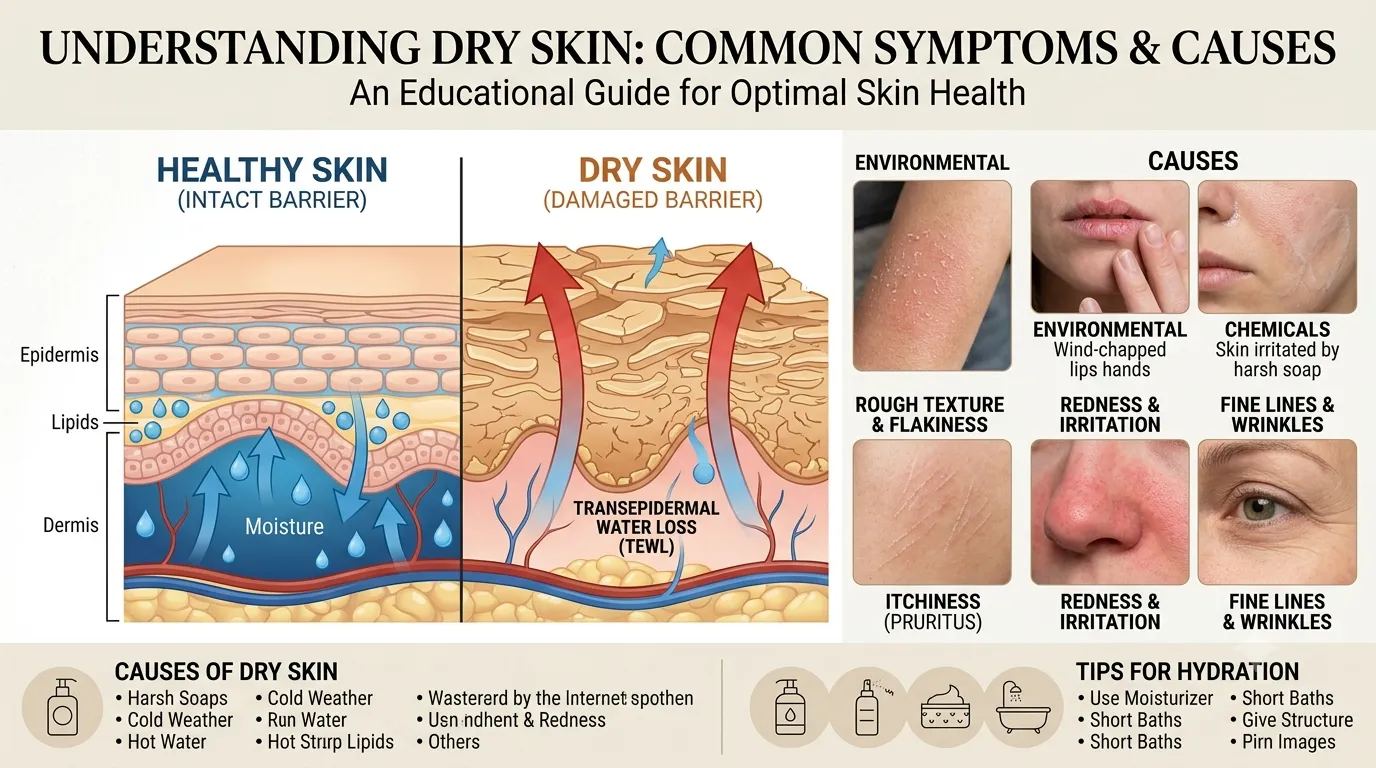
The severity of symptoms depends on your age, environment, skincare routine, and overall health.
Common signs include:
- Skin that feels tight, especially after bathing
- Rough or uneven texture
- Flaking or peeling
- Fine white scales
- Itching
- Dull appearance
- Ashy-looking skin
- Visible dry patches on skin
- Small spots of dry skin
- Mild redness
- Increased sensitivity to skincare products
These symptoms often worsen during cold weather, after long hot showers, or in environments with low humidity.
Understanding the Early Signs of Barrier Damage
Research from the British Journal of Dermatology shows that dry skin doesn't just happen overnight—it develops gradually as your skin's protective shield loses its ability to hold onto water. In fact, even slight barrier damage can cause your skin to feel tight, flaky, and irritated well before you ever see actual cracks or severe flaking.
Why It Matters for Your Skin: If your skin feels tight or stripped right after washing your face, don't ignore it. This "tight feeling" isn't a sign of deep cleaning; it is actually one of the earliest alarms your skin sets off to tell you that its barrier is leaking moisture and needs targeted support.
Dry and Patchy Skin: Why Does It Happen?
One of the most searched concerns is dry and patchy skin.
Instead of affecting the entire body evenly, dry skin often develops in localized areas because different parts of the body experience varying amounts of friction, environmental exposure, and natural oil production. Common locations include:
- Face
- Hands
- Elbows
- Knees
- Lower legs
- Feet
Patchy dryness usually develops when moisture escapes faster than the skin can replace it. Contributing factors include:
- Frequent washing
- Cold weather
- Indoor heating
- Aging
- Harsh skincare products
- Repeated friction from clothing
Dry Patches on Skin
Finding isolated dry patches on skin can be frustrating.
These areas often feel:
- Rough
- Slightly raised
- Flaky
- Less flexible than surrounding skin
While uncomplicated dry skin is a common cause, localized dry patches may also occur with conditions such as eczema, psoriasis, fungal infections, or contact dermatitis.
For this reason, patches that continue to enlarge, become painful, bleed, or fail to improve with appropriate skincare should be evaluated by a healthcare professional rather than self-treated indefinitely.
Spot of Dry Skin vs. Dry Patches
Although these phrases are often used interchangeably, they may describe slightly different presentations.
| Spot of Dry Skin | Dry Patches on Skin |
| Usually small and isolated | Often larger or multiple areas |
| May result from temporary irritation | Often reflects ongoing barrier dysfunction |
| Frequently resolves with improved skincare | May require investigation if persistent |
The distinction isn't diagnostic, but it can help describe your symptoms more accurately.
Why Does Dry Skin Itch?
One of the most uncomfortable symptoms is dry itchy skin. Healthy skin contains enough moisture and lipids to protect nerve endings from irritation. When the barrier weakens:
- Water escapes more easily.
- Microscopic cracks develop.
- Irritants penetrate more readily.
- Nerve endings become more sensitive.
This combination often produces itching. Unfortunately, scratching can further damage the skin barrier, creating an itch–scratch cycle that becomes increasingly difficult to break.
The Science Behind Itchy, Dry Skin
Studies from the Journal of the American Academy of Dermatology show that an itchy sensation is directly connected to a damaged skin barrier. When your barrier is weak, moisture evaporates quickly, leaving microscopic gaps. This allows daily environmental irritants to slip inside your skin and irritate the tiny nerve endings beneath the surface, signaling your brain to scratch.
Why It Matters for Your Skin:
If you are constantly dealing with itchy skin, using temporary cooling lotions is just a short-term fix. Lasting relief happens when you address the root cause: repairing and reinforcing the skin barrier so it can lock out irritants and keep the nervous system calm.
What Is Scaly Skin?
Scaly skin refers to visible flakes that separate from the skin's surface. This occurs because dead skin cells accumulate and are shed unevenly. Scaly skin may develop due to:
- Dry skin
- Aging
- Eczema
- Psoriasis
- Certain fungal infections
- Excessive sun exposure
Dry skin is among the most common causes, but persistent or widespread scaling deserves medical evaluation to rule out other skin conditions.
Why Does Skin Peeling Occur?
Many people become concerned when they notice skin peeling. Peeling happens when damaged surface cells detach as new skin forms underneath. Common causes include:
- Very dry skin
- Sunburn
- Overuse of exfoliating products
- Retinoids
- Chemical peels
- Allergic reactions
Small amounts of peeling can occur as the skin recovers from irritation, but extensive peeling accompanied by pain, blisters, or fever requires prompt medical assessment.
Ashy Skin: A Sign of Severe Dryness
Ashy skin appears grayish or whitish because dry, dead skin cells accumulate on the surface. It is particularly noticeable in individuals with medium to deeper skin tones but can affect all skin types.
Ashiness often indicates that the skin barrier needs improved hydration and gentle exfoliation where appropriate. Regular use of barrier-supporting moisturizers can help reduce this appearance over time.
Can Dry Skin Become Painful?
Yes. When dryness progresses, the skin may develop:
- Small cracks (fissures)
- Burning
- Tenderness
- Bleeding
- Increased sensitivity
These symptoms occur because the protective barrier has become significantly compromised. Painful cracks, especially on the hands or feet, increase the risk of secondary bacterial infection and should not be ignored.
Is It Dry Skin or Something Else?
Dry skin shares symptoms with several other skin conditions. Understanding the differences can help you decide when professional evaluation is appropriate.
Condition | Typical Features |
Dry skin (Xerosis) | Tightness, flaking, mild itching, rough texture |
Atopic dermatitis (Eczema) | Intense itching, inflamed skin, recurring flare-ups |
Psoriasis | Thick, well-defined plaques with silvery scales |
Contact dermatitis | Rash following exposure to an irritant or allergen |
Fungal infection | Ring-shaped or spreading patches with active borders |
While these conditions may appear similar, they require different treatment approaches.
Dermatologists generally recommend avoiding self-diagnosis when dry skin is persistent, widespread, or associated with significant redness, pain, bleeding, or recurrent infections. A proper evaluation can help distinguish uncomplicated dry skin from inflammatory or infectious skin diseases that require specific treatment.
When Should You See a Healthcare Professional?
Many cases of dry skin improve with appropriate skincare and lifestyle changes. However, seek medical advice if you experience:
- Severe itching that disrupts sleep
- Cracked skin that bleeds frequently
- Signs of infection (pus, warmth, increasing redness)
- Extensive skin peeling
- Large areas of inflamed skin
- Dryness that persists despite several weeks of appropriate care
- Sudden onset of severe dryness without an obvious cause
- Associated symptoms such as unexplained weight changes, fatigue, or excessive thirst
These features may indicate an underlying medical condition that requires further assessment.
Expert Perspective
One of the most common misconceptions I encounter is that persistent dry skin is always a cosmetic issue. In reality, chronic dryness can sometimes be the skin's way of signaling an underlying medical condition or an impaired skin barrier that needs proper attention. Addressing the cause—not just the symptoms—often leads to better long-term outcomes.
— Dr. Aamir Raza
Can Dry Skin Affect Your Quality of Life?
Absolutely. Persistent dryness may:
- Disturb sleep because of itching
- Cause discomfort during everyday activities
- Reduce confidence due to visible flaking
- Make makeup or shaving more difficult
- Increase sensitivity to environmental irritants
Although dry skin is often viewed as a minor concern, moderate to severe cases can have a meaningful impact on daily life, emphasizing the importance of early and consistent care.
What Is the Best Dry Skin Treatment?
There isn't a single solution that works for everyone. The most effective dry skin treatment combines several evidence-based strategies that restore the skin barrier, reduce transepidermal water loss (TEWL), and help the skin retain moisture over time.
Rather than simply adding moisture to the surface, successful treatment focuses on repairing the skin's natural protective barrier. For most people, this includes:
- Using gentle cleansers
- Applying moisturizer correctly
- Protecting the skin barrier
- Avoiding excessive heat and harsh products
- Managing environmental triggers
- Addressing any underlying medical conditions when present
The Scientific Secret to Overcoming Chronic Dryness
Decades of research in the Journal of Investigative Dermatology by Dr. Peter M. Elias and his team confirm that fixing a damaged skin barrier is the single most effective way to heal chronically dry skin. When you actively repair this shield, you drop your skin's moisture loss, boost its natural hydration levels, and calm down internal irritation and redness before it flares up.
Why It Matters for Your Skin:
Truly healthy skin isn't just about applying a heavy cream to make it look moisturized. It means having a functional, strong biological shield that keeps moisture locked deep inside on its own, while successfully blocking out the daily environmental irritants that cause damage.
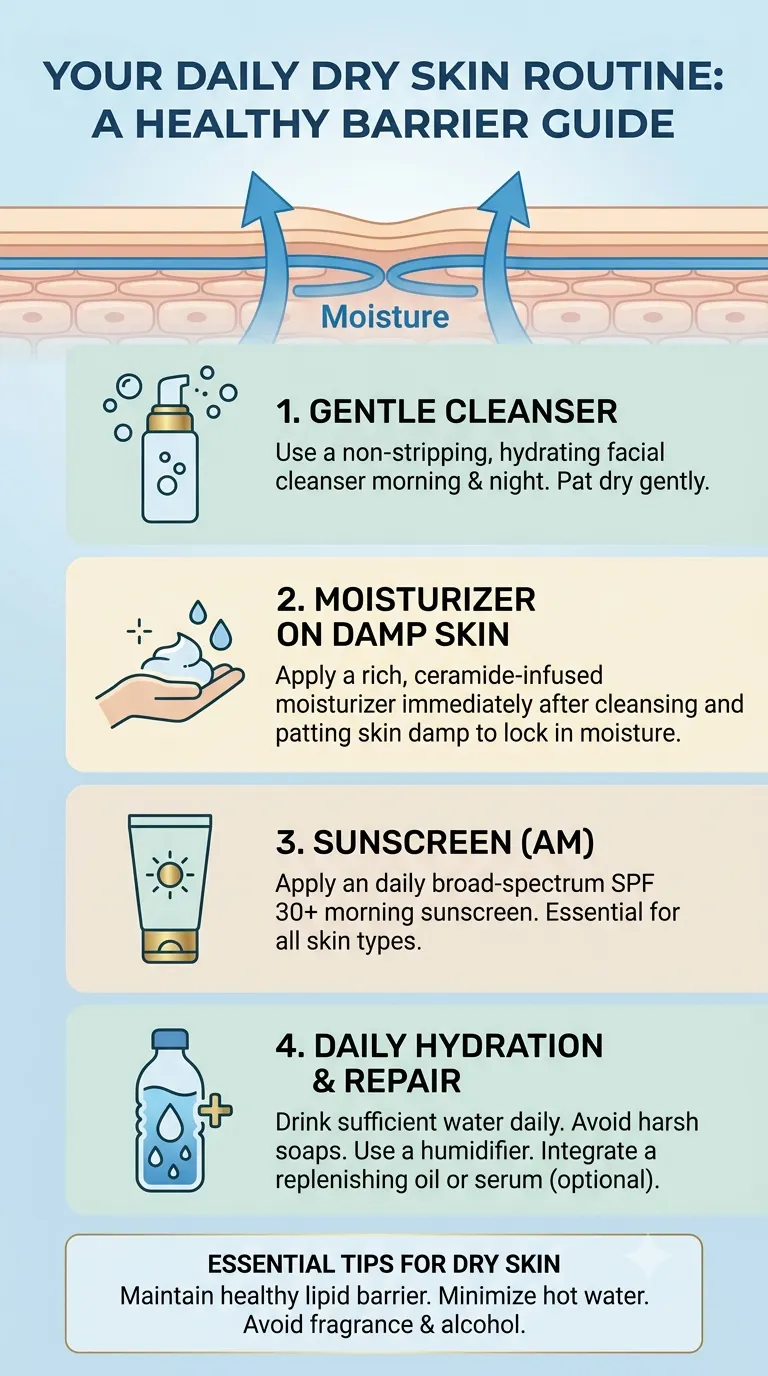
Step 1: Choose a Gentle Cleanser
Many people unknowingly worsen dry skin during cleansing.
Traditional soaps often have an alkaline pH and may remove protective lipids from the skin's surface.
Instead, look for gentle cleansers that:
- Have a skin-friendly pH
- Clean without stripping natural oils
- Are fragrance-free if you have sensitive skin
- Contain moisturizing ingredients where possible
Avoid cleansing more often than necessary, especially if your skin already feels tight after washing.
Step 2: Moisturize While Skin Is Slightly Damp
One of the simplest yet most effective techniques is applying moisturizer soon after bathing. Dermatologists often recommend moisturizing within a few minutes of gently patting the skin dry.
This helps trap existing moisture inside the skin while reinforcing the barrier. Instead of rubbing the skin vigorously with a towel:
- Pat dry gently.
- Leave the skin slightly damp.
- Apply moisturizer promptly.
This simple habit can significantly improve long-term skin hydration.
According to the American Academy of Dermatology, the best time to apply moisturizer is immediately after bathing, while your skin is still slightly damp. This helps lock in hydration, strengthens the skin barrier, and reduces moisture loss.
What This Means for You
Choosing the right moisturizer is important—but using it at the right time can make an even bigger difference. Applying your moisturizer to damp skin helps maximize hydration, keeping your skin softer, smoother, and healthier for longer.
Step 3: Understand the Ingredients That Support Dry Skin
Rather than choosing products based on marketing claims, focus on ingredients supported by scientific evidence.
Ceramides
Ceramides are naturally occurring lipids that help hold skin cells together. They strengthen the skin barrier and reduce moisture loss.
As ceramide levels decline with age and environmental damage, replenishing them through skincare may improve skin hydration.
Glycerin
Glycerin is one of the most widely studied humectants.
It attracts water into the outer layer of the skin, improving hydration and helping maintain skin flexibility. Research consistently supports glycerin as an effective ingredient for improving dry skin.
Hyaluronic Acid
Hyaluronic acid binds water within the skin and contributes to hydration. While it cannot repair the skin barrier on its own, it works well alongside barrier-supporting ingredients such as ceramides.
Urea
At lower concentrations, urea functions as both a humectant and a moisturizer. It can be especially helpful for rough, thickened, or scaly skin, including dry skin on the elbows, knees, and feet.
Petrolatum
Petrolatum is one of the most effective occlusive ingredients available. It creates a protective layer over the skin that significantly reduces water loss.
Despite common misconceptions, high-quality petrolatum has a long history of safe use in dermatology.
Scientific evidence suggests that the most effective moisturizers are those formulated with a combination of humectants, emollients, and occlusive agents rather than relying on a single type of ingredient. According to a systematic review published in the Cochrane Database of Systematic Reviews, these multi-ingredient formulations help improve skin hydration, strengthen the skin barrier, and reduce moisture loss, making them particularly beneficial for people with dry skin.
In practical terms, this means that when choosing a moisturizer, it's worth looking beyond marketing claims and checking the ingredient list. Humectants such as glycerin attract water to the skin, emollients help smooth and soften rough patches, and occlusive ingredients create a protective layer that locks in moisture. Together, these ingredients work synergistically to keep your skin hydrated, comfortable, and resilient throughout the day.
Step 4: Avoid Long, Hot Showers
Hot water may feel relaxing, but it also removes natural oils from the skin more quickly. For healthier skin:
- Keep showers brief (around 5–10 minutes).
- Use warm—not hot—water.
- Avoid excessive scrubbing.
- Pat skin dry rather than rubbing.
These simple habits help preserve the skin's natural barrier.
Step 5: Protect Your Skin From the Environment
Environmental factors play a major role in dry skin. To reduce moisture loss:
- Wear gloves during cold weather.
- Protect exposed skin from strong winds.
- Use a scarf when temperatures are extremely low.
- Avoid prolonged exposure to dry indoor air.
During winter, indoor heating often reduces humidity enough to worsen dryness. Maintaining moderate indoor humidity may help reduce moisture loss in susceptible individuals.
Step 6: Wear Skin-Friendly Fabrics
Certain fabrics can aggravate dry skin through friction. People with sensitive or dry skin often find softer materials such as cotton more comfortable than rough wool or synthetic fabrics worn directly against the skin.
Also remember to:
- Wash new clothing before wearing it.
- Choose fragrance-free laundry detergents when possible.
- Avoid fabric softeners if they trigger irritation.
Step 7: Stay Hydrated—But Keep Expectations Realistic
Many people assume drinking more water alone will cure dry skin. The evidence is more nuanced. Adequate hydration supports overall health, but skin dryness is primarily a barrier problem, not simply a lack of drinking water.
If you're already well hydrated, dramatically increasing water intake has not consistently been shown to eliminate dry skin.
While staying well hydrated is essential for overall health, drinking more water alone is not a guaranteed solution for dry skin. A review published in Clinical, Cosmetic and Investigational Dermatology found that although adequate water intake supports normal physiological functions, skin hydration is influenced by several factors, including the integrity of the skin barrier, environmental conditions, and an individual's overall hydration status.
For this reason, experts recommend taking a comprehensive approach to managing dry skin. In addition to maintaining adequate daily fluid intake, protecting and restoring the skin barrier with a well-formulated moisturizer is one of the most effective ways to improve skin hydration and reduce dryness. Combining healthy hydration habits with a consistent skincare routine provides the best support for soft, comfortable, and healthy-looking skin.
Step 8: Eat a Balanced Diet
Healthy skin depends on adequate nutrition.
A balanced diet provides nutrients involved in maintaining normal skin structure and function.
These include:
- Protein
- Essential fatty acids
- Vitamin A
- Vitamin C
- Vitamin D
- Vitamin E
- Zinc
Rather than relying on supplements, most people benefit from obtaining nutrients through a varied diet unless a deficiency has been identified by a healthcare professional.
Current dermatology and nutrition guidance generally recommends correcting confirmed nutritional deficiencies rather than routinely taking supplements solely for dry skin.
Step 9: Avoid Common Skincare Mistakes
Many everyday habits unintentionally worsen dry skin. These include:
- Washing the face too frequently
- Using harsh exfoliating scrubs
- Overusing chemical exfoliants
- Applying alcohol-based toners
- Ignoring sunscreen
- Frequently changing skincare products
- Using fragranced products that trigger irritation
Simplifying your routine often produces better long-term results than constantly introducing new products.
Can Dry Skin Be Prevented?
In many cases, yes. Preventing dryness is usually easier than treating severely damaged skin. Daily habits that support healthy skin include:
- Cleansing gently
- Moisturizing consistently
- Avoiding excessively hot water
- Wearing sunscreen daily
- Maintaining comfortable indoor humidity
- Protecting skin during cold weather
- Managing underlying skin conditions appropriately
Consistency is far more effective than waiting until symptoms become severe.
A Word from the Expert
One of the most valuable lessons I share with students and readers is that healthy skin develops through consistent daily habits rather than quick fixes. Small changes—such as cleansing gently, moisturizing correctly, and protecting the skin barrier every day—often produce more meaningful long-term improvements than frequently switching between products.
— Dr. Aamir Raza
10 Common Dry Skin Treatment Mistakes to Avoid
Even the best skincare products won't deliver lasting results if common mistakes continue to damage your skin barrier.
1. Taking Long, Hot Showers Every Day
Hot water removes the skin's natural oils much faster than lukewarm water.
What This Means for You:
2. Using Harsh Soaps
Many traditional soaps contain ingredients that strip away protective lipids.
3. Waiting Too Long to Apply Moisturizer
Moisturizer works best when applied within a few minutes after bathing.
4. Over-Exfoliating
Scrubs, exfoliating brushes, and frequent chemical exfoliants can worsen dryness when overused.
5. Ignoring Indoor Humidity
During winter, indoor heating often lowers humidity enough to increase transepidermal water loss.
6. Believing Drinking More Water Alone Will Cure Dry Skin
Hydration is important for overall health, but dry skin treatment primarily focuses on repairing the skin barrier.
7. Frequently Switching Products
Trying a new product every few days makes it difficult to determine what is actually helping—or causing irritation.
8. Scratching Dry, Itchy Skin
Scratching temporarily relieves itching but further damages the skin barrier.
9. Skipping Sunscreen
Ultraviolet (UV) exposure contributes to skin barrier damage and premature skin aging.
10. Ignoring Persistent Symptoms
If dryness is severe, painful, widespread, or doesn't improve after several weeks of appropriate skincare, seek medical evaluation.
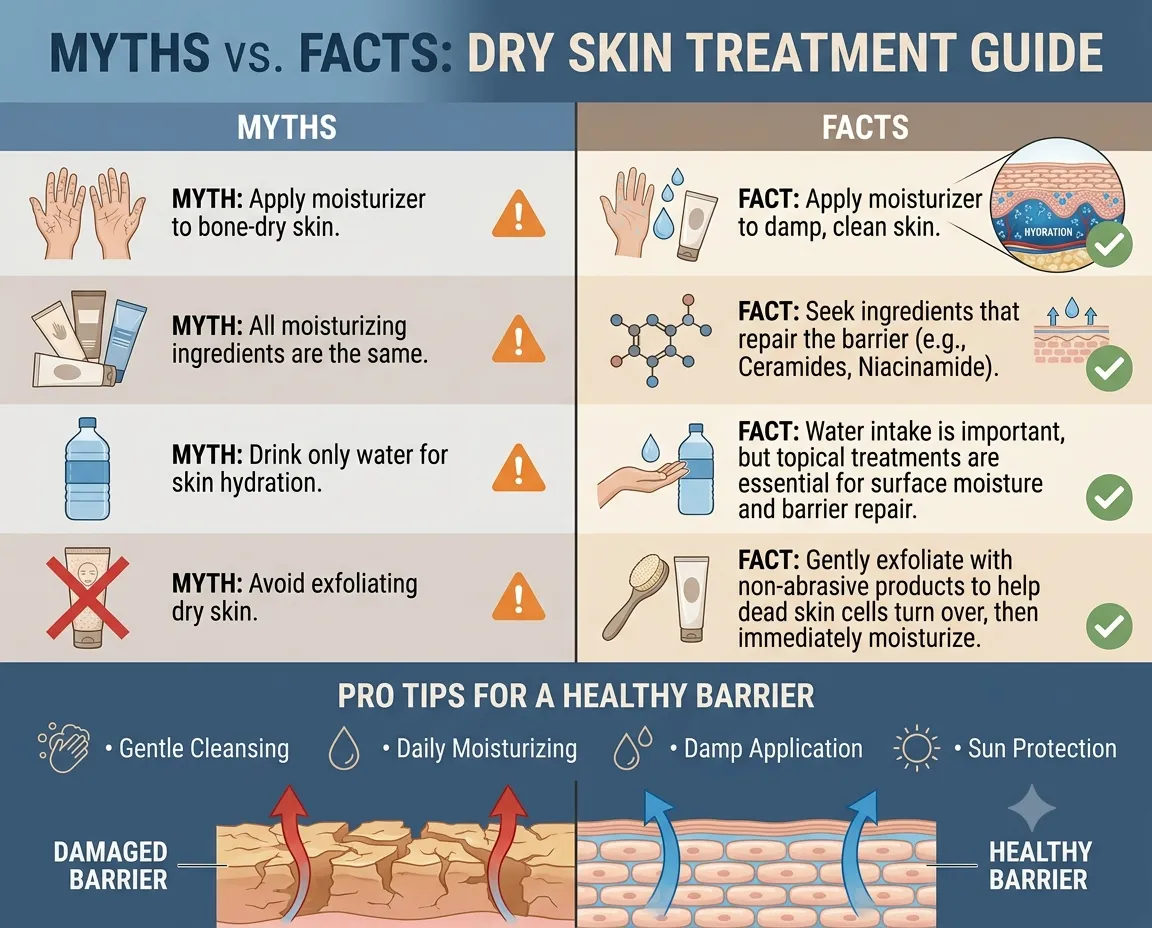
Myth vs. Fact Dry Skin Treatment Guide
Myth | Fact |
Dry skin only happens during winter. | Dry skin can occur year-round due to aging, genetics, environmental exposure, skincare habits, and certain medical conditions. |
Drinking more water always cures dry skin. | Hydration supports overall health, but repairing the skin barrier is usually more important for improving dry skin. |
Expensive skincare always works better. | The effectiveness of a product depends on its ingredients and formulation—not its price. |
Oily skin cannot become dehydrated. | Even oily skin can become dehydrated when it lacks sufficient water. |
Scrubbing removes dry skin faster. | Excessive exfoliation often worsens dryness and damages the skin barrier. |
Moisturizer should only be used when skin feels dry. | Consistent daily moisturizing is more effective than waiting until symptoms become severe. |
Frequently Asked Questions
What causes dry skin?
Dry skin develops when the skin barrier loses water faster than it can replace it. Common causes include aging, cold weather, low humidity, hot showers, harsh cleansers, certain medical conditions, and some medications.
How long does dry skin take to improve?
Mild dryness may begin improving within a few days to two weeks with consistent skincare. More severe cases may require several weeks or longer, particularly if an underlying skin condition is present.
Is dry skin the same as dehydrated skin?
No. Dry skin is a skin type characterized by insufficient natural oils, while dehydrated skin is a temporary condition caused by inadequate water content.
Is dry skin the same as dehydrated skin?
No. Dry skin is a skin type characterized by insufficient natural oils, while dehydrated skin is a temporary condition caused by inadequate water content.
What is the best dry skin treatment?
The most effective treatment combines gentle cleansing, regular moisturizing with barrier-supporting ingredients, avoiding excessive heat, protecting the skin from environmental damage, and addressing any underlying medical conditions.
Can dry skin heal naturally?
Yes. Mild dry skin often improves when the skin barrier is protected and environmental triggers are minimized. Persistent or severe symptoms should be evaluated by a healthcare professional.
Can dry skin cause itching?
Yes. As the skin barrier weakens, water loss increases and nerve endings become more exposed to irritation, making itching one of the most common symptoms.
When should I see a doctor?
Seek medical advice if your dry skin:
- Bleeds repeatedly
- Becomes infected
- Is associated with severe pain
- Covers large areas of the body
- Persists despite several weeks of appropriate treatment
Is accompanied by fever, unexplained weight loss, or other concerning symptoms
Key Takeaways
Effective dry skin treatment is about more than simply applying moisturizer. Long-term improvement depends on:
- Repairing the skin barrier
- Reducing transepidermal water loss
- Using gentle skincare products
- Moisturizing consistently
- Protecting skin from environmental damage
- Identifying underlying medical conditions when symptoms persist
Healthy skin develops through consistent daily care rather than occasional intensive treatments.
About the Author
Dr. Aamir is a Herbal Physician with a Bachelor of Eastern Medicine & Surgery (Silver Medal) and an MPhil in Phytomedicine (Gold Medal). He previously served as a faculty member at The Islamia University of Bahawalpur and Kohat University of Science & Technology (KUST). Through aamirwellness.com and aamirnaturals.com, he publishes evidence-based educational content on skincare, hair care, herbal medicine, nutrition, and wellness, drawing on peer-reviewed scientific research and established clinical guidelines.
Medical Disclaimer
This article is intended for educational purposes only and should not be considered medical advice. Individual skin conditions vary, and recommendations should not replace personalized evaluation by a qualified healthcare professional. If your symptoms are severe, persistent, or associated with infection or significant inflammation, consult a dermatologist or another licensed medical provider.
References
- Elias PM. Skin barrier function. Journal of Investigative Dermatology.
- American Academy of Dermatology Association. Dry Skin: Diagnosis and Treatment.
- American Academy of Dermatology Association. How to Care for Dry Skin.
- Cochrane Skin Group. Emollients and Moisturizers for Eczema and Dry Skin.
- British Journal of Dermatology. Reviews on xerosis and skin barrier function.
- Journal of the American Academy of Dermatology. Clinical guidance on xerosis and barrier repair.
- International Journal of Cosmetic Science. Research on humectants, emollients, and skin hydration.
- Clinical, Cosmetic and Investigational Dermatology. Evidence on hydration, moisturizers, and barrier-supportive skincare.
- National Institutes of Health (NIH). Research on skin barrier biology and epidermal physiology.
- National Eczema Association. Educational resources on dry skin and barrier care.