
Table of Contents
How Vitamin C Brightens Skin: Complete Scientific Guide
A brighter, healthier-looking complexion is one of the most common skincare goals worldwide. Whether caused by sun exposure, acne marks, pollution, aging, or hormonal changes, dullness and uneven skin tone can make skin appear tired and less vibrant.
How vitamin C brightens Skin? Among all skincare ingredients, Vitamin C has earned a reputation as one of the most effective and scientifically supported solutions for improving skin radiance and reducing visible discoloration.
Dermatologists, cosmetic chemists, and skincare professionals consistently recommend Vitamin C because it addresses several underlying causes of dull skin at the same time. It not only helps fade dark spots but also protects against environmental damage, supports collagen production, and improves overall skin health.
In this comprehensive guide, we'll explore exactly how Vitamin C brightens skin, the science behind its effectiveness, who can benefit from it, and how to use it correctly for maximum results.
Quick Answer
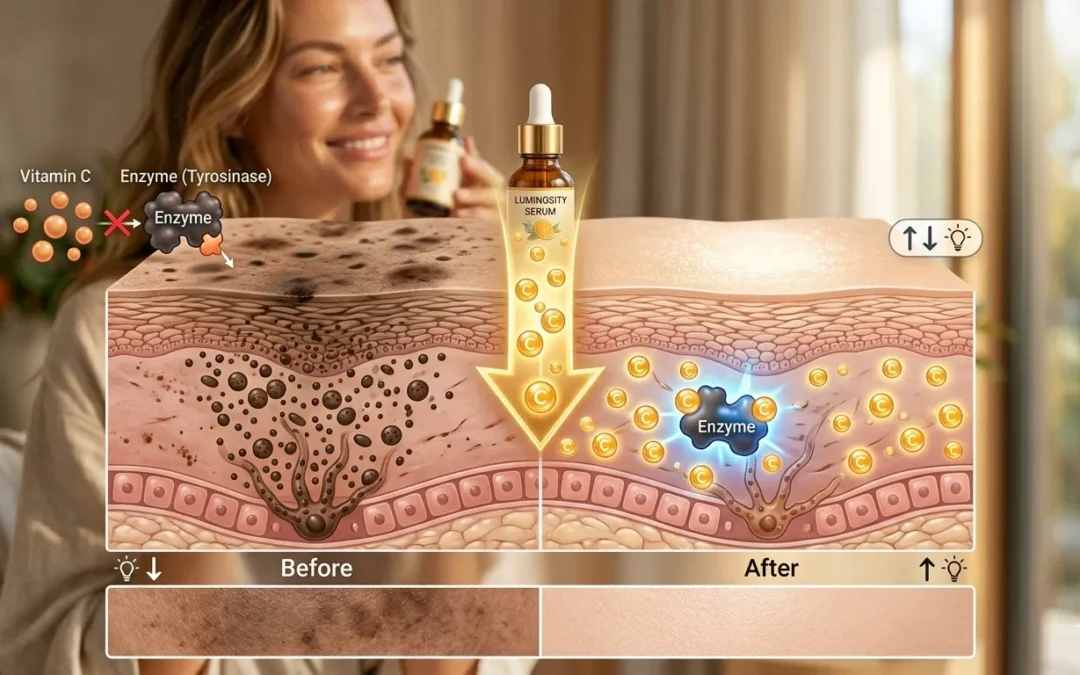
Vitamin C brightens skin by reducing excess melanin production, inhibiting the enzyme tyrosinase, protecting against free radical damage, supporting collagen synthesis, and improving overall skin tone. Regular use can help fade dark spots, reduce hyperpigmentation, enhance radiance, and create a more even complexion.
What Is Vitamin C?
Vitamin C, scientifically known as ascorbic acid, is an essential nutrient and powerful antioxidant.
In skincare, Vitamin C is used because of its ability to:
- Protect skin from oxidative stress
- Reduce visible pigmentation
- Support collagen production
- Improve skin brightness
- Enhance overall skin health
Unlike many skincare ingredients that target only one concern, Vitamin C provides multiple benefits simultaneously.
Why Skin Becomes Dull and Uneven?
Several factors contribute to skin dullness and uneven tone.
Excess Melanin Production
Overproduction of melanin can lead to:
- Dark spots
- Hyperpigmentation
- Uneven complexion
Sun Exposure: Ultraviolet radiation stimulates melanocytes, increasing pigment production.
Acne and Inflammation: Post-inflammatory hyperpigmentation often develops after acne heals.
Pollution and Free Radical Damage: Environmental stressors create oxidative stress that contributes to dullness and aging.
Aging: Natural cell turnover slows with age, reducing skin radiance.
Understanding the Science of Skin Brightening
Skin brightness is influenced by several biological factors:
Melanin Distribution: Even melanin distribution creates a more uniform complexion.
Cellular Turnover: Healthy skin sheds damaged cells efficiently.
Collagen Content: Higher collagen levels improve skin texture and reflect light more effectively.
Oxidative Stress: Lower oxidative damage supports healthier-looking skin.
Vitamin C positively influences all of these mechanisms.
How Vitamin C Brightens Skin
- Inhibits Tyrosinase Activity
Tyrosinase is a key enzyme involved in melanin production.
Vitamin C helps reduce tyrosinase activity.
Result
- Less excess pigment formation
- Reduction in dark spots
- More even skin tone
- Reduces Melanin Production
Vitamin C interferes with pathways involved in melanin synthesis.
Result
- Gradual fading of pigmentation
- Brighter complexion
- Improved skin clarity
This mechanism makes Vitamin C particularly useful for:
- Hyperpigmentation
- Acne marks
- Sun spots
- Uneven skin tone
- Provides Antioxidant Protection
Free radicals generated by:
- UV exposure
- Pollution
- Smoking
- Environmental stress
can damage skin cells.
Vitamin C neutralizes these unstable molecules before they cause significant damage.
Result
- Healthier skin
- Reduced dullness
- Improved radiance

- Supports Collagen Production
Vitamin C plays a critical role in collagen synthesis.
Collagen helps maintain:
- Firmness
- Smoothness
- Elasticity
Result
Healthier skin reflects light more evenly, creating a brighter appearance.
- Reduces Inflammation
Inflammation contributes to pigmentation and redness.
Vitamin C helps calm oxidative stress and inflammatory responses.
Result
- Improved skin tone
- Reduced discoloration
- Healthier complexion
Dermatological Perspective
Dermatologists often recommend Vitamin C because it addresses several common skin concerns simultaneously:
- Hyperpigmentation
- Photoaging
- Dullness
- Fine lines
- Environmental damage
When used consistently, Vitamin C can significantly improve overall skin appearance.
Cosmetic Industry Perspective
Vitamin C is one of the most widely studied cosmetic ingredients. It is commonly incorporated into:
- Serums
- Moisturizers
- Eye creams
- Brightening treatments
- Anti-aging products
Because consumers frequently seek brighter, healthier-looking skin, Vitamin C remains a cornerstone ingredient in modern skincare formulations.
Common Problems Vitamin C Can Help Improve
Hyperpigmentation: One of the most researched uses of Vitamin C.
Acne Marks: Helps improve post-inflammatory pigmentation.
Sun Spots: Can gradually reduce visible discoloration caused by UV exposure.
Uneven Skin Tone: Promotes a more balanced complexion.
Dull Skin: Enhances natural radiance.
Early Signs of Aging: Supports collagen and antioxidant protection.
Effective Solutions for Brighter Skin
Medical Solutions
Dermatologists may combine Vitamin C with:
- Prescription retinoids
- Azelaic acid
- Hydroquinone
- Chemical peels
Benefits: Faster results, Comprehensive treatment
Limitations: Professional supervision may be required
Dermatologist Recommendations
Most experts recommend:
- Daily antioxidant use
- Consistent sunscreen application
- Long-term treatment plans
Skincare Solutions
Vitamin C Serum
The most popular delivery method.
Benefits
- High potency, easy absorption
- Daily use compatibility
Ingredient-Based Solutions
Niacinamide: Supports brightening and barrier function.
Tranexamic Acid: Useful for pigmentation concerns.
Licorice Extract: Helps improve uneven skin tone.
Retinol: Promotes skin renewal.
Natural Remedies (Evidence-Based)
Certain plant-derived ingredients may complement Vitamin C:
- Licorice extract
- Green tea
- Aloe vera
- Soy extracts
These should complement—not replace—evidence-based skincare.
Lifestyle Improvements
Sun Protection
Critical for preventing new pigmentation.
Healthy Diet
Supports antioxidant defenses.
Quality Sleep
Supports skin repair processes.
Stress Management
May reduce inflammation-related skin issues.
Best Skincare Ingredients for Brighter Skin

| Ingredient | Benefits | Scientific Evidence |
| Vitamin C | Brightening and antioxidant protection | Strong |
| Niacinamide | Reduces pigment transfer | Strong |
| Tranexamic Acid | Hyperpigmentation support | Strong |
| Retinol | Skin renewal | Strong |
| Azelaic Acid | Pigmentation reduction | Strong |
| Licorice Extract | Brightening | Moderate |
| Alpha Arbutin | Melanin regulation | Moderate |
| Kojic Acid | Pigment reduction | Moderate |
| Hyaluronic Acid | Hydration support | Strong |
| Ceramides | Barrier support | Strong |
Precautions & Expert Tips
- Use Vitamin C consistently.
- Store products away from sunlight.
- Close containers tightly.
- Use sunscreen daily.
- Apply on clean skin.
- Introduce gradually if sensitive.
- Avoid expired products.
- Monitor irritation.
- Pair with antioxidants.
- Stay hydrated.
- Avoid excessive exfoliation.
- Protect skin from UV exposure.
- Patch-test new products.
- Follow product instructions.
- Maintain realistic expectations.
- Be patient with pigmentation treatment.
- Use stable formulations.
- Avoid mixing too many actives initially.
- Support barrier health.
- Consult a dermatologist for stubborn pigmentation.
Myths vs Facts
Myth | Fact |
Vitamin C bleaches skin | It helps even skin tone |
Results appear overnight | Brightening takes time |
Only older people need Vitamin C | All ages can benefit |
Vitamin C replaces sunscreen | Sunscreen remains essential |
Higher percentages always work better | Stability matters too |
Vitamin C only brightens skin | It offers multiple benefits |
Sensitive skin cannot use Vitamin C | Many formulations are suitable |
Natural Vitamin C is always better | Formulation quality matters |
One product fixes all pigmentation | Multiple factors influence results |
Vitamin C permanently removes dark spots | Ongoing protection is needed |
Frequently Asked Questions
How does Vitamin C brighten skin?
Vitamin C reduces melanin production, inhibits tyrosinase activity, and provides antioxidant protection that improves overall skin tone.
How long does Vitamin C take to brighten skin?
Many users notice improvements within 4–12 weeks, though deeper pigmentation may require longer treatment.
Is Vitamin C safe for daily use?
Generally yes, when formulated appropriately.
Can Vitamin C be combined with niacinamide?
Yes. Modern formulations often combine both successfully.
Is Vitamin C suitable for oily skin?
Yes. Most skin types can benefit.
What form of Vitamin C is most effective?
L-ascorbic acid is the most studied form, though derivatives may offer improved stability.
Can Vitamin C fade dark spots?
Yes. Research suggests consistent use can help reduce hyperpigmentation over time.
Does Vitamin C help acne marks?
Yes. It may improve post-inflammatory hyperpigmentation caused by acne.
Should Vitamin C be used in the morning?
Morning use is common because of its antioxidant protection benefits.
Does Vitamin C increase collagen production?
Yes. It plays an essential role in collagen synthesis.
Does Vitamin C work for melasma?
It may help but usually works best as part of a comprehensive treatment plan.
Is sunscreen necessary when using Vitamin C?
Absolutely. Sunscreen is essential for preventing further pigmentation.
Expert Insight
Dermatologists consistently recommend Vitamin C as one of the most effective ingredients for addressing dullness, pigmentation, and environmental damage.
Evidence-Based Findings
Clinical studies demonstrate that Vitamin C helps inhibit melanin production, improve antioxidant protection, and support collagen synthesis.
Safety Considerations
- Generally safe for long-term use
- Suitable for most skin types
- Requires proper storage
- Most effective when paired with sunscreen
Expert Summary
Vitamin C brightens skin through multiple scientifically validated pathways. It helps reduce melanin production, inhibits pigmentation processes, protects against oxidative stress, and supports collagen synthesis. These combined effects make Vitamin C one of the most effective ingredients for achieving a healthier, brighter, and more even complexion.
Conclusion
Vitamin C remains one of the gold-standard ingredients in modern skincare because it addresses the root causes of dullness and uneven skin tone rather than simply masking them.
By reducing pigmentation, supporting collagen production, protecting against environmental damage, and improving overall skin health, Vitamin C offers a comprehensive approach to brighter skin. Consistent use, combined with daily sun protection and a balanced skincare routine, can help reveal a more radiant and even-looking complexion over time.
Scientific References
- National Institutes of Health (NIH). Vitamin C Fact Sheet for Health Professionals.
- National Library of Medicine (PubMed). Topical Vitamin C in Dermatology, 2023.
- Journal of Cosmetic Dermatology. Vitamin C and Hyperpigmentation Management, 2022.
- International Journal of Cosmetic Science. Antioxidants in Skin Care, 2021.
- American Academy of Dermatology (AAD). Skin Brightening and Pigmentation Treatments.
- British Journal of Dermatology. Melanin Biology and Skin Pigmentation.
- American Journal of Clinical Dermatology. Vitamin C in Cosmetic Dermatology.
- Harvard Medical School. Skin Aging and Antioxidant Protection.
- Mayo Clinic. Skin Care Ingredients Guide.
- Cleveland Clinic. Hyperpigmentation and Skin Brightening Treatments.