
Table of Contents
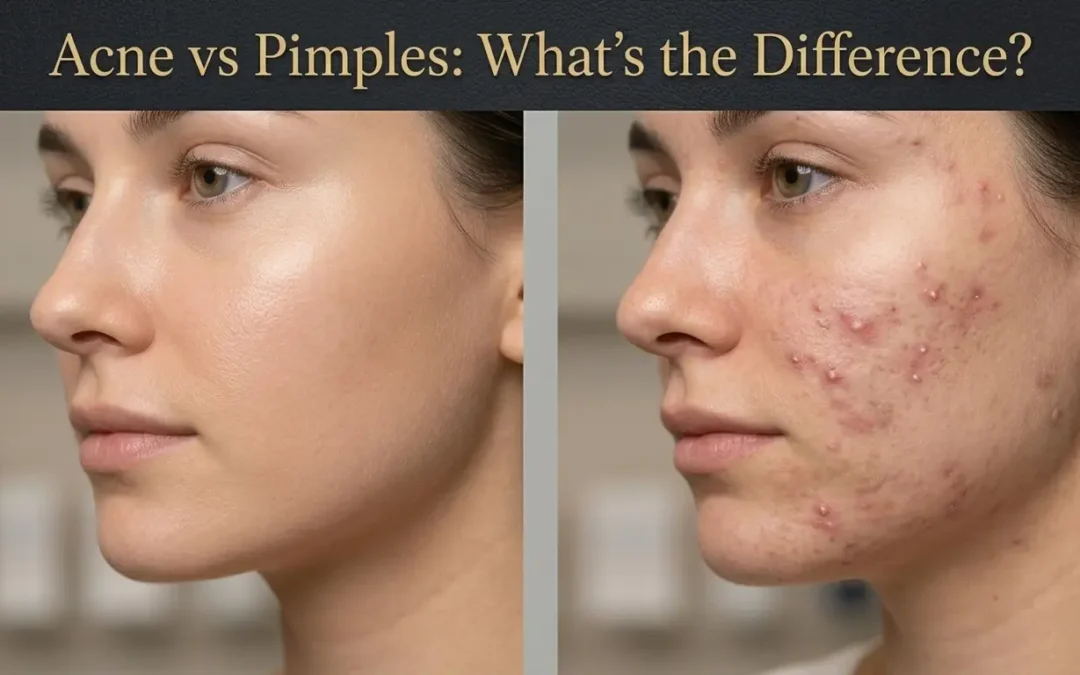
Many people use the terms "Acne" and "pimples" interchangeably. While they are closely related, they are not exactly the same thing. This confusion often leads people to misunderstand their skin condition, choose ineffective treatments, or underestimate the seriousness of persistent breakouts.
According to dermatologists, acne is a medical skin condition, while pimples are one of the visible symptoms of that condition. Understanding the difference can help you choose appropriate skincare products, identify potential triggers, and know when professional treatment may be necessary.
Whether you're a teenager experiencing your first breakout, an adult struggling with hormonal acne, or simply trying to improve your skincare knowledge, this scientific guide explains everything you need to know.
What Is Acne?
Scientific Definition
Acne vulgaris is a chronic inflammatory disorder of the pilosebaceous unit, which includes:
- Hair follicles
- Sebaceous (oil) glands
- Hair shafts
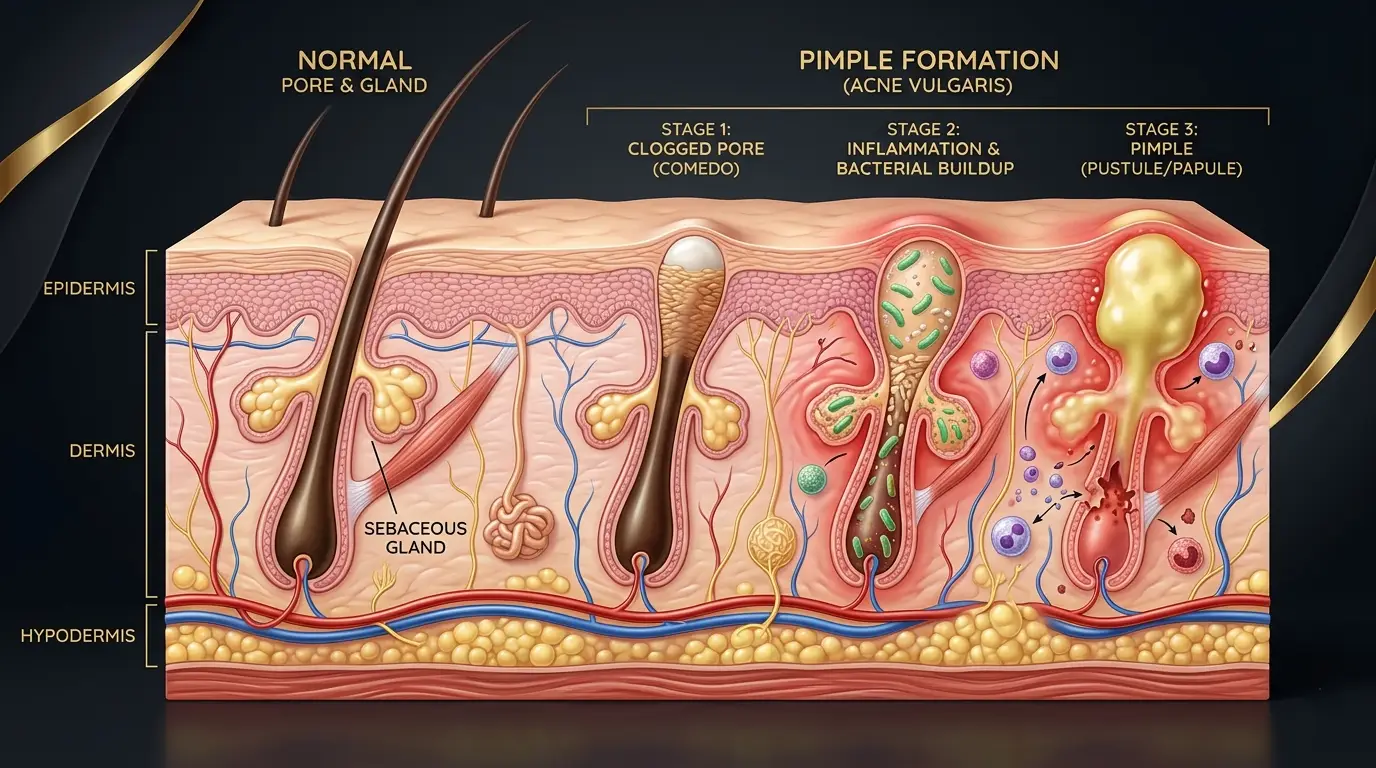
Acne develops when pores become blocked by oil, dead skin cells, and debris, creating an environment that promotes inflammation and bacterial overgrowth.
Dermatological Perspective
Dermatologists classify acne as a medical condition that can vary in severity from mild blackheads to severe cystic lesions.
Acne commonly affects:
- Face
- Forehead
- Chin
- Jawline
- Chest
- Back
- Shoulders
What Are Pimples?
A pimple is an individual skin lesion that develops when a pore becomes clogged and inflamed.
Pimples can appear as:
- Whiteheads
- Blackheads
- Red bumps
- Pustules
- Nodules
- Cysts
A person may occasionally develop a pimple without having clinical acne. For example, a single breakout caused by stress, hormones, or a cosmetic product does not necessarily mean someone has acne.
Acne vs Pimples: The Main Difference
| Feature | Acne | Pimples |
| Definition | Medical skin condition | Individual skin lesion |
| Duration | Often chronic | Usually temporary |
| Scope | Multiple lesions and recurring breakouts | Single or few spots |
| Causes | Multifactorial disease | Result of clogged pore or inflammation |
| Severity | Mild to severe | Usually localized |
| Medical Diagnosis | Yes | Symptom rather than diagnosis |
| Scarring Risk | Higher | Lower unless severe |
| Treatment | Long-term management | Spot treatment often sufficient |
Simple Explanation
Think of acne as the overall disease process and pimples as one of the visible signs that the condition exists.
Understanding the Science
Skin Biology
Healthy skin naturally sheds dead skin cells while sebaceous glands produce oil to maintain hydration and barrier function.
Problems begin when this balance becomes disrupted.
Excess Sebum Production
Sebaceous glands may become overactive due to hormonal stimulation.
Excess oil mixes with dead skin cells and contributes to pore blockage.
Follicular Hyperkeratinization
Skin cells inside pores fail to shed normally and accumulate.
This process creates microscopic blockages called microcomedones.
Bacterial Activity
The skin naturally contains Cutibacterium acnes bacteria.
When pores become clogged, bacterial populations increase and trigger inflammation.
Inflammation
The body's immune response causes:
- Redness
- Swelling
- Tenderness
- Pus formation
This is what creates many visible pimples.
Types of Acne and Pimples
Non-Inflammatory Acne
Whiteheads
Closed clogged pores beneath the skin.
Blackheads
Open clogged pores exposed to oxygen.
Inflammatory Acne
Papules: Small red inflamed bumps.
Pustules: Red bumps containing visible pus.
Nodules: Large painful lesions beneath the skin.
Cysts: Deep inflammatory lesions with the highest risk of scarring.
Common Problems Associated with Acne
Visible Symptoms
- Recurrent breakouts
- Blackheads
- Whiteheads
- Red inflamed lesions
- Oily skin
- Enlarged pores
Hidden Effects
- Chronic inflammation
- Barrier dysfunction
- Skin microbiome imbalance
Emotional Impact
Research shows acne can contribute to:
- Reduced self-confidence
- Anxiety
- Social withdrawal
- Emotional distress
Long-Term Consequences
Untreated acne may lead to:
- Permanent scarring
- Post-inflammatory hyperpigmentation
- Persistent redness
- Uneven skin texture
Major Causes of Acne and Pimples
Hormonal Factors
Hormones are among the most significant acne triggers.
Common hormonal influences include:
- Puberty
- Menstrual cycles
- Pregnancy
- Menopause
- PCOS
- Testosterone fluctuations
Genetic Factors
Family history strongly influences:
- Acne susceptibility
- Severity
- Scarring risk
Lifestyle Factors
Certain habits may worsen acne:
- Sleep deprivation
- Smoking
- High stress levels
- Poor skincare routines
Nutritional Factors
Research suggests that some individuals may experience worsening acne from:
- High-glycemic foods
- Sugary beverages
- Excess refined carbohydrates
- Certain dairy products
Environmental Factors
External contributors include:
- Pollution
- Humidity
- Friction from masks or helmets
- Sweat accumulation
Cosmetic-Related Factors
Products containing pore-clogging ingredients may contribute to breakouts.
Common concerns include:
- Heavy oils
- Thick foundations
- Comedogenic formulations
Effective Solutions
Medical Solutions - Topical Retinoids
Benefits:
- Prevent clogged pores
- Improve cell turnover
Limitations:
- Potential irritation
Best Practice:
- Introduce gradually
Dermatologist Recommendations
- Treat acne early.
- Avoid squeezing lesions.
- Follow a consistent routine.
- Wear sunscreen daily.
- Seek professional help for persistent breakouts.
Benzoyl Peroxide
Benefits:
- Reduces acne bacteria
- Anti-inflammatory
Limitations:
- Can cause dryness
Best Practice:
- Use lower strengths initially
Prescription Treatments
For moderate-to-severe acne, dermatologists may prescribe:
- Topical antibiotics
- Oral antibiotics
- Hormonal therapies
- Isotretinoin
Skincare Solutions
Morning Routine
- Gentle cleanser
- Antioxidant serum
- Lightweight moisturizer
- Broad-spectrum SPF 30+
Evening Routine
- Cleanser
- Acne treatment
- Moisturizer
Natural Remedies (Evidence-Based)
Some ingredients show supportive evidence:
- Green tea extract
- Aloe vera
- Colloidal oatmeal
- Tea tree oil
Natural treatments should complement, not replace, evidence-based care.
Ingredient-Based Solutions
Salicylic Acid
- Unclogs pores
- Removes excess oil
Niacinamide
- Reduces redness
- Helps regulate oil production
Azelaic Acid: Targets acne and pigmentation
Retinol: Supports skin renewal
Ceramides: Strengthen the skin barrier
Lifestyle Improvements
- Sleep 7–9 hours nightly
- Exercise regularly
- Manage stress
- Maintain a balanced diet
- Stay hydrated
- Avoid smoking
Best Skincare Ingredients for Acne and Pimples
| Ingredient | Benefits | Scientific Evidence |
| Salicylic Acid | Clears clogged pores | Strong |
| Benzoyl Peroxide | Reduces acne bacteria | Strong |
| Retinoids | Prevents comedones | Strong |
| Niacinamide | Reduces inflammation | Moderate-Strong |
| Azelaic Acid | Treats acne and discoloration | Strong |
| Ceramides | Supports barrier repair | Moderate |
| Zinc | Oil regulation | Moderate |
| Sulfur | Helps reduce blemishes | Moderate |
| Green Tea Extract | Antioxidant activity | Emerging |
| Hyaluronic Acid | Hydration support | Moderate |
Precautions & Expert Tips
- Wear SPF daily.
- Avoid aggressive scrubbing.
- Don't pop pimples.
- Use non-comedogenic products.
- Moisturize consistently.
- Avoid over-exfoliation.
- Introduce actives gradually.
- Patch test new products.
- Remove makeup before bed.
- Wash makeup brushes weekly.
- Change pillowcases regularly.
- Manage stress levels.
- Maintain consistent sleep habits.
- Avoid smoking.
- Stay hydrated.
- Don't combine too many actives at once.
- Monitor skin reactions carefully.
- Seek treatment for severe acne.
- Protect the skin barrier.
- Be patient—results take time.
Myths vs Facts Regarding Acne & Pimples
Myth | Fact |
Acne and pimples are the same thing | Pimples are a symptom of acne |
Only teenagers get acne | Adults commonly experience acne |
Dirty skin causes acne | Acne is multifactorial |
Sun exposure cures acne | UV exposure may worsen inflammation |
Toothpaste treats pimples | It often irritates skin |
Washing more prevents acne | Overwashing can damage the barrier |
Makeup always causes acne | Non-comedogenic makeup is generally safe |
Oily skin doesn't need moisturizer | Hydration benefits all skin types |
Acne is contagious | Acne cannot be spread between people |
Stress has no effect on acne | Stress can worsen breakouts |
Frequently Asked Questions About Acne & Pimples
Is acne the same as a pimple?
No. Acne is a skin disease, while a pimple is one type of lesion caused by acne or temporary pore blockage.
Can I have pimples without acne?
Yes. Occasional pimples can occur without having chronic acne.
Can acne leave scars?
Yes. Moderate-to-severe inflammatory acne can cause permanent scarring if not treated properly.
Are blackheads considered acne?
Yes. Blackheads are a type of non-inflammatory acne lesion.
Does diet influence acne?
Research suggests high-glycemic diets may worsen acne in some individuals.
Which ingredient is best for clogged pores?
Salicylic acid is one of the most effective ingredients for pore congestion.
What causes pimples?
Pimples develop when pores become blocked with oil, dead skin cells, and debris, leading to inflammation.
Why do adults still get acne?
Hormonal fluctuations, stress, genetics, medications, and lifestyle factors may contribute.
Do hormones affect both acne and pimples?
Yes. Hormonal changes can increase oil production and promote breakouts.
How long does acne treatment take?
Most evidence-based treatments require 6–12 weeks for visible improvement.
Should I pop a pimple?
No. Popping increases inflammation, infection risk, and scarring.
Is sunscreen important for acne-prone skin?
Absolutely. Sunscreen helps prevent pigmentation and protects overall skin health.
Conclusion Acne vs Pimples
Although the terms acne and pimples are often used interchangeably, they represent different aspects of skin health. Acne is a chronic inflammatory disorder involving multiple biological processes, whereas pimples are visible lesions that develop as a result of those processes.
By understanding the causes, symptoms, and treatment options for both acne and pimples, individuals can make informed skincare decisions, reduce the risk of long-term skin damage, and improve overall skin health through evidence-based care.
Scientific References About Acne vs Pimples
- American Academy of Dermatology. Acne Resource Center. 2024.
- National Institutes of Health. Acne Vulgaris Overview. 2023.
- National Library of Medicine (PubMed). Pathogenesis of Acne. 2022.
- American Journal of Clinical Dermatology. Advances in Acne Management. 2024.
- Journal of Cosmetic Dermatology. Acne and Skincare Research. 2023.
- British Journal of Dermatology. Acne Pathophysiology Review. 2022.
- Mayo Clinic. Acne Causes and Symptoms. 2024.
- Cleveland Clinic. Acne Treatment Overview. 2024.
- International Journal of Cosmetic Science. Skin Barrier and Acne Research. 2022.
- FDA Acne Treatment Guidance.