
Everything You Need to Know About Niacinamide: Benefits, Uses & Safety
Walk into almost any skincare aisle today, and you'll likely see niacinamide listed on everything from serums and moisturizers to cleansers and sunscreens. It's often promoted as a solution for acne, enlarged pores, oily skin, dark spots, redness, and signs of aging—but can one ingredient really do all of that?
The growing popularity of niacinamide isn't driven solely by marketing. Over the past two decades, this form of vitamin B3 has become one of the most extensively studied skincare ingredients. According to research published in the Journal of Cosmetic Dermatology and other peer-reviewed dermatology journals, niacinamide offers multiple skin benefits through different biological pathways, making it one of the few ingredients that addresses several common skin concerns simultaneously.
Unlike some active ingredients that primarily target a single issue, niacinamide supports the skin's natural barrier, helps regulate sebum production, reduces visible redness, improves uneven skin tone, and enhances overall skin resilience. The American Academy of Dermatology (AAD) also recognizes niacinamide as a beneficial ingredient in skincare routines for certain concerns, particularly when combined with a gentle, evidence-based regimen.
Whether you're wondering what niacinamide is, what niacinamide does, or whether niacinamide is good for acne, this comprehensive guide explains the science behind the ingredient, summarizes current research, and helps you understand how to use it effectively as part of a healthy skincare routine.
What Is Niacinamide?
Niacinamide is a water-soluble form of vitamin B3, an essential nutrient that plays an important role in maintaining healthy skin and supporting normal cellular function.
Vitamin B3 exists in two primary forms:
- Niacin (nicotinic acid)
- Niacinamide (nicotinamide)
Although both forms contribute to the body's vitamin B3 requirements, niacinamide is the form most commonly used in topical skincare because it delivers skin benefits without causing the flushing reaction often associated with high doses of niacin.
According to the National Institutes of Health (NIH), vitamin B3 is involved in hundreds of enzymatic reactions that support energy production, DNA repair, and healthy cell function. In topical skincare, niacinamide helps optimize these biological processes within the skin, contributing to improved barrier function and overall skin health.
Because it is water-soluble and generally well tolerated, niacinamide is suitable for most skin types, including oily, combination, dry, and sensitive skin.
Vitamin B3 and Niacinamide: Understanding the Science
To understand why niacinamide has become such a valuable skincare ingredient, it's helpful to understand the role of vitamin B3 in the body.
Vitamin B3 is required for the production of two essential coenzymes:
- Nicotinamide adenine dinucleotide (NAD⁺)
- Nicotinamide adenine dinucleotide phosphate (NADP⁺)
These coenzymes are involved in cellular energy production, antioxidant defense, DNA repair, and numerous metabolic processes. Healthy skin cells rely on these pathways to repair environmental damage, maintain barrier integrity, and support normal cell turnover.
Research published in the British Journal of Dermatology and the Journal of Cosmetic Dermatology suggests that topical niacinamide helps improve several aspects of skin function by supporting these natural cellular mechanisms rather than simply masking visible skin concerns.
Did You Know?
Your skin is the body's largest organ and serves as its first line of defense against environmental stressors. Supporting the skin barrier with ingredients like niacinamide may help the skin better retain moisture and resist external irritants.
Why Has Niacinamide Become So Popular?
Few skincare ingredients have gained as much attention in recent years as niacinamide—and for good reason.
Unlike ingredients that target only one concern, niacinamide has been studied for its potential role in improving multiple aspects of skin health. This versatility makes it a valuable addition to many skincare routines.
Current evidence suggests niacinamide may help:
- Strengthen the skin barrier
- Reduce transepidermal water loss (TEWL)
- Regulate excess oil production
- Reduce visible redness
- Improve uneven skin tone
- Support acne-prone skin
- Minimize the appearance of enlarged pores
- Improve the appearance of fine lines over time
According to reviews published in the International Journal of Cosmetic Science, niacinamide is well tolerated by most users and can often be combined with other evidence-based ingredients such as hyaluronic acid, ceramides, and azelaic acid to address multiple skin concerns within a single routine.
How Does Niacinamide Work in the Skin?
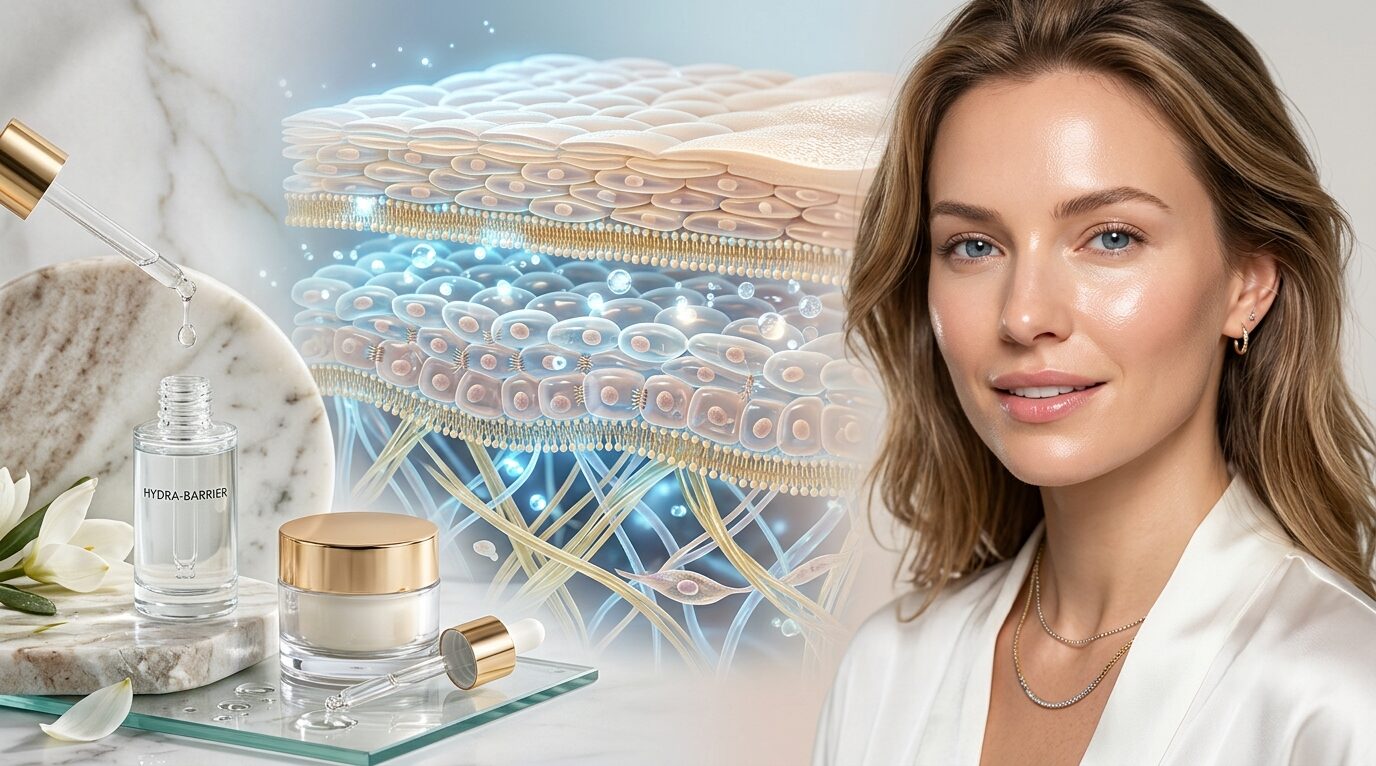
One reason niacinamide is considered a multifunctional ingredient is that it supports several biological processes rather than acting through a single mechanism.
1. Supports the Skin Barrier
The skin barrier helps prevent moisture loss while protecting against environmental irritants.
Research indicates that niacinamide promotes the production of key barrier lipids, including ceramides, which contribute to healthier, more resilient skin.
2. Helps Regulate Sebum Production
Excess sebum is one of several factors associated with oily skin and acne.
Some clinical studies suggest that topical niacinamide may help reduce facial oiliness in certain individuals, making it a useful ingredient for people with combination or oily skin.
3. Reduces Visible Redness
Niacinamide has anti-inflammatory properties that may help calm visible redness associated with irritation and certain inflammatory skin conditions.
4. Supports More Even Skin Tone
Ultraviolet exposure, inflammation, and post-acne marks can contribute to uneven pigmentation.
Research suggests niacinamide may help reduce the transfer of melanin to skin cells, supporting a more even-looking complexion when used consistently alongside daily sun protection.
5. Related Reading:
Sunscreen: The Complete Guide to SPF, UV Protection & Skin Health
What Is Hyperpigmentation?
Does Sunscreen Help Dark Spots?
Evidence-Based Benefits of Niacinamide

One of the reasons niacinamide has become a cornerstone ingredient in modern skincare is its ability to address multiple skin concerns simultaneously. Rather than targeting a single problem, niacinamide supports several biological processes that contribute to healthier, more resilient skin.
According to numerous clinical studies published in the Journal of Cosmetic Dermatology, British Journal of Dermatology, and the International Journal of Cosmetic Science, niacinamide has demonstrated benefits across barrier repair, pigmentation management, sebum regulation, and skin aging.
Below are the most well-supported benefits based on current scientific evidence.
1. Strengthens the Skin Barrier
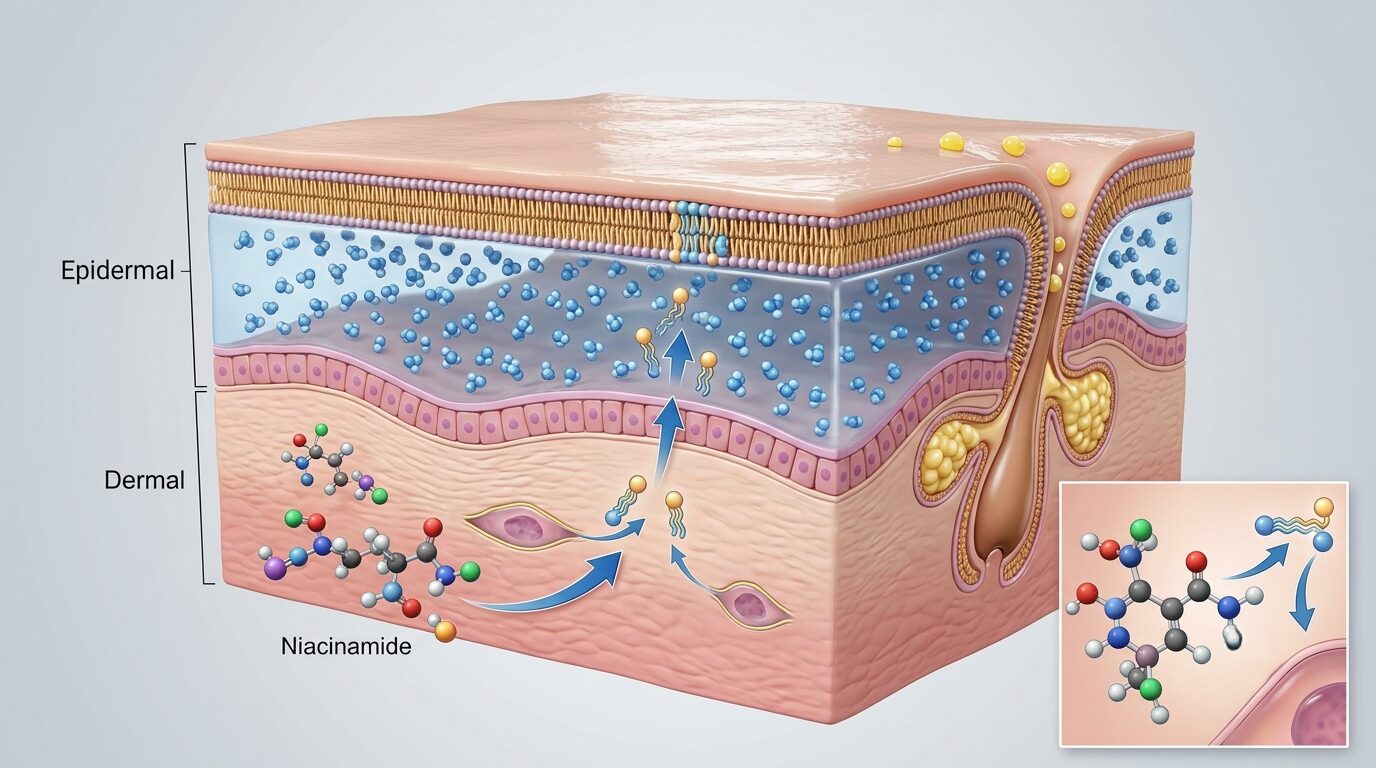
The skin barrier, also known as the stratum corneum, acts as the body's first line of defense. It helps retain moisture while protecting against environmental irritants, pollutants, allergens, and microorganisms.
When the skin barrier becomes compromised, individuals may experience:
- Dryness
- Sensitivity
- Redness
- Irritation
- Increased water loss
- Greater susceptibility to environmental damage
Research published in the British Journal of Dermatology suggests that topical niacinamide increases the production of ceramides and other essential lipids that strengthen the skin barrier and reduce transepidermal water loss (TEWL).
Why This Matters?
A stronger skin barrier improves the skin's ability to tolerate active ingredients such as retinoids, exfoliating acids, and vitamin C while maintaining healthy hydration.
Related Reading
→ Skin Barrier: The Complete Guide
→ Ceramides for Healthy Skin
Expert Insight
Many people focus on treating individual skin concerns such as acne or pigmentation while overlooking the skin barrier. Dermatologists increasingly recognize that restoring barrier function often improves multiple skin concerns simultaneously.
2. Helps Reduce Excess Oil Production
Excess sebum production is one of the primary contributors to oily skin and acne.
While sebum plays an essential role in lubricating and protecting the skin, excessive oil production may contribute to clogged pores and acne formation.
Several clinical studies suggest that niacinamide may help regulate facial oil production without excessively drying the skin.
According to research published in the Journal of Cosmetic Dermatology, topical niacinamide significantly reduced facial sebum excretion in participants with oily skin after consistent use.
Benefits for Oily Skin
- Helps balance oil production
- May reduce midday facial shine
- Supports healthier-looking pores
- Complements acne treatments
Unlike harsh cleansers or alcohol-based products, niacinamide helps regulate oil while maintaining the integrity of the skin barrier.
Related Reading
→ Oily Skin: Causes, Care, and Best Ingredients
3. Supports Acne-Prone Skin
One of the most frequently searched questions is:
Does Niacinamide Help with Acne?
Current evidence suggests that niacinamide can be a valuable part of an acne skincare routine, although it is not considered a standalone treatment for moderate or severe acne.
Niacinamide supports acne-prone skin by addressing several contributing factors.
Reduces Inflammation
Inflammation plays a central role in acne development.
Niacinamide possesses anti-inflammatory properties that may help reduce the redness and irritation associated with inflammatory acne lesions.
Supports Sebum Regulation
Balanced oil production may help reduce the likelihood of clogged pores.
Strengthens the Skin Barrier
Many acne treatments, including retinoids and benzoyl peroxide, can compromise the skin barrier.
Niacinamide helps support barrier recovery, improving tolerance to these treatments.
According to the Journal of Clinical and Aesthetic Dermatology, niacinamide-containing formulations may improve mild to moderate inflammatory acne while enhancing skin comfort.
Is Niacinamide Good for Acne?
For many individuals, yes.
However, niacinamide should be viewed as a supportive ingredient rather than a replacement for proven acne therapies when medically indicated.
People with persistent or severe acne should consult a dermatologist for personalized treatment recommendations.
Related Reading
Did You Know?
Niacinamide doesn't kill acne-causing bacteria like benzoyl peroxide. Instead, it supports healthier skin by reducing inflammation, regulating excess oil, and strengthening the skin barrier.
4. Helps Improve Uneven Skin Tone
Uneven skin tone often develops due to:
- Sun exposure
- Post-inflammatory hyperpigmentation
- Acne marks
- Environmental damage
- Aging
One of niacinamide's most researched benefits is its ability to improve overall skin tone.
Rather than bleaching the skin, niacinamide helps reduce the transfer of melanosomes (pigment-containing structures) from melanocytes to surrounding skin cells.
According to studies published in the International Journal of Cosmetic Science, this mechanism may contribute to a more even complexion when combined with consistent sunscreen use.
Particularly Helpful For
- Post-acne marks
- Mild hyperpigmentation
- Uneven skin tone
- Sun-related discoloration
Related Reading
→ Hyperpigmentation: Causes and Treatment
→ Does Sunscreen Help Dark Spots?
Uneven skin tone often develops due to:
- Sun exposure
- Post-inflammatory hyperpigmentation
- Acne marks
- Environmental damage
- Aging
One of niacinamide's most researched benefits is its ability to improve overall skin tone.
Rather than bleaching the skin, niacinamide helps reduce the transfer of melanosomes (pigment-containing structures) from melanocytes to surrounding skin cells.
According to studies published in the International Journal of Cosmetic Science, this mechanism may contribute to a more even complexion when combined with consistent sunscreen use.
Particularly Helpful For
- Post-acne marks
- Mild hyperpigmentation
- Uneven skin tone
- Sun-related discoloration
Related Reading
→ Hyperpigmentation: Causes and Treatment
→ Does Sunscreen Help Dark Spots?
5. Helps Minimize the Appearance of Enlarged Pores
Enlarged pores are influenced by several factors, including:
- Excess oil production
- Loss of skin elasticity
- Genetics
- Aging
While niacinamide cannot permanently change pore size, research suggests that improved oil regulation and healthier skin barrier function may make pores appear less noticeable over time.
This benefit is particularly appreciated by individuals with oily or combination skin.
6. Supports Healthy Skin Aging
Skin aging is influenced by both intrinsic factors (natural aging) and extrinsic factors (sun exposure, pollution, smoking, lifestyle).
Niacinamide contributes to healthier-looking skin by supporting several age-related processes.
Potential benefits include:
- Improved skin elasticity
- Reduced appearance of fine lines
- Enhanced hydration
- Better barrier function
- More even skin tone
According to the Journal of Cosmetic Dermatology, topical niacinamide has demonstrated measurable improvements in signs of photoaging after consistent use.
Related Reading
→ Anti-Aging Skincare Guide
→ Does Sunscreen Prevent Wrinkles?
7. Helps Reduce Visible Redness
Visible redness may result from:
- Sensitive skin
- Acne
- Environmental irritation
- Compromised skin barrier
Niacinamide's anti-inflammatory properties may help calm irritated skin and reduce persistent redness over time.
Because it is generally well tolerated, niacinamide is often included in products formulated for sensitive skin.
8. Supports Better Hydration
Healthy hydration depends on both water content and an intact skin barrier.
Niacinamide helps improve the skin's ability to retain moisture by strengthening barrier function.
When combined with humectants such as hyaluronic acid and emollients like ceramides, niacinamide contributes to smoother, more comfortable skin.
Related Reading
→ Hyaluronic Acid: Complete Guide
Niacinamide for Different Skin Types
One of niacinamide's greatest strengths is its versatility. Unlike some active ingredients that are suitable only for specific skin types, niacinamide is generally appropriate for a wide range of users.
Niacinamide for Oily Skin
Individuals with oily skin often benefit from niacinamide because it may help:
- Reduce excess oil
- Improve shine control
- Support healthier-looking pores
- Complement acne treatments
Niacinamide for Dry Skin
Dry skin benefits from niacinamide's barrier-supporting properties.
Combined with moisturizers containing ceramides and glycerin, niacinamide helps improve long-term hydration.
Niacinamide for Combination Skin
Combination skin often presents unique challenges.
Niacinamide supports balance by helping regulate oil in the T-zone while strengthening drier areas of the face.
Niacinamide for Sensitive Skin
Because niacinamide is generally well tolerated, it is frequently recommended for sensitive skin.
Nevertheless, patch testing is advisable before introducing any new skincare product.
Niacinamide for Mature Skin
Mature skin may benefit from niacinamide's support for:
- Barrier repair
- Hydration
- Elasticity
- Overall skin resilience
Although niacinamide is not a replacement for retinoids or sunscreen, it complements many anti-aging routines.
What Does Niacinamide Do?
At the cellular level, niacinamide supports healthy skin by:
- Strengthening the skin barrier
- Increasing ceramide production
- Supporting DNA repair mechanisms
- Helping regulate sebum production
- Reducing inflammatory responses
- Improving hydration
- Supporting a more even skin tone
- Complementing other evidence-based skincare ingredients
Rather than acting through a single pathway, niacinamide improves skin health through multiple interconnected biological processes.
This multifunctional nature explains why it has become one of the most recommended skincare ingredients by dermatologists worldwide.
What Experts Says?
Few skincare ingredients have demonstrated such broad applicability across different skin types and concerns. While no ingredient is a universal solution, niacinamide stands out because it supports the skin's natural biology rather than targeting only one isolated issue. When used consistently within a balanced skincare routine—and paired with daily sunscreen—it can contribute to healthier, more resilient skin over time.
How to Use Niacinamide Correctly?
Although niacinamide is considered one of the most versatile skincare ingredients, using it correctly can maximize its benefits while minimizing the risk of irritation.
Unlike stronger active ingredients that often require a gradual introduction, niacinamide is generally well tolerated by most skin types and can usually be incorporated into both morning and evening skincare routines.
Step 1: Start with a Gentle Cleanser
Clean skin allows niacinamide to penetrate more effectively.
Choose a cleanser appropriate for your skin type:
- Oily Skin → Gentle foaming cleanser
- Dry Skin → Hydrating cleanser
- Sensitive Skin → Fragrance-free cleanser
- Acne-Prone Skin → Non-comedogenic cleanser
Avoid harsh scrubs that may compromise the skin barrier.
Step 2: Apply Niacinamide
Niacinamide is commonly available in:
- Serums
- Moisturizers
- Essences
- Toners
- Creams
A serum is often the most concentrated and effective delivery method.
Apply a few drops evenly across the face after cleansing and before heavier creams.
Step 3: Moisturize
Moisturizer helps lock in hydration and further supports the skin barrier.
Ingredients that pair well include:
- Ceramides
- Glycerin
- Squalane
- Hyaluronic Acid
Step 4: Apply Sunscreen (Morning)
Daily sunscreen is essential.
Although niacinamide may help improve uneven skin tone, ongoing UV exposure can worsen pigmentation and reduce the effectiveness of skincare treatments.
According to the American Academy of Dermatology (AAD), using a broad-spectrum sunscreen with SPF 30 or higher every day is one of the most effective ways to protect the skin from UV-induced damage and support treatment outcomes for pigmentation concerns.
Related Reading
→ Sunscreen: The Complete Guide
→ Does Sunscreen Help Dark Spots?
What Percentage of Niacinamide Is Best?
One of the most common questions is whether a higher percentage always produces better results. The answer is not necessarily.
Clinical research suggests that concentrations between 2% and 5% are effective for improving barrier function, hydration, and skin tone, while many commercial serums use 5% to 10% concentrations.
Higher percentages are not automatically more effective and may increase irritation in sensitive individuals.
General Guidance
Niacinamide Concentration | Typical Use |
2–5% | Daily maintenance, sensitive skin, barrier support |
5–10% | Most common concentration for general skincare concerns |
Above 10% | May be suitable for some individuals but not always necessary |
Selecting the right formulation depends on your skin type, overall routine, and tolerance rather than simply choosing the highest concentration.
Expert Insight
Research consistently shows that skincare success depends more on regular, long-term use than on selecting the strongest possible formula. A well-formulated 5% niacinamide product used consistently may provide excellent results for many individuals.
Ingredients That Work Well with Niacinamide
One of niacinamide's greatest strengths is its compatibility with many evidence-based skincare ingredients.
Niacinamide and Hyaluronic Acid
This combination is excellent for nearly all skin types.
Benefits include:
- Improved hydration
- Stronger skin barrier
- Better moisture retention
Niacinamide and Ceramides
A particularly beneficial combination for:
- Dry skin
- Sensitive skin
- Compromised skin barrier
Together they help reinforce the skin's protective barrier.
Azelaic Acid and Niacinamide
This pairing is frequently recommended for individuals with:
- Acne-prone skin
- Post-acne marks
- Uneven skin tone
- Persistent redness
Because the ingredients work through different mechanisms, they often complement each other well.
Related Reading
→ Azelaic Acid: Benefits, Uses, and Side Effects
Niacinamide and Salicylic Acid
Suitable for oily and acne-prone skin.
Potential benefits include:
- Better oil control
- Reduced congestion
- Improved skin barrier support
- Enhanced overall tolerance
Niacinamide and Retinol
Retinoids may cause dryness or irritation during the adjustment period.
Niacinamide helps support the skin barrier and may improve overall comfort when both ingredients are incorporated appropriately.
Can You Use Vitamin C and Niacinamide Together?
This question has generated confusion for many years.
Earlier laboratory studies suggested possible interactions under extreme conditions, leading to the misconception that these ingredients should never be combined.
Current dermatology research indicates that modern formulations of vitamin C and niacinamide can generally be used together as part of the same skincare routine when they are well formulated.
According to dermatology literature published in the Journal of Cosmetic Dermatology, both ingredients provide complementary antioxidant and skin-supporting benefits.
Related Reading
→ Vitamin C: Complete Guide
Niacin vs Niacinamide
Although both are forms of vitamin B3, they are not identical.
Feature | Niacin | Niacinamide |
Also Known As | Nicotinic Acid | Nicotinamide |
Skin Flushing | May occur at high doses | Does not typically cause flushing |
Topical Skincare | Rarely used | Widely used |
Common Use | Nutritional supplementation | Skincare and dermatology |
For topical skincare, niacinamide is generally preferred because it delivers skin benefits without the flushing commonly associated with niacin.
Niacinamide Side Effects
Niacinamide is generally considered safe for topical use and is well tolerated by most people.
However, no skincare ingredient is completely free from the possibility of irritation.
Potential side effects may include:
- Mild redness
- Temporary itching
- Burning sensation
- Irritation
- Dryness (rare)
- Allergic reactions (uncommon)
These effects are more likely in individuals with highly sensitive skin or when multiple active ingredients are introduced simultaneously.
Patch testing new products is recommended.
Can Niacinamide Cause Acne?

Another common concern is whether niacinamide itself causes acne. Current scientific evidence does not suggest that niacinamide directly causes acne.
However, breakouts after starting a new product may occur due to several reasons:
- Other ingredients in the formulation
- Occlusive products
- Skin adjustment
- Individual sensitivity
- Coincidental acne flare
If persistent irritation or breakouts develop, discontinue the product and consult a qualified healthcare professional or dermatologist.
Precautions and Expert Tips
To get the most from niacinamide:
- Introduce one new product at a time.
- Patch test before full-face application.
- Apply consistently rather than excessively.
- Use sunscreen every morning.
- Avoid over-exfoliating the skin.
- Support the skin barrier with moisturizer.
- Store products away from excessive heat and sunlight.
- Follow manufacturer instructions.
- Avoid unrealistic expectations—visible improvements often require several weeks of consistent use.
- Seek professional advice for persistent skin conditions.
Myths vs Facts of Niacinamide
Myth | Fact |
Niacinamide is only for acne. | It supports multiple aspects of skin health, including barrier function, hydration, pigmentation, and oil regulation. |
Higher percentages always work better. | Moderate concentrations are often effective and better tolerated. |
Niacinamide permanently shrinks pores. | It may reduce the appearance of enlarged pores but cannot permanently change pore size. |
Niacinamide lightens skin unnaturally. | It helps promote a more even skin tone rather than bleaching the skin. |
Vitamin C and niacinamide should never be used together. | Modern evidence indicates they can generally be used together in well-formulated products. |
Niacinamide replaces sunscreen. | Sunscreen remains essential for protecting against UV damage and preventing pigmentation. |
Niacinamide works overnight. | Consistent use over several weeks is typically required. |
Everyone needs a 10% serum. | Lower concentrations may be sufficient for many individuals. |
Niacinamide cures acne. | It supports acne-prone skin but is not a cure for acne. |
Natural ingredients are always safer than niacinamide. | Safety depends on the ingredient, formulation, and individual skin response—not whether it is natural or synthetic. |
Frequently Asked Questions
Is niacinamide suitable for all skin types?
Generally, yes. Niacinamide is well tolerated by oily, dry, combination, mature, and sensitive skin, although patch testing is always recommended.
Does niacinamide help with acne?
Research suggests niacinamide may support acne-prone skin by helping regulate oil production, reducing inflammation, and strengthening the skin barrier.
Can niacinamide reduce dark spots?
Niacinamide may help improve the appearance of uneven skin tone by reducing melanosome transfer. Consistent sunscreen use is also important for managing pigmentation.
How long does niacinamide take to work?
Results vary, but many studies report visible improvements after 8–12 weeks of consistent use.
Can I use niacinamide every day?
Yes. Most people can use niacinamide once or twice daily as directed by the product manufacturer.
Is niacinamide good for oily skin?
Yes. Clinical studies indicate that niacinamide may help regulate excess sebum production while maintaining barrier function.
Can I use niacinamide with retinol?
Yes. Many skincare routines combine these ingredients because niacinamide helps support barrier function while retinol addresses skin renewal.
What percentage of niacinamide should I use?
Products containing approximately 5–10% niacinamide are commonly used. Higher concentrations are not always necessary.
Expert Summary
Niacinamide is one of the most thoroughly researched skincare ingredients available today. As a form of vitamin B3, it supports the skin through multiple biological mechanisms rather than targeting a single concern. Scientific evidence supports its role in strengthening the skin barrier, improving hydration, regulating excess oil, reducing visible redness, supporting acne-prone skin, and promoting a more even skin tone.
Its versatility, compatibility with many other skincare ingredients, and generally favorable safety profile make niacinamide a valuable component of many skincare routines. However, the best results come from consistent use, realistic expectations, and pairing niacinamide with evidence-based practices such as daily sunscreen use and a gentle skincare routine.
Conclusion
Niacinamide has earned its place as one of the most trusted ingredients in modern skincare because it is supported by a growing body of scientific research rather than short-term trends. Whether your goal is healthier skin, improved barrier function, better hydration, reduced oiliness, or support for acne-prone and uneven skin, niacinamide offers a well-rounded, evidence-based approach.
Rather than relying on a single "miracle" ingredient, view niacinamide as part of a comprehensive skincare routine that includes gentle cleansing, appropriate moisturization, daily broad-spectrum sunscreen, and consistency. With informed product choices and patience, niacinamide can contribute meaningfully to long-term skin health.