
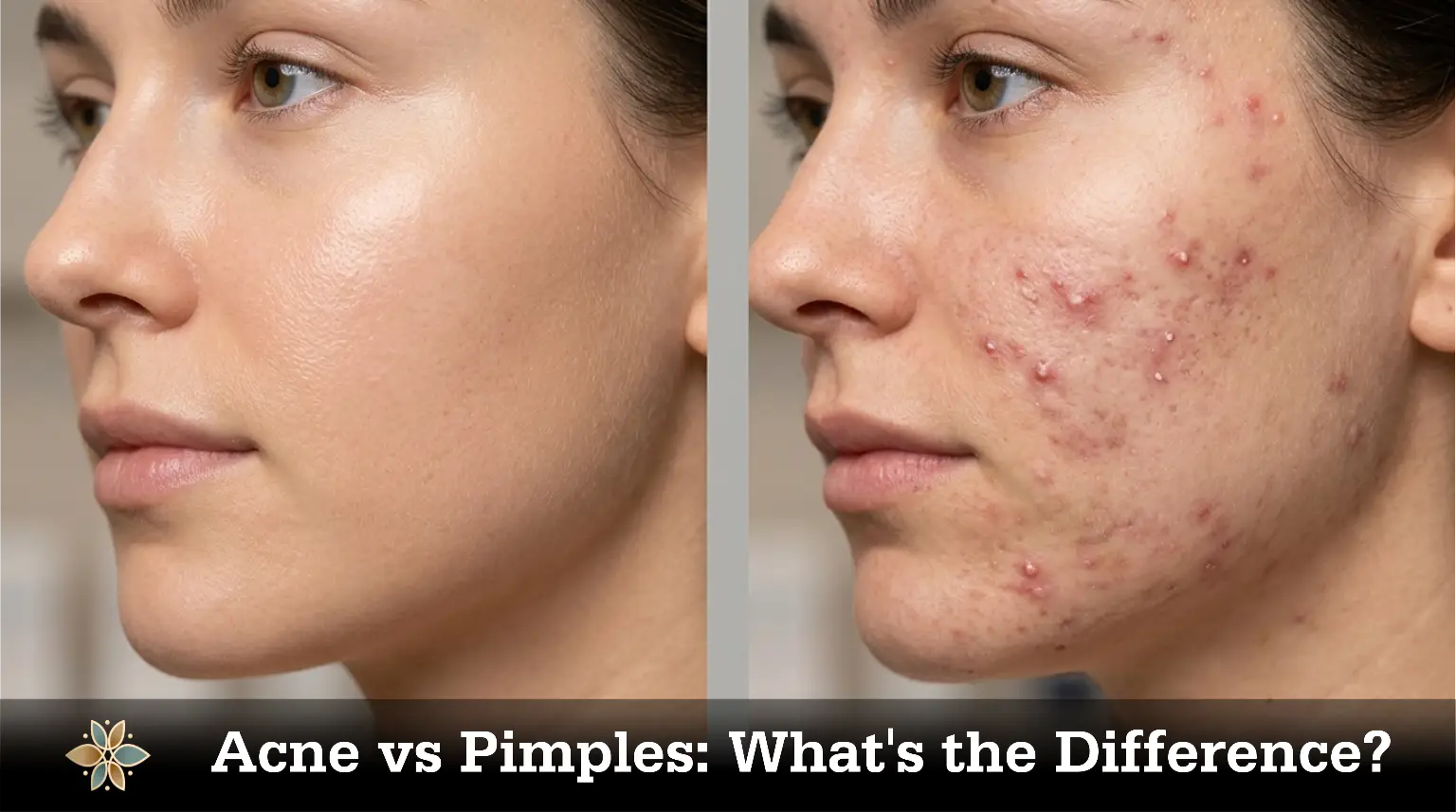
Many people use the terms "acne" and "pimples" interchangeably. While they are closely related, they are not exactly the same thing. This confusion often leads people to misunderstand their skin condition, choose ineffective treatments, or underestimate the seriousness of persistent breakouts.
According to dermatologists, acne is a medical skin condition, while pimples are one of the visible symptoms of that condition. Understanding the difference can help you choose appropriate skincare products, identify potential triggers, and know when professional treatment may be necessary.
Whether you're a teenager experiencing your first breakout, an adult struggling with hormonal acne, or simply trying to improve your skincare knowledge, this scientific guide explains everything you need to know.
Quick Answer
Acne is a chronic inflammatory skin condition that affects hair follicles and oil glands. Pimples are individual skin lesions that develop as a result of acne or temporary pore blockage. In simple terms, acne is the disease, while pimples are one of its symptoms.
Acne's Scientific Definition
Acne vulgaris is a chronic inflammatory disorder of the pilosebaceous unit, which includes:
- Hair follicles
- Sebaceous (oil) glands
- Hair shafts
Acne develops when pores become blocked by oil, dead skin cells, and debris, creating an environment that promotes inflammation and bacterial overgrowth.
Dermatological Perspective
Dermatologists classify acne as a medical condition that can vary in severity from mild blackheads to severe cystic lesions. Acne commonly affects:
- Face
- Forehead
- Chin
- Jawline
- Chest
- Back
Shoulders
What Are Pimples?
A pimple is an individual skin lesion that develops when a pore becomes clogged and inflamed. Pimples can appear as:
- Whiteheads
- Blackheads
- Red bumps
- Pustules
- Nodules
- Cysts
A person may occasionally develop a pimple without having clinical acne. For example, a single breakout caused by stress, hormones, or a cosmetic product does not necessarily mean someone has acne.