
Sunscreen: The Complete Guide to SPF, UV Protection, Skin Health, and Daily Sun Safety
QUICK ANSWER
Sunscreen is a protective skincare product that helps shield the skin from ultraviolet (UV) radiation. Regular sunscreen use can reduce sunburn, premature aging, hyperpigmentation, and long-term skin damage. Dermatologists generally recommend broad-spectrum sunscreen with SPF 30 or higher for daily use.
Table of Contents
Few skincare products have received as much scientific support as sunscreen. While many people associate sunscreen primarily with preventing sunburn during summer vacations, modern research has demonstrated that sunscreen plays a much larger role in protecting long-term skin health. Daily exposure to ultraviolet radiation can contribute to:
- Premature aging
- Hyperpigmentation
- Uneven skin tone
- Fine lines and wrinkles
- Loss of skin elasticity
- Sunburn
- Certain forms of skin cancer
These effects may accumulate gradually over many years, often without immediate visible signs. Today, dermatologists widely consider sunscreen one of the most important components of a comprehensive skincare routine. Whether your goal is preventing sun damage, maintaining youthful-looking skin, reducing hyperpigmentation, or protecting overall skin health, understanding how sunscreen works is essential. This Sunscreen Resource Center serves as the central educational hub for all sunscreen-related content on Lunaria Organics.
What Is Sunscreen?
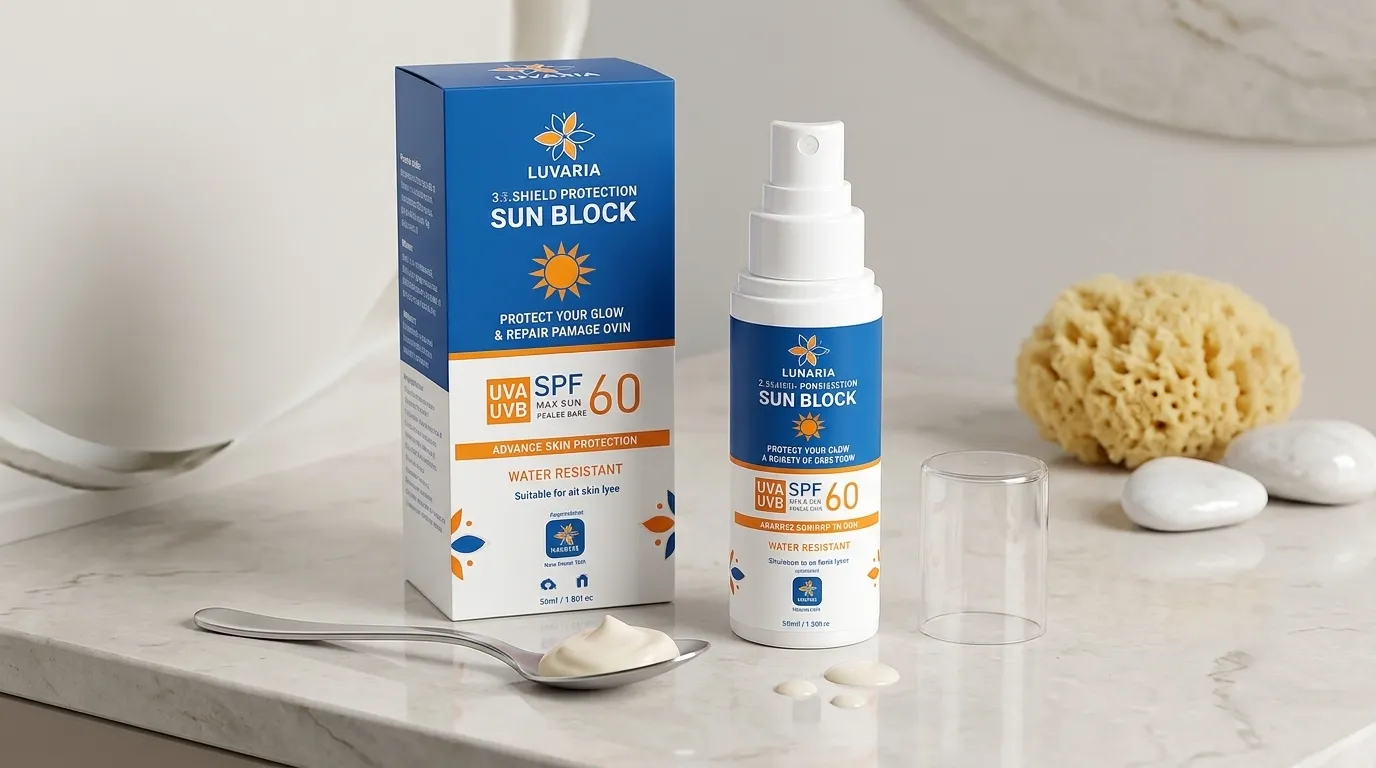
Scientific Definition: Sunscreen is a topical product formulated to help protect the skin from ultraviolet (UV) radiation emitted by the sun. These products contain active ingredients known as UV filters that either:
- Absorb UV radiation
- Reflect UV radiation
- Scatter UV radiation
before it can significantly damage skin cells. Sunscreens are available in various forms including:
- Creams
- Lotions
- Gels
- Fluids
- Sprays
- Sticks
The primary purpose of sunscreen is to reduce UV-induced skin damage while helping maintain healthier skin over time.
Why Sunscreen Matters
Many people believe sunscreen is only necessary on sunny days or during outdoor activities. Scientific evidence suggests otherwise.
UV exposure occurs:
- Year-round
- During cloudy weather
- Through windows (UVA)
- During daily commutes
- During outdoor exercise
- During routine activities
Even relatively short periods of repeated exposure can contribute to cumulative skin damage.
Benefits of Daily Sunscreen Use
Helps Prevent Sunburn
Sunburn is one of the most immediate effects of excessive UV exposure.
Repeated sunburns increase the risk of long-term skin damage.
Helps Reduce Premature Aging
Research has shown that ultraviolet radiation contributes significantly to visible skin aging.
This process is known as:
Photoaging
Common signs include:
- Fine lines
- Wrinkles
- Sagging skin
- Uneven texture
- Pigmentation changes
Daily sunscreen use can help reduce these effects.
Helps Minimize Hyperpigmentation
UV exposure can stimulate melanin production.
This may worsen:
- Dark spots
- Melasma
- Post-inflammatory hyperpigmentation
For individuals treating hyperpigmentation, sunscreen is often considered a non-negotiable part of treatment.
Related Reading:
→ Does Sunscreen Help Dark Spots?
Supports Overall Skin Health
Healthy skin depends on protecting structural proteins such as:
- Collagen
- Elastin
UV damage accelerates the breakdown of these proteins. Consistent sunscreen use helps support long-term skin integrity.
Understanding UV Radiation
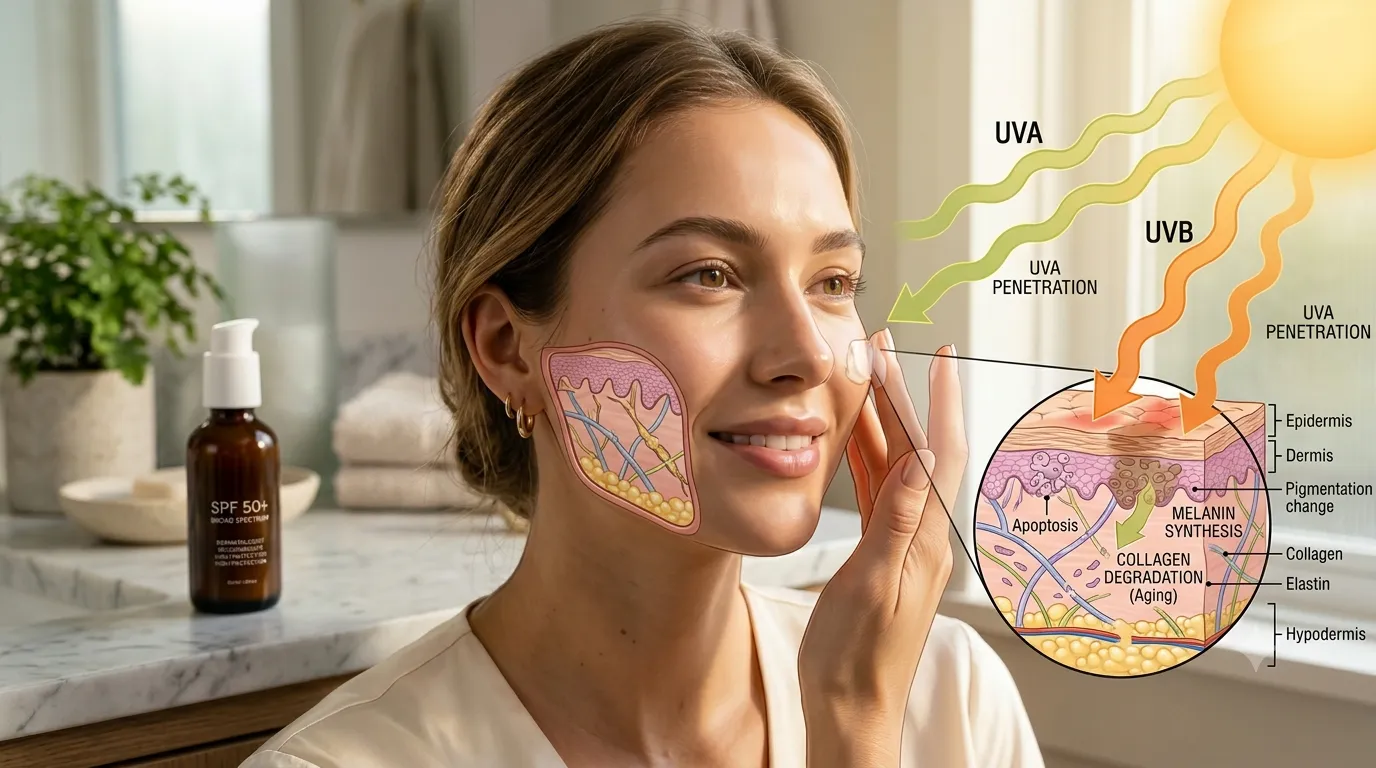
To understand sunscreen, it is important to understand ultraviolet radiation. The sun emits several forms of radiation. The most relevant to skin health include UVA Rays and UVB Rays. Both contribute to skin damage but affect the skin differently.
UVA Radiation (The Aging Rays)
UVA rays penetrate deeper into the skin. They are strongly associated with:
- Premature aging
- Collagen breakdown
- Wrinkles
- Pigmentation issues
- Long-term skin damage
UVA rays remain relatively constant throughout the year and can penetrate glass. This means exposure can occur:
- Indoors near windows
- While driving
- During cloudy weather
UVB Radiation (The Burning Rays)
UVB rays primarily affect the outer layers of skin. They are responsible for:
- Sunburn
- DNA damage
- Increased skin cancer risk
UVB intensity varies depending on:
- Season
- Geographic location
- Time of day
Both UVA and UVB protection are essential for comprehensive sun safety.
How Sunscreen Works?
Modern sunscreens protect the skin through specialized UV-filtering ingredients. When applied correctly, these ingredients help reduce the amount of UV radiation reaching skin cells. The protection mechanism depends on the type of sunscreen.
UV Absorption
Many sunscreen ingredients absorb UV radiation and convert it into small amounts of heat. Examples include:
- Avobenzone
- Octisalate
- Octocrylene
- Homosalate
UV Reflection and Scattering
Mineral sunscreen ingredients help scatter and reflect UV radiation. Examples include:
- Zinc Oxide
- Titanium Dioxide
Modern research indicates that mineral filters may also absorb portions of UV radiation in addition to scattering it.
Types of Sunscreen
Sunscreens can generally be divided into two major categories.
1. Mineral Sunscreen
Also known as: Physical Sunscreen
Uses ingredients such as:
- Zinc Oxide
- Titanium Dioxide
Potential benefits:
- Broad-spectrum protection
- Suitable for sensitive skin
- Lower irritation potential
Potential limitations:
- White cast
- Heavier texture
2. Chemical Sunscreen
Uses organic UV filters that absorb ultraviolet radiation.
Common ingredients include:
- Avobenzone
- Octocrylene
- Octisalate
- Homosalate
Potential benefits:
- Lightweight texture
- Easier cosmetic elegance
- Often invisible on skin
Potential limitations:
- May irritate highly sensitive skin
- Certain filters may not suit all individuals
Why Daily Sunscreen Is Considered Essential
Modern dermatology increasingly views sunscreen as a preventive skincare product rather than merely a seasonal product. Daily sunscreen use may help:
✓ Protect collagen
✓ Support skin barrier health
✓ Reduce pigmentation issues
✓ Minimize photoaging
✓ Improve outcomes of skincare treatments
✓ Enhance long-term skin health
For this reason, sunscreen is often recommended alongside cleansers, moisturizers, and treatment serums as a foundational component of daily skincare.
SPF EXPLAINED
One of the most misunderstood terms in skincare is SPF. Many consumers assume that a higher SPF means complete protection from the sun. In reality, SPF measures protection against a specific type of ultraviolet radiation and should be understood within the context of overall sun protection.
What Does SPF Mean?
SPF stands for: Sun Protection Factor
SPF measures how effectively a sunscreen helps protect the skin from UVB radiation, the primary cause of sunburn. In simple terms: If your skin normally burns after 10 minutes of sun exposure, an SPF product theoretically allows you to stay in the sun longer before burning when applied correctly. However, real-world protection depends on:
- Application amount
- Reapplication frequency
- Sweat and water exposure
- Skin type
- UV intensity
SPF 15 vs SPF 30 vs SPF 50
A common misconception is that SPF 50 provides dramatically more protection than SPF 30. In reality:
| SPF | Approximate UVB Protection |
| SPF 15 | ~93% |
| SPF 30 | ~97% |
| SPF 50 | ~98% |
| SPF 100 | ~99% |
While higher SPF products provide slightly greater protection, no sunscreen blocks 100% of UV radiation. For most individuals, dermatologists generally recommend:
SPF 30 or Higher for everyday use.
Is SPF 100 Necessary?
SPF 100 may provide additional protection for:
- Very fair skin
- Individuals with a history of skin cancer
- Outdoor workers
- High UV environments
However, SPF 100 should not create a false sense of security.
Reapplication remains essential regardless of SPF level.
What Is Broad-Spectrum Sunscreen?
A sunscreen may have a high SPF while still providing inadequate UVA protection. This is why dermatologists emphasize:
Broad-Spectrum Protection
A broad-spectrum sunscreen helps protect against:
✓ UVA Rays
✓ UVB Rays
Broad-spectrum protection is often considered more important than SPF alone.
Why Broad-Spectrum Protection Matters
Without UVA protection, individuals remain vulnerable to:
- Premature aging
- Wrinkles
- Hyperpigmentation
- Collagen breakdown
- Long-term skin damage
Many skincare professionals consider broad-spectrum protection the gold standard for daily sunscreen use.
UVA vs UVB: Understanding the Difference
UVA Rays (Aging Rays)
Characteristics:
- Penetrate deeper into skin
- Present year-round
- Pass through windows
- Associated with photoaging
- Contribute to pigmentation issues
Common effects:
- Wrinkles
- Fine lines
- Sagging skin
- Uneven skin tone
UVB Rays (Burning Rays)
Characteristics:
- Affect outer skin layers
- Cause sunburn
- More intense during summer
- Strongest during midday hours
Common effects:
- Sunburn
- Skin redness
- DNA damage
Why You Need Protection from Both
Comprehensive sunscreen protection requires defense against:
UVA Damage
and
UVB Damage
This is why broad-spectrum sunscreen is recommended instead of products that focus only on SPF.
Mineral vs Chemical Sunscreen
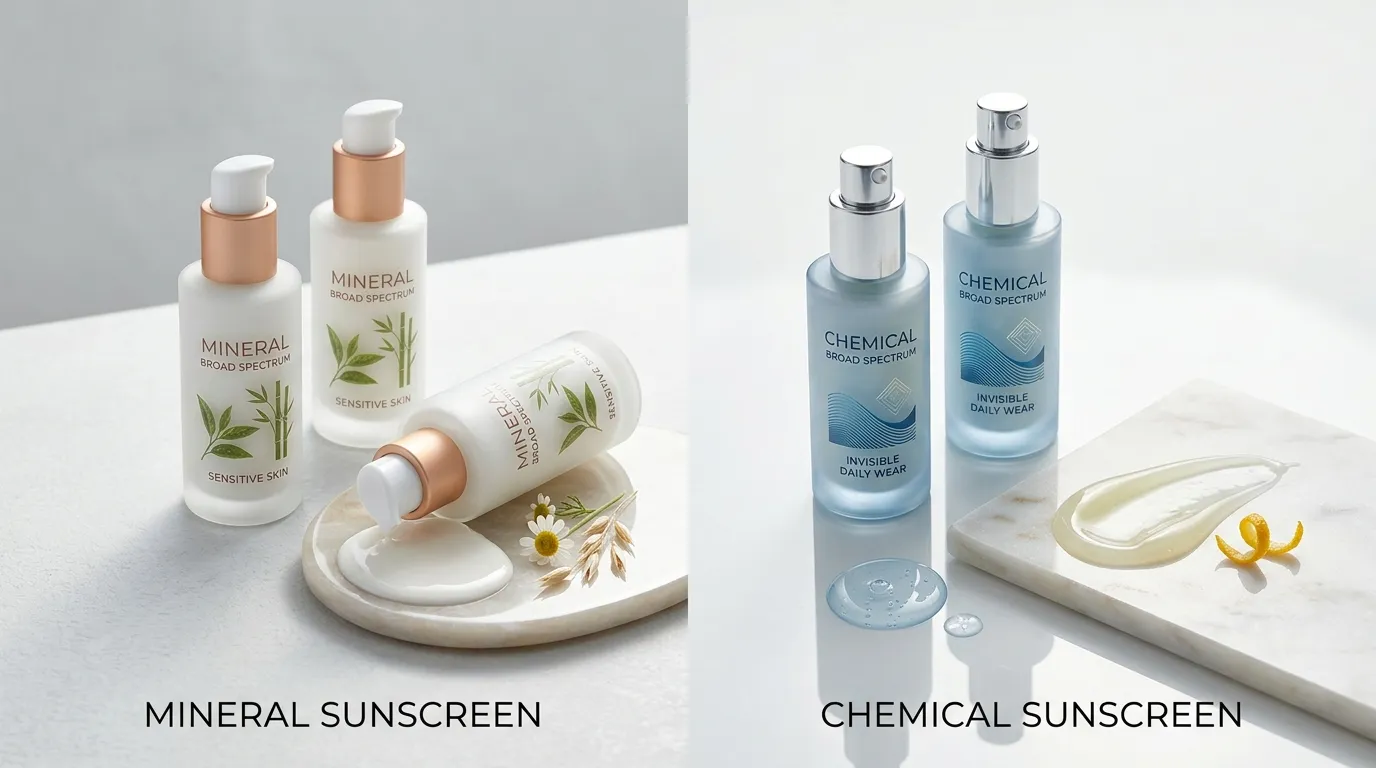
One of the most debated topics in skincare is the difference between mineral and chemical sunscreens. Both can be effective when used correctly.
The best choice depends on:
- Skin type
- Sensitivity level
- Personal preference
- Cosmetic elegance
- Lifestyle needs
Mineral Sunscreen
Also called, Physical Sunscreen
Primary ingredients:
- Zinc Oxide
- Titanium Dioxide
Benefits of Mineral Sunscreen
Broad-Spectrum Coverage: Zinc oxide offers excellent UVA and UVB protection.
Suitable for Sensitive Skin: Many dermatologists recommend mineral sunscreens for individuals with:
- Rosacea
- Sensitive skin
- Post-procedure skin
Immediate Protection: Mineral sunscreens begin protecting immediately after application.
Potential Limitations of Mineral Sunscreen
White Cast
Some formulations may leave a visible residue. This is particularly noticeable on deeper skin tones.
Heavier Texture
Certain mineral formulations may feel thicker than chemical alternatives.
Chemical Sunscreen
Chemical sunscreens use organic UV filters. Common ingredients include:
- Avobenzone
- Octocrylene
- Octisalate
- Homosalate
Benefits of Chemical Sunscreen
Lightweight Feel: Often preferred for daily wear.
Better Cosmetic Elegance: Many formulations blend seamlessly into the skin.
No White Cast: Generally suitable for all skin tones.
Potential Limitations of Chemical Sunscreen
Skin Sensitivity: Some individuals may experience irritation from specific UV filters.
Eye Stinging: Certain formulations may cause discomfort around the eyes.
Mineral vs Chemical Sunscreen Comparison
Feature | Mineral Sunscreen | Chemical Sunscreen |
UVA Protection | Excellent | Depends on filters |
UVB Protection | Excellent | Excellent |
Sensitive Skin | Often preferred | May irritate some users |
White Cast | Possible | Minimal |
Texture | Heavier | Lightweight |
Cosmetic Elegance | Moderate | High |
Acne-Prone Skin | Depends on formula | Depends on formula |
Best Sunscreen Ingredient
Understanding sunscreen ingredients helps consumers make informed decisions.
Zinc Oxide
One of the most respected sunscreen ingredients.
Benefits:
- Broad-spectrum protection
- Suitable for sensitive skin
- Strong UVA protection
Related Reading:
→ Zinc Oxide Sunscreen: Complete Guide
Titanium Dioxide
Benefits:
- Effective UV protection
- Gentle on skin
- Common in mineral sunscreens
Avobenzone
Benefits:
- Strong UVA protection
- Frequently used in broad-spectrum formulations
Octocrylene
Benefits:
- Helps stabilize sunscreen formulations
- Enhances UV protection
Antioxidants in Sunscreens
Many modern sunscreens contain antioxidants such as:
- Vitamin C
- Vitamin E
- Green Tea Extract
- Ferulic Acid
These ingredients may help reduce oxidative stress caused by UV exposure.
Sunscreen for Different Skin Types
Not all sunscreens are suitable for every skin type. Choosing the right formulation can significantly improve compliance and comfort.
Sunscreen for Oily Skin
Individuals with oily skin often prefer:
- Lightweight fluids
- Gel sunscreens
- Matte finishes
- Non-comedogenic formulas
Look for labels such as:
- ✓ Oil-Free
- ✓ Non-Comedogenic
- ✓ Lightweight
Related Reading:
→ Best Sunscreen for Oily Skin
Sunscreen for Dry Skin
Dry skin benefits from sunscreens containing:
- Ceramides
- Hyaluronic Acid
- Glycerin
- Squalane
These ingredients help support hydration.
Related Reading:
→ Best Sunscreen for Dry Skin
Sunscreen for Sensitive Skin
Sensitive skin often responds best to:
- Mineral sunscreens
- Fragrance-free products
- Alcohol-free formulas
Related Reading:
→ Best Sunscreen for Sensitive Skin
Sunscreen for Acne-Prone Skin
Acne-prone individuals should prioritize:
- Non-comedogenic formulas
- Lightweight textures
- Oil-free products
Potentially beneficial ingredients include:
- Niacinamide
- Zinc Oxide
Related Reading:
→ Best Sunscreen for Acne-Prone Skin
Common Sunscreen Mistakes
Even excellent sunscreen cannot perform effectively if used incorrectly.
Applying Too Little
Most people apply significantly less sunscreen than recommended. Insufficient application reduces protection dramatically.
Skipping Reapplication
Sunscreen wears off over time due to:
- Sweat
- Water exposure
- Friction
- Natural degradation
Forgetting Key Areas
Frequently missed areas include:
- Ears
- Neck
- Eyelids
- Hands
- Scalp
Only Using Sunscreen on Sunny Days
UV radiation can penetrate clouds. Daily use is generally recommended regardless of weather conditions.
Sunscreen Myths vs Facts
Sunscreen Myth | Suncreen Fact |
Dark skin doesn't need sunscreen | All skin tones benefit from UV protection |
Sunscreen causes vitamin D deficiency | Normal daily activities can still contribute to vitamin D production |
SPF 100 means all-day protection | Reapplication remains necessary |
Sunscreen is only for summer | UV exposure occurs year-round |
Makeup SPF is enough | Dedicated sunscreen is usually recommended |
You don't need sunscreen indoors | UVA can penetrate windows |
Mineral sunscreen is always better | Both types can be effective |
Higher SPF means no reapplication | Reapplication is still required |
Sunscreen prevents tanning completely | Some tanning may still occur |
One application lasts all day | Most sunscreens require reapplication |
Sunscreen Safety and Scientific Researche
Sunscreen remains one of the most extensively studied skincare categories. Major health organizations including:
- American Academy of Dermatology (AAD)
- U.S. Food and Drug Administration (FDA)
- World Health Organization (WHO)
support appropriate sun protection practices. Current scientific evidence continues to support sunscreen as an important tool for reducing UV-related skin damage.
When selecting sunscreen, consumers should choose products that:
✓ Provide broad-spectrum protection
✓ Match their skin type
✓ Encourage consistent daily use
✓ Meet local regulatory standards
Daily Sunscreen Routine
Applying sunscreen consistently is just as important as choosing the right sunscreen. Even the most advanced sunscreen formula cannot provide optimal protection if it is used incorrectly.
A simple daily sunscreen routine can significantly improve long-term skin health and help prevent cumulative UV damage.
Morning Sunscreen Routine
Step 1: Cleanse
Start with a gentle cleanser suitable for your skin type.
This helps remove:
- Excess oil
- Sweat
- Overnight product buildup
Step 2: Apply Treatment Products
Examples include:
- Vitamin C Serum
- Niacinamide Serum
- Hydrating Serums
- Antioxidant Treatments
Allow products to absorb before applying sunscreen.
Step 3: Moisturize (If Needed)
Individuals with dry or dehydrated skin may benefit from a moisturizer before sunscreen. Some modern sunscreens already contain moisturizing ingredients.
Step 4: Apply Sunscreen
Apply sunscreen as the final step of your morning skincare routine before makeup.
Use:
SPF 30 or Higher
Broad-Spectrum Protection
Adequate Amount
Proper application is critical for achieving labeled protection.
How Much Sunscreen Should You Apply?
One of the most common sunscreen mistakes is under-application. Most adults require approximately:
Face and Neck
Two-finger rule: A line of sunscreen along the length of the index and middle fingers.
Entire Body
Approximately:
One Ounce (30 mL)
or roughly a shot-glass amount. Using less than recommended significantly reduces protection.
When Should You Reapply Sunscreen?
Reapplication is essential because sunscreen effectiveness decreases over time. General recommendation:
Every Two Hours: when outdoors.
More frequent reapplication may be necessary during:
- Swimming
- Sweating
- Towel drying
- Outdoor sports
Sunscreen and Hyperpigmentation
Sunscreen plays a major role in preventing and managing pigmentation concerns. Many people focus on brightening treatments while overlooking sun protection. Without sunscreen, treatments targeting pigmentation often produce slower or less noticeable results.
How UV Exposure Worsens Hyperpigmentation
Ultraviolet radiation stimulates melanin production. This may worsen:
- Dark spots
- Melasma
- Post-inflammatory hyperpigmentation
- Uneven skin tone
For this reason, dermatologists frequently consider sunscreen one of the most important components of any pigmentation treatment plan.
Related Reading:
→ What Is Hyperpigmentation?
→ How Vitamin C Brightens Skin
→ Niacinamide for Hyperpigmentation
Sunscreen and Anti-Aging
One of the most compelling reasons to use sunscreen daily is its role in reducing visible signs of aging.
Photoaging
Photoaging refers to skin aging caused by UV exposure. Common signs include:
- Fine lines
- Wrinkles
- Loss of elasticity
- Rough texture
- Uneven pigmentation
Research consistently demonstrates that UV radiation is one of the leading external contributors to premature skin aging.
Protecting Collagen and Elastin
Healthy skin depends on structural proteins such as:
Collagen
Elastin
UV radiation accelerates the breakdown of these proteins. Daily sunscreen use helps reduce this process and supports healthier-looking skin over time.
Related Reading:
→ Does Sunscreen Prevent Aging?
→ What Causes Wrinkles?
Sunscreen and Skin Cancer Prevention
While cosmetic benefits often receive the most attention, sunscreen's role in protecting overall skin health is equally important. Excessive UV exposure can damage cellular DNA and contribute to long-term skin changes. Major health organizations worldwide encourage comprehensive sun protection practices that include:
- Sunscreen
- Protective clothing
- Shade
- UV avoidance during peak hours
Sunscreen should be viewed as one component of a broader sun safety strategy.
Dermatologist Recommendations
Although sunscreen needs vary between individuals, several recommendations are widely supported by dermatology professionals.
Choose Broad-Spectrum Protection
Protect against both:
- UVA Rays
- UVB Rays
Use SPF 30 or Higher: For most people, SPF 30 provides effective daily protection when applied correctly.
Apply Enough Product: Most users apply significantly less sunscreen than recommended.
Reapply Consistently: Particularly during prolonged outdoor exposure.
Match Sunscreen to Your Skin Type
Comfortable products improve long-term compliance. The best sunscreen is often the one you will use every day.
Frequently Asked Questions Regarding Sunscreen
Do I Need Sunscreen Every Day?
Yes. UV exposure occurs throughout the year, including during cloudy weather and routine daily activities.
What Does Broad-Spectrum Mean?
Broad-spectrum sunscreen helps protect against both UVA and UVB radiation.
Should I Wear Sunscreen Indoors?
If you spend time near windows or receive significant daylight exposure, sunscreen may still be beneficial because UVA rays can penetrate glass.
Can Sunscreen Cause Acne?
Some formulations may not suit acne-prone skin. Choosing non-comedogenic products may help reduce the risk of breakouts.
How Long Does Sunscreen Last After Application?
Most sunscreens should be reapplied approximately every two hours during outdoor exposure.
Can Sunscreen Help Prevent Hyperpigmentation?
Yes.
Consistent sunscreen use is considered one of the most important strategies for managing pigmentation concerns.
Is SPF 30 Enough?
For most individuals, SPF 30 provides effective daily protection when applied correctly and reapplied as needed.
Can Sunscreen Prevent Wrinkles?
Daily sunscreen use may help reduce UV-related skin aging and support healthier skin over time.
Does Dark Skin Need Sunscreen?
Yes.
Although darker skin contains more melanin, UV damage and pigmentation concerns can still occur.
Is Higher SPF Always Better?
Higher SPF provides slightly greater UVB protection, but proper application and reapplication remain more important.
Is Mineral Sunscreen Better Than Chemical Sunscreen?
Neither type is universally superior. The best choice depends on:
- Skin type
- Sensitivity
- Personal preference
- Cosmetic elegance
Can I Skip Sunscreen If My Makeup Contains SPF?
Most experts recommend using a dedicated sunscreen because makeup is often not applied in sufficient quantities to achieve labeled SPF protection.
Conclusion of Sunscreen Guide
Sunscreen is far more than a seasonal skincare product. It is a daily protective measure that supports healthier skin, reduces cumulative UV damage, and complements nearly every skincare goal—from preventing premature aging to managing pigmentation concerns.
Whether you have oily skin, sensitive skin, acne-prone skin, or mature skin, incorporating sunscreen into your daily routine is one of the simplest and most evidence-based decisions you can make for long-term skin health.
SCIENTIFIC REFERENCES
- American Academy of Dermatology (AAD). Sunscreen FAQs and Sun Protection Recommendations.
- U.S. Food and Drug Administration (FDA). Sunscreen: How to Help Protect Your Skin from the Sun.
- World Health Organization (WHO). Ultraviolet Radiation and Human Health.
- National Cancer Institute. Sun Protection and Skin Cancer Prevention.
- Harvard Medical School. Understanding UV Radiation and Skin Aging.
- Journal of the American Academy of Dermatology. Sunscreen Use and Photoaging Prevention.
- British Journal of Dermatology. UV Exposure and Skin Aging Research.
- International Journal of Cosmetic Science. Advances in Sunscreen Formulation and Photoprotection.
- National Library of Medicine (PubMed). Broad-Spectrum Sunscreen and Skin Health Research.
- Cleveland Clinic. Sunscreen and Skin Protection Guidance.