
Skin Cancer: World's 5th most common cancer globally
Quick Answer
Skin cancer develops when skin cells grow abnormally, usually after repeated damage from ultraviolet (UV) radiation from the sun or artificial tanning devices. The three main types are basal cell carcinoma, squamous cell carcinoma, and melanoma. Early detection, timely diagnosis, and appropriate treatment greatly improve outcomes, making regular skin checks and daily sun protection essential.
Key Takeaways
- Skin cancer is the most common cancer worldwide.
- Early-stage skin cancer is often highly treatable.
- The most common types are basal cell carcinoma, squamous cell carcinoma, and melanoma.
- Ultraviolet (UV) exposure remains one of the leading preventable risk factors.
- Regular skin examinations and daily sunscreen use help reduce the risk of advanced disease.
Table of Contents
Every year, millions of people around the world are diagnosed with skin cancer, ranging from slow-growing lesions that rarely spread to aggressive cancers capable of invading other parts of the body if left untreated.
Although hearing the word "cancer" can be frightening, it is important to understand that not all skin cancers behave the same way. Some grow slowly and are highly curable when detected early, while others—particularly melanoma—can become life-threatening if diagnosis and treatment are delayed.
One reason skin cancer is so common is that our skin is constantly exposed to environmental factors, especially ultraviolet (UV) radiation from sunlight. Over time, repeated UV exposure can damage the DNA inside skin cells, increasing the likelihood of abnormal cell growth.
Fortunately, skin cancer is also one of the few cancers that can often be detected visually before it causes serious health problems. Learning to recognize early skin cancer symptoms, understanding your personal risk factors, and seeking prompt medical evaluation for suspicious skin changes can significantly improve treatment outcomes.
According to the World Health Organization (WHO), excessive ultraviolet radiation remains one of the leading preventable causes of skin cancer. Likewise, organizations such as the American Cancer Society (ACS) and the American Academy of Dermatology (AAD) emphasize that regular skin examinations, protective clothing, and consistent sunscreen use are essential components of skin cancer prevention.
This comprehensive guide explains what skin cancer is, how it develops, the major types of skin cancer, common symptoms, available treatment options, and practical strategies for reducing your risk based on current scientific evidence.
What Is Skin Cancer?
disrupt the normal process of cell growth and repair.
Healthy skin cells continuously grow, mature, and are replaced in a carefully regulated cycle. When DNA inside these cells becomes damaged—most commonly by repeated exposure to ultraviolet radiation—some cells may begin multiplying without normal control.
Over time, these abnormal cells can form:
- Lesions
- Growths
- Scaly patches
- Persistent sores
- Unusual moles
- Tumors
Not every abnormal skin growth is cancerous, but any new, changing, or non-healing lesion should be evaluated by a qualified healthcare professional.
How Does Skin Cancer Develop?
Most skin cancers develop gradually over many years.
Repeated exposure to ultraviolet radiation damages the DNA inside skin cells. Normally, the body repairs this damage or removes damaged cells through natural processes.
However, when DNA damage accumulates faster than the body can repair it, mutations may develop.
These mutations can cause cells to:
- Grow uncontrollably
- Avoid normal cell death
- Multiply rapidly
- Form cancerous tumors
While sunlight is the most common source of ultraviolet exposure, tanning beds also emit UV radiation that contributes to skin cancer risk.
What Experts Say?
Skin cancer does not usually develop after a single episode of sun exposure. Instead, it often results from years of cumulative ultraviolet damage, making consistent daily sun protection one of the most effective preventive strategies.
How Common Is Skin Cancer?
Skin cancer is the most frequently diagnosed cancer in many countries.
Although incidence varies worldwide, non-melanoma skin cancers account for millions of new cases every year, while melanoma is responsible for a smaller proportion of diagnoses but causes the majority of skin cancer-related deaths.
Several factors have contributed to increasing rates of skin cancer, including:
- Greater ultraviolet exposure
- Aging populations
- Outdoor lifestyles
- Increased use of tanning devices
- Improved detection and diagnosis
Fortunately, advances in screening, awareness, and treatment have significantly improved outcomes for many patients.
Why Early Detection Matters
Early-stage skin cancer is often much easier to treat than advanced disease.
When detected early:
- Treatment is usually less invasive.
- Cure rates are generally higher.
- Surgical procedures are often smaller.
- The likelihood of cancer spreading decreases.
For this reason, dermatologists encourage individuals to become familiar with the normal appearance of their skin and promptly report any suspicious changes.
How Skin Cancer Develops
Skin cancer begins when genetic mutations alter the normal life cycle of skin cells.
Several factors contribute to these mutations.
Ultraviolet Radiation
The leading environmental cause of skin cancer.
Ultraviolet radiation comes from:
- Sunlight
- Tanning beds
- Artificial UV sources
Repeated exposure damages cellular DNA, increasing mutation risk.
DNA Damage
When DNA repair mechanisms become overwhelmed, abnormal cells may survive and continue dividing instead of dying naturally.
Immune System Changes
The immune system normally helps remove abnormal cells.
Conditions that weaken immune function may increase the likelihood that damaged cells survive long enough to become cancerous.
Genetic Susceptibility
Some individuals inherit genetic factors that increase their lifetime risk of developing skin cancer.
Family history should always be discussed with your healthcare provider during skin cancer risk assessment.
Major Types of Skin Cancer
Although there are several forms of skin cancer, three types account for the vast majority of diagnosed cases.
Basal Cell Carcinoma (BCC)
Basal cell carcinoma develops from cells located in the deepest layer of the epidermis.
It is:
- The most common skin cancer
- Usually slow-growing
- Rarely spreads to distant organs
- Often highly treatable when detected early
Common locations include:
- Face
- Nose
- Ears
- Neck
- Scalp
Related Guide: Basal Cell Carcinoma: Symptoms, Causes & Treatment
Squamous Cell Carcinoma (SCC)
Squamous cell carcinoma develops from squamous cells located closer to the skin surface. Compared with basal cell carcinoma, SCC has a greater potential to spread if left untreated. It commonly develops on:
- Face
- Lips
- Ears
- Hands
- Scalp
Related Guide: Squamous Cell Carcinoma Explained
Melanoma
Melanoma develops from melanocytes, the pigment-producing cells responsible for skin color.
Although melanoma is less common than basal or squamous cell carcinoma, it is generally considered the most serious form because of its greater ability to spread to lymph nodes and other organs. Early diagnosis is especially important.
Related Guide: Melanoma Skin Cancer: Complete Expert Guide
Did You Know?
Approximately 95% of skin cancers are basal cell carcinoma or squamous cell carcinoma, while melanoma accounts for a much smaller percentage of cases but is responsible for most skin cancer-related deaths due to its higher likelihood of metastasis if not treated promptly.
Who Is Most at Risk?
Although anyone can develop skin cancer, certain factors increase risk.
Major risk factors include:
- Fair skin
- Light-colored eyes
- Blond or red hair
- History of severe sunburns
- Frequent outdoor work
- Regular tanning bed use
- Increasing age
- Family history of skin cancer
- Personal history of skin cancer
- Weakened immune system
Importantly, people of every skin tone can develop skin cancer. While individuals with darker skin generally have more natural protection from ultraviolet radiation due to increased melanin, they are not immune to skin cancer and may experience delayed diagnosis because suspicious lesions are sometimes overlooked.
What Experts Say?
Risk factors increase the likelihood of developing skin cancer, but they do not guarantee it. Likewise, having no obvious risk factors does not eliminate the possibility of skin cancer. Any new or changing skin lesion should be evaluated by a qualified healthcare professional regardless of skin type or age.
Early Stage Skin Cancer
One of the most important facts about skin cancer is that early detection can significantly improve treatment outcomes. Many skin cancers begin as small, subtle changes that are easy to overlook, especially because they are often painless during the early stages.
Recognizing early stage skin cancer can lead to earlier diagnosis, less invasive treatment, and a better prognosis.
Early skin cancer may appear as:
- A new mole or growth
- A sore that does not heal
- A rough or scaly patch
- A shiny or pearly bump
- A persistent red patch
- A lesion that slowly changes in size, shape, or color
Not every unusual skin lesion is cancerous, but any persistent or changing lesion should be evaluated by a dermatologist.
Related Guide: Early Stage Skin Cancer: Signs, Pictures & When to Seek Help
Why Early Detection Matters
Skin cancer identified at an early stage is often:
- Easier to remove
- Less likely to spread
- Associated with higher treatment success
- Less likely to require extensive surgery
Melanoma, in particular, has an excellent prognosis when diagnosed before it spreads beyond the skin.
Skin Cancer Symptoms
Skin cancer symptoms vary depending on the type of cancer and the location of the lesion. Some skin cancers develop slowly over months or years, while others may change more rapidly.
Common skin cancer symptoms include:
- A sore that doesn't heal
- A bleeding lesion
- Persistent itching
- Pain or tenderness
- Crusting
- Scaly patches
- Changes in an existing mole
- New skin growths
- Unexplained skin discoloration
Some lesions may remain completely painless, which is why visual changes should never be ignored.
General Warning Signs
Seek medical evaluation if you notice:
- Rapid changes in size
- Irregular borders
- Color variation
- Persistent ulceration
- Bleeding without injury
- Recurrent crusting
- A lesion that repeatedly heals and returns
What Experts Say?
Many skin cancers are not painful during their earliest stages. Waiting for pain before seeking medical attention may delay diagnosis.
Signs of Skin Cancer
Many people search for "signs of skin cancer" rather than symptoms. Although these terms are often used interchangeably, signs generally refer to visible physical changes that can be observed during a skin examination.
Common visible signs include:
- A new mole
- A changing mole
- Pearly bumps
- Waxy growths
- Persistent red plaques
- Thickened skin
- Crusting lesions
- Open sores
- Scaly growths
- Pigmented lesions with irregular borders
The ABCDE Rule for Melanoma
Dermatologists frequently recommend using the ABCDE Rule when evaluating moles.
A — Asymmetry
One half differs from the other.
B — Border
Edges are:
- Irregular
- Notched
- Blurred
C — Color
Multiple colors may appear within one lesion:
- Brown
- Black
- Red
- Blue
- White
D — Diameter
Typically larger than 6 mm, although melanoma can be smaller.
E — Evolving
Any mole that changes in:
- Size
- Shape
- Color
- Elevation
- Symptoms
requires prompt medical evaluation.
Did You Know?
The "E" (Evolving) criterion is often considered the most important warning sign because changes over time may indicate abnormal cell growth.
What Does Skin Cancer Look Like?
There is no single appearance that defines skin cancer.
Depending on its type, it may resemble:
- A mole
- A pimple
- A scar
- A wart
- A dry patch
- An eczema-like rash
- A persistent sore
Because appearance varies considerably, any suspicious lesion should be examined by a healthcare professional.
Related Guide: What Does Skin Cancer Look Like? Complete Visual Guide
Skin Cancer on the Face
The face is one of the most common locations for skin cancer because it receives substantial ultraviolet exposure throughout life.
Frequently affected areas include:
- Forehead
- Nose
- Eyelids
- Cheeks
- Lips
- Temples
- Ears
Skin cancer on the face may appear as:
- A shiny bump
- A non-healing sore
- Persistent redness
- Thickened skin
- Crusting lesions
- Pigmented changes
Because facial skin is highly visible and cosmetically important, early diagnosis often allows for more tissue-preserving treatment approaches.
Skin Cancer on the Nose
The nose is among the most sun-exposed parts of the body.
This makes it particularly susceptible to:
- Basal cell carcinoma
- Squamous cell carcinoma
- Occasionally melanoma
Suspicious changes include:
- Persistent scabbing
- Bleeding
- Small ulcers
- Pearly nodules
- Non-healing sores
Because nasal skin has limited tissue available for reconstruction, early diagnosis is especially important.
Related Guide: Skin Cancer on the Nose: Symptoms, Diagnosis & Treatment
Can a White Spot Be Skin Cancer?
Some people notice a white mark on the skin and worry it could represent skin cancer.
Although many white spots result from harmless conditions such as:
- Vitiligo
- Fungal infections
- Scarring
- Post-inflammatory pigment loss
certain skin cancers can occasionally appear as:
- Pale plaques
- Waxy white lesions
- Scar-like areas
A persistent white lesion that changes over time or fails to heal should be assessed by a dermatologist.
Related Guide: Can a White Spot Be Skin Cancer?
How Skin Cancer Is Diagnosed?
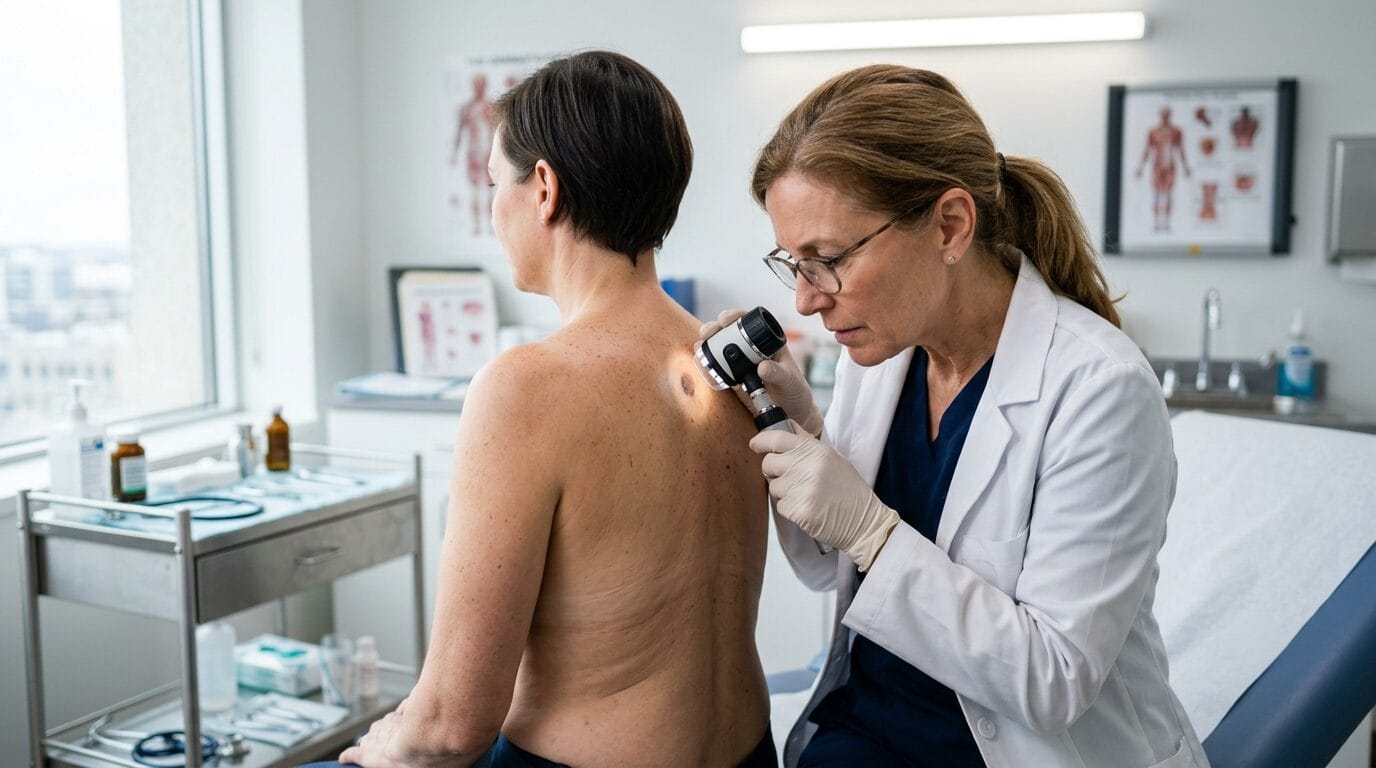
Diagnosis usually begins with a thorough medical history and skin examination.
A dermatologist evaluates:
- Lesion size
- Shape
- Border
- Color
- Texture
- Location
- Growth pattern
Additional diagnostic tools may be used when necessary.
Dermoscopy
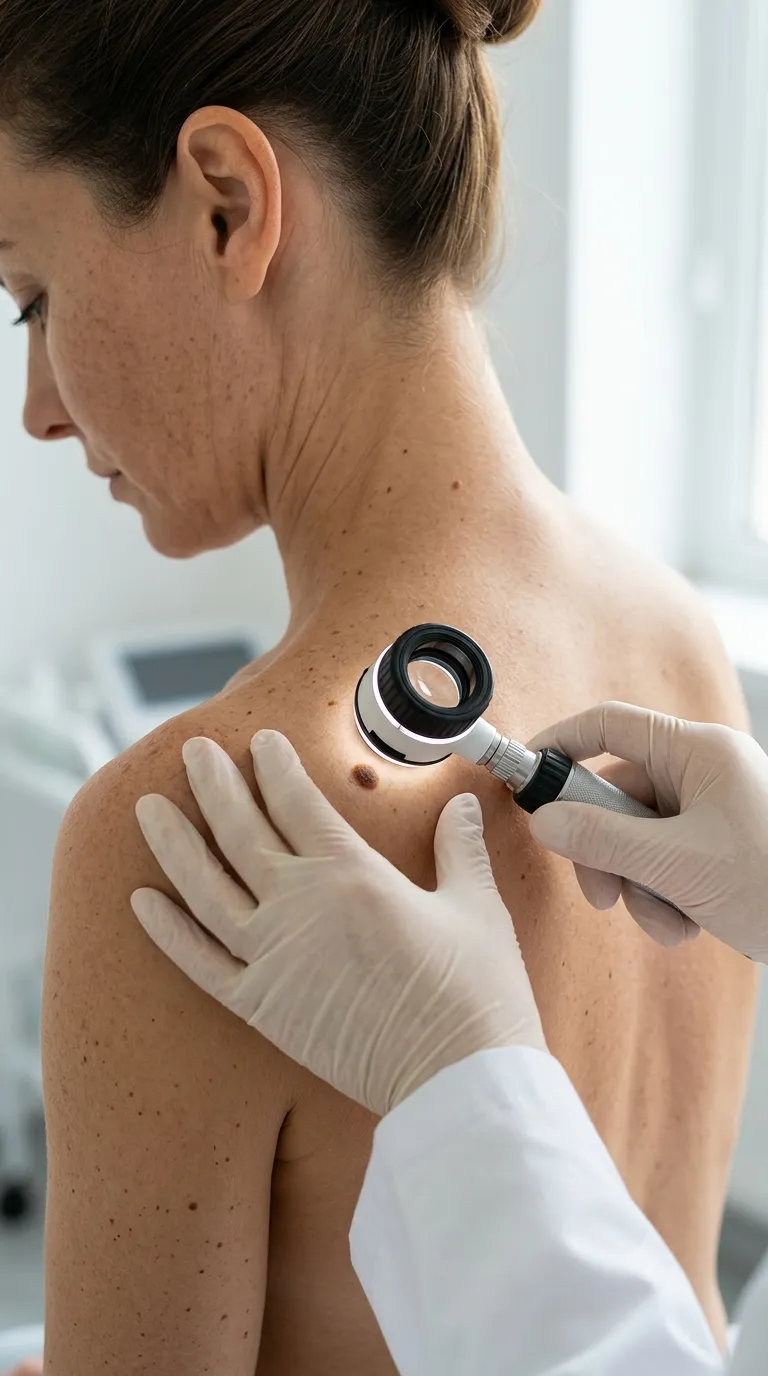
A dermoscope is a handheld device that magnifies skin structures not visible to the naked eye.
This improves diagnostic accuracy for many pigmented lesions.
Skin Biopsy
A biopsy remains the gold standard for confirming skin cancer.
A small tissue sample is removed and examined under a microscope by a pathologist.
Common biopsy techniques include:
- Shave biopsy
- Punch biopsy
- Excisional biopsy
The choice depends on the lesion's appearance and location.
Imaging Studies
Most early skin cancers do not require imaging.
However, advanced cases may involve:
- Ultrasound
- CT scan
- MRI
- PET scan
to evaluate possible spread.
Skin Cancer Screening
Routine skin examinations help identify suspicious lesions before symptoms become severe.
People at increased risk may benefit from regular professional skin examinations, including those with:
- Fair skin
- A history of severe sunburns
- Numerous moles
- Previous skin cancer
- A strong family history of melanoma
- Long-term immunosuppression
In addition to professional examinations, dermatologists often recommend performing monthly self-skin examinations to become familiar with your normal skin and identify new or changing lesions early.
What Experts Say?
Screening is most effective when combined with skin awareness. Becoming familiar with your own moles and skin patterns makes it easier to recognize changes that deserve prompt medical evaluation.
Skin Cancer Treatment
Skin cancer treatment depends on several factors, including:
- The type of skin cancer
- The size and depth of the tumor
- Its location
- Whether it has spread
- The patient's age and overall health
The primary goal of treatment is to remove or destroy cancer cells while preserving as much healthy tissue as possible.
Fortunately, most skin cancers are highly treatable when diagnosed early.
Surgical Excision
For many skin cancers, surgery is the first-line treatment.
During surgical excision, the dermatologist or surgeon removes:
- The cancer
- A small margin of surrounding healthy tissue
The removed tissue is then examined by a pathologist to confirm whether all cancer cells have been eliminated.
This treatment is commonly used for:
- Basal Cell Carcinoma
- Squamous Cell Carcinoma
Early Melanoma
Mohs Micrographic Surgery
Mohs surgery is a specialized technique that removes skin cancer one layer at a time. Each layer is immediately examined under a microscope until no cancer cells remain.
Mohs surgery offers:
- Extremely high cure rates
- Maximum preservation of healthy tissue
- Excellent cosmetic outcomes
It is commonly recommended for skin cancers located on:
- Nose
- Eyelids
- Lips
- Ears
- Face
Related Guide: Mohs Surgery Explained
Radiation Therapy
Radiation therapy uses high-energy radiation to destroy cancer cells. It may be recommended when:
- Surgery is not appropriate
- Complete surgical removal is difficult
- Cancer returns after surgery
Radiation is particularly useful for selected older adults or patients who cannot undergo surgery.
Immunotherapy
Immunotherapy helps the body's immune system recognize and attack cancer cells.
It has transformed the treatment of advanced melanoma and certain high-risk skin cancers.
Examples include immune checkpoint inhibitors that enhance the immune response against cancer cells.
Targeted Therapy
Some melanomas contain specific genetic mutations, such as BRAF mutations.
Targeted therapies are designed to block these abnormal molecular pathways, slowing or stopping tumor growth.
Chemotherapy
Chemotherapy is used much less frequently than in the past because newer therapies often provide better outcomes.
However, it may still play a role in selected advanced cases.
What Experts Say?
Treatment recommendations should always be individualized. Factors such as cancer type, stage, overall health, and patient preferences are considered by the treating dermatologist, surgical oncologist, or oncology team.
Can Skin Cancer Be Prevented?
Although not every case of skin cancer can be prevented, many cases are linked to avoidable ultraviolet (UV) exposure.
Reducing UV damage throughout life remains one of the most effective ways to lower skin cancer risk.
Practice Daily Sun Protection
Dermatologists recommend:
- Wearing broad-spectrum sunscreen with SPF 30 or higher
- Reapplying sunscreen every two hours outdoors
- Seeking shade during peak UV hours
- Wearing wide-brimmed hats
- Using UV-protective sunglasses
- Wearing long-sleeved protective clothing
Avoid Tanning Beds
Artificial tanning devices emit ultraviolet radiation that significantly increases the risk of skin cancer, particularly melanoma.
There is no such thing as a safe tan from a tanning bed.
Perform Monthly Skin Self-Examinations
Become familiar with:
- Your moles
- Birthmarks
- Freckles
- Normal skin patterns
Report any new or changing lesions to a dermatologist.
Schedule Professional Skin Examinations
Individuals at higher risk should discuss regular skin examinations with their dermatologist, especially if they have:
- Numerous moles
- Previous skin cancer
- Strong family history
- Fair skin with extensive sun exposure
- Immunosuppression
Does Sunscreen Help Prevent Skin Cancer?
Regular sunscreen use is an important part of a comprehensive sun protection strategy.
Broad-spectrum sunscreen helps reduce exposure to harmful UVA and UVB radiation, which can damage the DNA of skin cells over time.
However, sunscreen should not be viewed as complete protection on its own.
For optimal protection, combine sunscreen with:
- Protective clothing
- Seeking shade
- Avoiding indoor tanning
- Wearing sunglasses
- Limiting unnecessary sun exposure during peak UV hours
Related Guide: Everything You Need to Know About Sunscreen
Skin Cancer Prevention Tips
Simple daily habits can make a meaningful difference over time.
- Wear sunscreen every day.
- Avoid intentional tanning.
- Protect children from sunburn.
- Check your skin once a month.
- Visit a dermatologist for suspicious lesions.
- Wear protective clothing outdoors.
- Learn the ABCDE warning signs of melanoma.
- Never ignore a sore that doesn't heal.
Did You Know?
Research suggests that childhood and adolescent sunburns can increase the risk of developing melanoma later in life, highlighting the importance of lifelong sun protection.
Myths vs. Facts About Skin Cancer
Myth | Fact |
Only older adults develop skin cancer. | Skin cancer can occur at any age, although risk generally increases with cumulative UV exposure. |
Dark skin cannot develop skin cancer. | People of every skin tone can develop skin cancer, although the risk and common locations may differ. |
Skin cancer is always painful. | Many early skin cancers are painless. |
A tan protects against skin cancer. | A tan is a sign of skin damage, not protection. |
Sunscreen alone completely prevents skin cancer. | Sunscreen is one part of a comprehensive sun protection strategy. |
Every mole is skin cancer. | Most moles are benign, but new or changing moles should be evaluated by a healthcare professional. |
Frequently Asked Questions About Skin Cancer
What is the most common type of skin cancer?
Basal cell carcinoma is the most common type of skin cancer worldwide.
What does early skin cancer look like?
Early skin cancer may appear as a new growth, a changing mole, a non-healing sore, or a persistent scaly patch. Because appearances vary, suspicious lesions should be assessed by a dermatologist.
When should I see a dermatologist?
Seek medical evaluation if you notice:
- A new or changing mole
- A sore that does not heal
- Persistent bleeding or crusting
- Rapid changes in a skin lesion
Any suspicious skin growth
Is skin cancer curable?
Many skin cancers are highly curable when diagnosed and treated early. Prognosis depends on the type, stage, and extent of disease.
Can skin cancer spread?
Yes. Some types, particularly melanoma and advanced squamous cell carcinoma, can spread to lymph nodes and other organs if left untreated.
Can sunscreen prevent skin cancer?
Regular sunscreen use helps reduce UV-related skin damage and contributes to skin cancer prevention when combined with other sun protection measures.
Experts Summary
Skin cancer is the most common form of cancer, but it is also one of the most preventable and, in many cases, one of the most treatable when detected early. Understanding the warning signs, recognizing changes in your skin, and practicing consistent sun protection are essential steps in reducing your risk.
While basal cell carcinoma and squamous cell carcinoma are the most common forms, melanoma remains the most aggressive type and requires prompt medical attention. Routine self-examinations, regular dermatology visits for high-risk individuals, and evidence-based prevention strategies can substantially improve outcomes.
Conclusion of Skin Cancer
Understanding skin cancer empowers you to make informed decisions about your health.
Although no preventive strategy can eliminate all risk, adopting lifelong sun-safe behaviors—including daily use of broad-spectrum sunscreen, protective clothing, avoidance of indoor tanning, and regular skin examinations—can significantly reduce UV-related skin damage.
Equally important is recognizing that early detection saves lives. Any new, changing, or non-healing skin lesion deserves prompt medical evaluation. By combining awareness, prevention, and timely medical care, individuals can greatly improve the chances of successful treatment and long-term skin health
About the Author
This article was written by Dr. Aamir Raza.
Dr. Aamir Raza is a Phytomedicine Researcher, Herbal Physician, and Evidence-Based Health & Skincare Educator with more than 10 years of university teaching experience. He specializes in phytomedicine, dermatological science, herbal therapeutics, preventive healthcare, and translating peer-reviewed medical research into practical, accurate, and evidence-based health information.
Professional Credentials
🏅 M.Phil. (Phytomedicine) — Gold Medalist
🎓 BEMS (Bachelor of Eastern Medicine & Surgery) — Silver Medalist
👨🏫 10+ Years of University Teaching Experience
🌿 Herbal Physician
🔬 Phytomedicine Researcher
📝 Evidence-Based Health & Skincare Educator
Editorial Review Process
Every article published on Lunaria Organics follows a structured editorial workflow designed to meet Google's Experience, Expertise, Authoritativeness, and Trustworthiness (EEAT) standards.
Our editorial process includes:
- Comprehensive review of current scientific literature
- Evaluation of peer-reviewed dermatology and oncology research
- Verification against recommendations from internationally recognized medical organizations
- Balanced discussion of benefits, limitations, and current scientific evidence
- Scheduled content reviews to incorporate emerging research
- Reader-focused educational content designed to support informed health decisions
Medical Disclaimer
The information published on Lunaria Organics is intended for educational and informational purposes only. It should not replace professional medical advice, diagnosis, or treatment. If you notice a suspicious skin lesion, mole, or non-healing sore, seek prompt evaluation from a qualified dermatologist or healthcare professional.
Scientific References
American Cancer Society (ACS). Skin Cancer: Prevention, Detection, and Treatment.
National Cancer Institute (NCI). Skin Cancer (Including Melanoma)—Patient Information.
American Academy of Dermatology (AAD). Guidelines on skin cancer prevention, early detection, and sunscreen use.
World Health Organization (WHO). Ultraviolet Radiation and Human Health.
Centers for Disease Control and Prevention (CDC). Skin Cancer Prevention Resources.
National Institutes of Health (NIH). Research on UV radiation, DNA damage, and skin carcinogenesis.
National Library of Medicine (PubMed). Peer-reviewed studies on melanoma, basal cell carcinoma, squamous cell carcinoma, and skin cancer screening.
National Comprehensive Cancer Network (NCCN). Clinical Practice Guidelines in Oncology for Melanoma and Non-Melanoma Skin Cancers.
Journal of the American Academy of Dermatology (JAAD). Research on diagnosis, prevention, and treatment of skin cancer.