
Dandruff Treatment: The Complete Evidence-Based Guide to a Healthy, Flake-Free Scalp
By Dr. Aamir Raza
Herbal Physician | MPhil in Phytomedicine (Gold Medal)
Bachelor of Eastern Medicine & Surgery (Silver Medal)
Former Faculty, The Islamia University of Bahawalpur & Kohat University of Science & Technology (KUST)
Reviewed using peer-reviewed scientific research, dermatology guidelines, and evidence from reputable medical organizations.
Why Trust This Article?
Dandruff is one of the most common scalp conditions worldwide, affecting people of all ages. This article has been prepared by Dr. Aamir Raza, a qualified herbal physician and former university faculty member, using evidence from peer-reviewed dermatology journals, clinical guidelines, and authoritative organizations. Healthy hair begins with a healthy scalp—and taking the right steps today can make a noticeable difference in your comfort, confidence, and overall hair health.
Table of Contents
If you've ever noticed white flakes on your shoulders or struggled with an itchy scalp, you're far from alone. Dandruff is one of the most common scalp conditions worldwide, affecting millions of people regardless of age, gender, or hair type. While it isn't contagious or life-threatening, persistent dandruff can cause discomfort, embarrassment, and even contribute to increased hair shedding when left untreated.
Fortunately, effective dandruff treatment is possible. Advances in dermatological research have helped experts better understand the causes of dandruff and develop targeted solutions, including anti dandruff shampoo formulations and medicated dandruff shampoo options that address the root cause rather than simply masking symptoms.
Many people mistakenly believe dandruff results from poor hygiene. In reality, the condition is much more complex. Factors such as scalp microbiome imbalance, excess oil production, skin sensitivity, genetics, environmental conditions, and yeast overgrowth all play important roles in the development of dandruff.
This comprehensive guide explores:
- What dandruff actually is
- The leading causes of dandruff
- The difference between dry scalp and dandruff
- Why dandruff may contribute to hair fall
- How medicated shampoos work
- The best evidence-based treatment options
- Practical lifestyle tips for maintaining a healthy scalp
Whether you're dealing with occasional flakes or persistent scalp irritation, understanding the science behind dandruff is the first step toward lasting relief.
What Is Dandruff?
Dandruff is a chronic scalp condition characterized by excessive shedding of dead skin cells from the scalp. These flakes are often accompanied by itching, irritation, redness, and inflammation.
Under normal circumstances, skin cells naturally regenerate and shed over time. However, in individuals with dandruff, this renewal cycle becomes accelerated. Instead of taking several weeks, skin cells mature and shed within just a few days. These immature cells clump together with natural scalp oils, forming the visible white or yellowish flakes associated with dandruff.
The process is strongly linked to an overgrowth of Malassezia, a naturally occurring yeast that lives on most people's scalps. While this microorganism is harmless for many individuals, some people develop an inflammatory response that disrupts normal skin turnover.
Contrary to popular belief, dandruff is not caused by poor hygiene alone. Washing your hair less frequently may make flakes more noticeable, but it is rarely the underlying cause.
How Common Is Dandruff?
Dandruff affects nearly half of the adult population at some point in their lives, making it one of the most prevalent dermatological conditions worldwide. It commonly develops:
- During adolescence
- In early adulthood
- Between the ages of 20 and 50
- In individuals with oily scalps
- During periods of stress
- In colder, drier climates
Although dandruff can affect anyone, several factors may increase the likelihood of developing persistent symptoms. These include:
- Oily skin
- Hormonal changes
- Neurological disorders
- Weakened immune function
- Family history
- Infrequent shampooing
- High stress levels
The good news is that most cases respond well to consistent treatment with the right medicated anti dandruff shampoo and appropriate scalp care.
What Causes Dandruff?
Dandruff is rarely caused by a single factor. Instead, it develops through a combination of biological, environmental, and lifestyle influences. Let's examine the primary causes.
Malassezia Yeast Overgrowth
One of the most well-established causes of dandruff is an overgrowth of Malassezia yeast.
This naturally occurring fungus feeds on sebum, the oil produced by your scalp. As it breaks down these oils, it creates by-products that can irritate sensitive skin.
For some individuals, this irritation triggers inflammation, itching, and an accelerated turnover of skin cells.
This explains why antifungal ingredients found in many medicated dandruff shampoo products are highly effective at reducing symptoms.
Excess Oil Production
People with oily scalps are generally more prone to dandruff.
Sebum itself is not harmful—in fact, it helps protect and moisturize the scalp. However, excessive oil creates an ideal environment for Malassezia yeast to thrive.
As yeast populations increase, inflammation becomes more likely, leading to visible flakes.
This is why oily dandruff often requires shampoos specifically formulated with antifungal agents.
Dry Skin
Not every flaky scalp is caused by dandruff. Many people experience dry scalp and dandruff simultaneously, but they are distinct conditions.
Dry skin results from insufficient moisture, whereas dandruff involves inflammation and abnormal skin turnover.
Cold weather, indoor heating, harsh shampoos, and dehydration can all contribute to a dry scalp. Understanding this distinction is essential because treatments differ significantly.
Seborrheic Dermatitis
More severe dandruff may actually represent a mild form of seborrheic dermatitis. This inflammatory skin disorder affects areas rich in oil glands, including:
- The scalp
- Eyebrows
- Nose
- Ears
- Beard
- Chest
Symptoms often include:
- Redness
- Greasy scales
- Persistent itching
- Yellowish flakes
Individuals with seborrheic dermatitis often benefit from prescription-strength or medicated anti dandruff shampoo products containing ketoconazole or selenium sulfide.
Sensitivity to Hair Products
Certain styling products may trigger scalp irritation. Common culprits include:
- Hair sprays
- Gels
- Fragranced shampoos
- Hair dyes
- Alcohol-based styling products
This condition, known as contact dermatitis, can mimic dandruff symptoms. If flakes appear shortly after changing products, consider whether irritation rather than true dandruff may be responsible.
Weather and Seasonal Changes
Many people notice worsening dandruff during winter. Cold temperatures combined with dry indoor heating reduce scalp moisture while altering the scalp's protective barrier.
In contrast, warm and humid weather may increase oil production, encouraging yeast growth. These seasonal fluctuations often explain why dandruff severity changes throughout the year.
Stress
Stress doesn't directly cause dandruff, but it can make existing symptoms significantly worse. Psychological stress influences immune function and inflammatory pathways throughout the body, including the skin.
Many dermatologists observe that dandruff flare-ups frequently coincide with periods of:
- Work-related stress
- Sleep deprivation
- Illness
- Emotional challenges
Managing stress can therefore become an important part of long-term scalp health.
Signs and Symptoms of Dandruff
Dandruff presents differently from person to person, but several symptoms are particularly common. These include:
- White flakes on hair and clothing
- Persistent scalp itching
- Mild redness
- Oily patches on the scalp
- Dry-looking flakes
- Tight scalp sensation
- Mild inflammation
- Occasional scalp tenderness
Some individuals experience only cosmetic flakes, while others develop severe itching that interferes with daily life. Persistent symptoms lasting several months should be evaluated by a healthcare professional to rule out other scalp disorders.
Types of Dandruff
Understanding the different forms of dandruff helps determine the most appropriate treatment.
Dry Dandruff
Dry dandruff produces small, lightweight white flakes that easily fall from the scalp. People with dry dandruff often experience:
- Tight skin
- Increased flaking after shampooing
- Symptoms during winter
- Minimal oiliness
Dry dandruff is frequently confused with dry scalp, but true dandruff still involves accelerated skin turnover.
Oily Dandruff
Oily dandruff develops when excess sebum combines with dead skin cells.
The flakes tend to:
- Be larger
- Appear yellowish
- Stick to the scalp
- Feel greasy
- Cause noticeable itching
This type typically responds best to a medicated dandruff shampoo containing antifungal ingredients.
Seborrheic Dandruff
The most inflammatory form is associated with seborrheic dermatitis.
Symptoms include:
- Thick scales
- Persistent redness
- Inflamed skin
- Greasy flakes
- Chronic recurrence
Medical evaluation may be necessary if over-the-counter treatments fail to improve symptoms after several weeks.
Dry Scalp and Dandruff: What's the Difference?
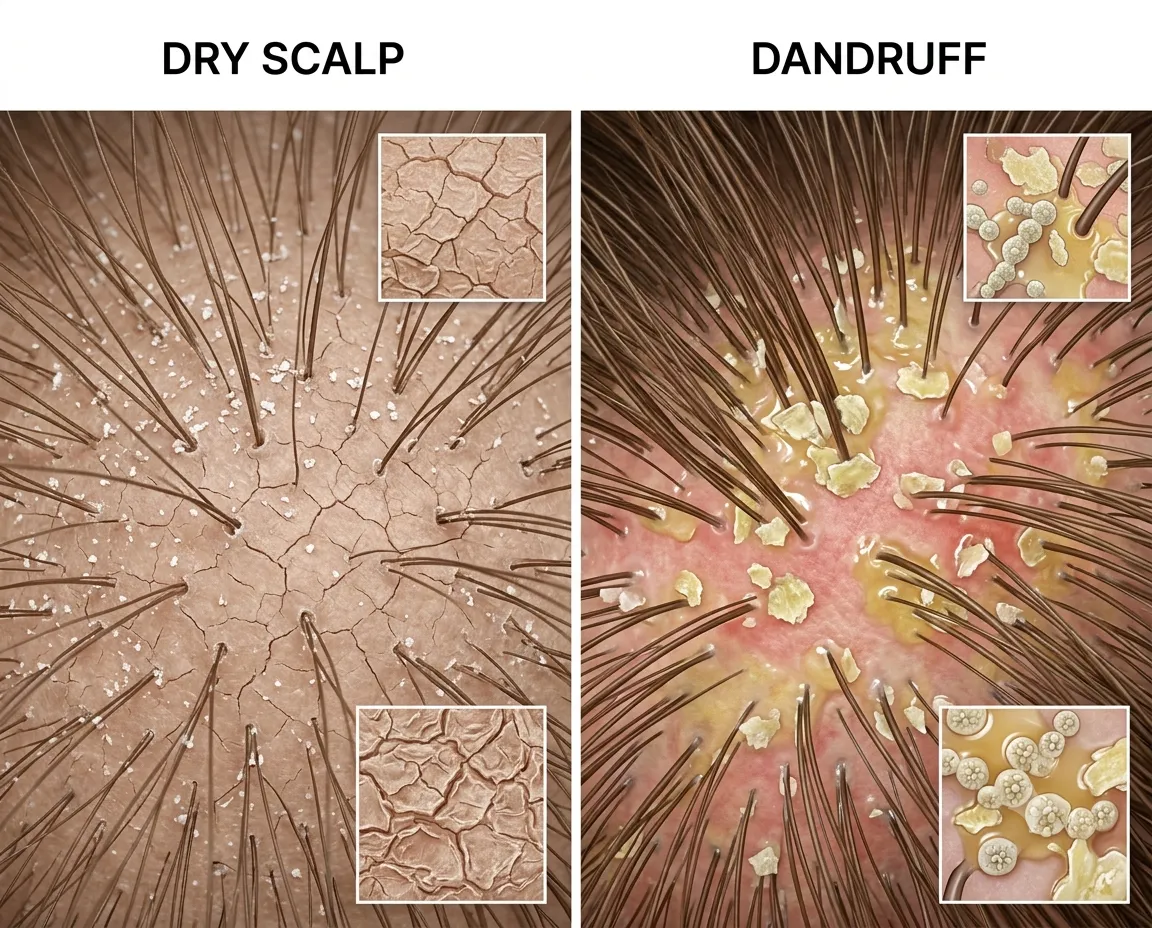
Many people search for information about dry scalp and dandruff, assuming they are the same condition. While both produce flakes, the underlying causes differ considerably.
| Dry Scalp | Dandruff |
| Lack of moisture | Excess skin turnover |
| Small, dry flakes | White or yellow flakes |
| Little inflammation | Often itchy and inflamed |
| Usually improves with moisturization | Requires targeted dandruff treatment |
| Often seasonal | Can occur year-round |
Choosing the wrong treatment may worsen symptoms. For example, applying heavy oils to fungal dandruff may encourage yeast growth, while using strong medicated shampoos on simple dry skin may increase irritation. Correct diagnosis is therefore essential for effective treatment.
Can Dandruff Cause Hair Fall?
One of the most common concerns among patients is whether hairfall due to dandruff is real. The answer is nuanced. Dandruff itself does not directly destroy hair follicles. However, persistent inflammation and excessive scratching can contribute to temporary hair shedding.
Here's how it happens:
- Chronic itching leads to scratching.
- Scratching damages the scalp surface.
- Inflammation weakens the hair environment.
- Hair enters the shedding phase more frequently.
The encouraging news is that this type of hair loss is generally reversible once dandruff is effectively controlled. Treating the underlying scalp condition often reduces excessive shedding and supports healthier hair growth over time.
The Best Dandruff Treatment Options Backed by Science
Successfully managing dandruff requires treating its underlying causes rather than simply removing visible flakes. While cosmetic shampoos may temporarily improve your scalp's appearance, they often fail to control the yeast overgrowth, inflammation, or excessive skin cell turnover responsible for recurring dandruff.
Today, dermatologists recommend a combination of medicated shampoos, proper scalp hygiene, and healthy lifestyle habits for long-term control. Let's explore the most effective treatment options available
Anti Dandruff Shampoo
For most people, using a high-quality anti dandruff shampoo is the first and most effective step toward controlling dandruff.
Unlike regular shampoos that primarily cleanse the hair, anti-dandruff shampoos contain active ingredients specifically designed to:
- Reduce fungal overgrowth
- Slow excessive skin cell production
- Calm scalp inflammation
- Remove accumulated flakes
- Relieve itching
- Restore the scalp's natural barrier
Consistency is essential. Even if symptoms improve after a few washes, stopping treatment too early may allow dandruff to return.
Most dermatologists recommend using an anti-dandruff shampoo two to three times per week during active flare-ups before switching to a maintenance schedule.
Medicated Dandruff Shampoo
Persistent or moderate-to-severe dandruff often requires a medicated dandruff shampoo. These shampoos contain clinically proven active ingredients that target the biological mechanisms responsible for dandruff rather than simply masking symptoms.
Common medicated ingredients include:
- Ketoconazole
- Zinc Pyrithione
- Selenium Sulfide
- Salicylic Acid
- Coal Tar
Each ingredient works differently, making product selection dependent on your symptoms and scalp condition.
Ketoconazole Shampoo
Ketoconazole is considered one of the most effective antifungal agents used in dandruff treatment.
It works by reducing the population of Malassezia yeast, helping normalize scalp inflammation and slowing excessive skin cell turnover.
Dermatologists frequently recommend ketoconazole for:
- Moderate dandruff
- Severe dandruff
- Seborrheic dermatitis
- Chronic scalp itching
- Recurrent dandruff
Many consumers recognize ketoconazole products through dandruff shampoo Nizoral, one of the best-known medicated shampoos available in many countries.
When used correctly, ketoconazole shampoos often produce noticeable improvement within several weeks.
Zinc Pyrithione Shampoo
Zinc Pyrithione has long been a trusted ingredient in over-the-counter anti-dandruff shampoos.
It offers multiple benefits by combining:
- Antifungal activity
- Antibacterial properties
- Anti-inflammatory effects
Because of its gentle nature, Zinc Pyrithione shampoos are often suitable for ongoing maintenance after dandruff has been brought under control.
Many dermatologists recommend alternating these shampoos with stronger medicated products for long-term scalp management.
Selenium Sulfide Shampoo
Selenium Sulfide works differently from antifungal medications.
Instead of focusing solely on yeast reduction, it also slows the production of new skin cells.
Benefits include:
- Reduced flaking
- Less itching
- Lower scalp oil production
- Improved control of seborrheic dermatitis
However, Selenium Sulfide should always be used according to product instructions, as excessive use may lead to scalp irritation or temporary discoloration in chemically treated hair.
Salicylic Acid Shampoo
Salicylic Acid functions as a keratolytic agent. In simple terms, it helps dissolve and remove thick layers of dead skin cells that accumulate on the scalp. It is especially useful for individuals experiencing:
- Thick scalp scales
- Heavy flaking
- Dry dandruff
- Product buildup
Because Salicylic Acid mainly removes flakes without targeting fungal overgrowth, dermatologists often recommend combining it with antifungal shampoos for comprehensive treatment.
Coal Tar Shampoo
Coal Tar has been used for decades to treat scalp disorders characterized by excessive skin cell production. It slows the rate at which scalp cells regenerate, reducing visible scaling. Coal Tar shampoos may benefit individuals with:
- Severe dandruff
- Psoriasis affecting the scalp
- Chronic seborrheic dermatitis
Although effective, some users dislike its strong odor or potential to stain light-colored fabrics.
How to Choose the Best Medicated Anti Dandruff Shampoo?
Not every shampoo works equally well for every individual. Choosing the right medicated anti dandruff shampoo depends on several factors.
Mild Dandruff
Look for:
- Zinc Pyrithione
- Mild antifungal ingredients
Ideal for:
- Occasional flakes
- Mild itching
- Preventive maintenance
Moderate Dandruff
Choose shampoos containing:
- Ketoconazole
- Selenium Sulfide
These products target both fungal growth and inflammation more aggressively.
Thick Scalp Build-Up
Look for shampoos containing:
- Salicylic Acid
These formulas loosen stubborn scales before antifungal ingredients eliminate the underlying cause.
Persistent or Recurrent Dandruff
If dandruff repeatedly returns despite using over-the-counter shampoos, consult a dermatologist.
Prescription treatments may include:
- Stronger ketoconazole formulations
- Topical corticosteroids
- Calcineurin inhibitors
- Prescription antifungal solutions
How to Use Anti Dandruff Shampoo Correctly
Many people unknowingly reduce the effectiveness of their shampoo by washing incorrectly. For best results:
Step 1
Completely wet your hair using lukewarm water.
Hot water may increase scalp irritation.
Step 2
Apply enough shampoo to cover the entire scalp—not just the hair.
Remember:
Dandruff is a scalp condition, not a hair condition.
Step 3
Massage gently using your fingertips.
Avoid scratching with your fingernails.
Step 4
Allow the shampoo to remain on the scalp for approximately 3–5 minutes.
This contact time allows active ingredients to work effectively.
Step 5
Rinse thoroughly.
Residual shampoo may irritate sensitive skin.
Step 6
Repeat according to your dermatologist's recommendations.
Many medicated shampoos are initially used two or three times weekly before transitioning to maintenance use.
Lifestyle Habits That Support Dandruff Treatment
Medication alone cannot always prevent dandruff from returning. Healthy scalp habits improve treatment success and reduce future flare-ups.
Wash Hair Regularly
Regular cleansing removes:
- Excess oil
- Dead skin cells
- Environmental pollutants
- Hair product buildup
Individuals with oily scalps often benefit from more frequent washing than those with dry hair.
Manage Stress
Although stress does not directly cause dandruff, it influences immune function and inflammatory responses. Simple stress-management strategies include:
- Regular exercise
- Meditation
- Quality sleep
- Deep breathing
- Time outdoors
Reducing chronic stress may decrease the frequency of dandruff flare-ups.
Eat a Nutrient-Rich Diet
A balanced diet supports healthy skin and scalp function.
Focus on foods rich in:
- Omega-3 fatty acids
- Zinc
- Vitamin D
- B vitamins
- Lean protein
- Fruits
- Vegetables
While no single food cures dandruff, nutritional deficiencies may worsen skin health.
Avoid Harsh Hair Products
Some cosmetic products contain ingredients that irritate sensitive scalps.
If dandruff worsens after introducing a new product, consider avoiding:
- Heavy styling gels
- Strong fragrances
- High-alcohol sprays
- Harsh sulfates
Switching to gentler formulations may reduce irritation.
Don't Scratch Your Scalp
Persistent scratching damages the skin barrier.
This may lead to:
- Increased inflammation
- Secondary bacterial infection
- Temporary hair shedding
- Slower healing
Instead, treat the underlying itching with appropriate medicated products.
Can Home Remedies Treat Dandruff?
Many home remedies circulate online, including:
- Tea tree oil
- Aloe vera
- Coconut oil
- Apple cider vinegar
- Baking soda
- Lemon juice
Some individuals report temporary relief, particularly from ingredients with moisturizing or mild antimicrobial properties.
However, scientific evidence supporting these remedies is limited compared with clinically tested medicated shampoos.
Essential oils can also trigger allergic reactions or skin irritation in sensitive individuals.
If you choose to try a home remedy, discontinue use immediately if redness, burning, or worsening symptoms occur.
For moderate or persistent dandruff, evidence-based treatments remain the safest and most reliable option.
When Should You See a Dermatologist?
Most cases of dandruff improve within several weeks of consistent treatment.
However, professional medical advice is recommended if:
- Symptoms persist after one month of treatment
- Severe redness develops
- Pain or swelling occurs
- Thick crusts form
- Hair loss becomes significant
- The scalp begins to bleed
- Symptoms spread beyond the scalp
A dermatologist can determine whether another condition—such as psoriasis, eczema, fungal infection, or allergic dermatitis—is responsible for your symptoms.
Early diagnosis often leads to faster and more effective treatment.
Frequently Asked Questions (FAQs)
What is the most effective dandruff treatment?
The most effective dandruff treatment depends on the underlying cause of your condition. For most people, dermatologists recommend using a medicated anti dandruff shampoo containing clinically proven active ingredients such as ketoconazole, zinc pyrithione, selenium sulfide, or salicylic acid. These ingredients target the fungus, inflammation, and excessive skin cell turnover responsible for dandruff. Consistent use, combined with proper scalp care, often provides long-term control.
Which anti dandruff shampoo is best?
There is no single shampoo that works for everyone because scalp conditions vary from person to person.
Generally:
- Ketoconazole shampoos are effective for persistent or severe dandruff.
- Zinc Pyrithione shampoos are ideal for mild to moderate dandruff.
- Selenium Sulfide shampoos help reduce excess oil and skin cell production.
- Salicylic Acid shampoos remove thick scalp scales and flakes.
If over-the-counter products fail after several weeks, consult a dermatologist for personalized treatment.
Can dandruff be cured permanently?
Dandruff is generally considered a chronic condition rather than one that can be permanently cured.
However, with the right scalp care routine and regular use of an appropriate anti dandruff shampoo, most people can keep symptoms well controlled and significantly reduce flare-ups.
How often should I wash my hair if I have dandruff?
The ideal washing frequency depends on your scalp type.
People with oily scalps often benefit from washing their hair more frequently using an appropriate medicated shampoo, while those with dry hair may require a gentler routine.
Following the instructions provided with your shampoo or those given by a dermatologist is the best approach.
When should I see a dermatologist?
Medical advice is recommended if:
- Dandruff persists despite four weeks of treatment.
- Severe redness or swelling develops.
- Thick yellow crusts appear.
- Significant hair loss occurs.
- The scalp becomes painful or starts bleeding.
- Symptoms spread to the face, ears, or other parts of the body.
A dermatologist can diagnose the underlying cause and recommend prescription-strength treatments if needed.
Is medicated dandruff shampoo safe for regular use?
Most medicated dandruff shampoo products are safe when used according to the manufacturer's instructions or your dermatologist's advice.
Many people begin by using medicated shampoo two or three times per week during flare-ups and later switch to once-weekly maintenance. If irritation develops, reduce frequency or seek medical guidance.
Does dandruff cause hair fall?
Dandruff itself does not permanently damage hair follicles. However, hairfall due to dandruff may occur because persistent itching and inflammation weaken the scalp environment.
Excessive scratching can also contribute to temporary hair shedding. Once dandruff is successfully treated, hair shedding often improves as the scalp returns to a healthier state.
What is the difference between dry scalp and dandruff?
Although they appear similar, dry scalp and dandruff are different conditions.
A dry scalp develops because the skin lacks moisture, producing small, dry flakes and a feeling of tightness. Dandruff, on the other hand, results from inflammation and accelerated skin cell turnover, often caused by an overgrowth of Malassezia yeast.
Choosing the correct treatment is important because moisturizing products that help a dry scalp may not effectively treat dandruff.
Is dandruff contagious?
No.
Dandruff is not contagious and cannot spread through physical contact, sharing combs, towels, or pillows.
It develops because of an individual's unique scalp biology, oil production, and inflammatory response—not because it is passed from one person to another.
Can stress make dandruff worse?
Yes.
Although stress does not directly cause dandruff, it may trigger or worsen flare-ups by affecting immune function and increasing inflammation.
Managing stress through regular exercise, adequate sleep, mindfulness, and a healthy lifestyle may support better scalp health.
Final Thoughts
Dandruff is one of the most common scalp conditions worldwide, but it is also one of the most manageable. Understanding the causes—whether fungal overgrowth, excess oil production, inflammation, or a compromised skin barrier—allows you to choose treatments that address the problem at its source instead of simply hiding the symptoms.
An evidence-based approach typically combines a suitable anti dandruff shampoo, consistent scalp care, and healthy lifestyle habits. For individuals with persistent or more severe symptoms, a medicated dandruff shampoo containing ingredients such as ketoconazole, selenium sulfide, zinc pyrithione, or salicylic acid can significantly improve scalp health when used correctly.
It's also important to distinguish between dry scalp and dandruff, as these conditions require different treatment strategies. Likewise, concerns about hairfall due to dandruff should not be ignored, since reducing inflammation and avoiding excessive scratching can help minimize temporary hair shedding.
Because dandruff is often a chronic condition, long-term maintenance is just as important as initial treatment. By following a consistent scalp care routine and seeking professional advice when symptoms persist, most people can achieve lasting relief and maintain a healthy, flake-free scalp.
Healthy hair begins with a healthy scalp—and taking the right steps today can make a noticeable difference in your comfort, confidence, and overall hair health.
Medical Disclaimer
This article is intended for educational and informational purposes only and should not be considered medical advice. The information provided does not replace professional diagnosis, treatment, or recommendations from a qualified healthcare provider or dermatologist.
If you experience severe scalp irritation, persistent dandruff, significant hair loss, signs of infection, or symptoms that do not improve with over-the-counter treatments, consult a licensed medical professional for an accurate diagnosis and personalized care.
About the Author
Dr. Aamir Raza is a Herbal Physician with a Bachelor of Eastern Medicine & Surgery (Silver Medal) and MPhil in Phytomedicine (Gold Medal). He previously served as a faculty member at The Islamia University of Bahawalpur and Kohat University of Science & Technology (KUST). Through aamirwellness.com and aamirnaturals.com, he publishes evidence-based educational content on skincare, hair care, herbal medicine, nutrition, and wellness, drawing on peer-reviewed scientific research and established clinical guidelines.
Scientific References
- American Academy of Dermatology (AAD). How to Treat Dandruff and Seborrheic Dermatitis. American Academy of Dermatology Association.
- Mayo Clinic. Dandruff: Symptoms and Causes. Mayo Clinic.
- Cleveland Clinic. Dandruff: Causes, Symptoms, Diagnosis and Treatment. Cleveland Clinic.
- National Health Service (NHS). Dandruff. NHS UK.
- National Institutes of Health (NIH). Seborrheic Dermatitis: Current Concepts and Treatment Options.
- National Center for Biotechnology Information (NCBI). Role of Malassezia Species in Dandruff and Seborrheic Dermatitis.
- National Library of Medicine. Management of Dandruff and Seborrheic Dermatitis.
- Gupta AK, Madzia SE, Batra R. Etiology and Management of Dandruff. Journal of Cosmetic Dermatology.
- Piérard-Franchimont C, Piérard GE. The Challenge of Dandruff. International Journal of Cosmetic Science.
- Borda LJ, Wikramanayake TC. Seborrheic Dermatitis and Dandruff: A Comprehensive Review. Journal of Clinical and Investigative Dermatology.
- Locker KCS, Bacon RA, Caterino TL, Breyfogle L, Alperet DJ, Sarkar P, et al. Understanding the dandruff flare-up: A cascade of measurable and perceptible changes to scalp health. Int J Cosmet Sci. 2025;47:703–717. https://doi.org/10.1111/ics.13067