
Wellness Definition: The Ultimate Guide to Better Health & the 8 Dimensions of Wellness

By Dr. Aamir Raza
Herbal Physician | MPhil in Phytomedicine (Gold Medal)
Bachelor of Eastern Medicine & Surgery (Silver Medal)
Former Faculty, The Islamia University of Bahawalpur & Kohat University of Science & Technology (KUST)
Reviewed using peer-reviewed scientific research, Wellness guidelines, and evidence from reputable medical organizations.
In today's fast-paced world, the word wellness appears everywhere—from fitness apps and nutrition programs to workplace initiatives and healthcare campaigns. Yet despite its popularity, many people still ask a simple question:
What is wellness?
Some believe wellness means exercising regularly. Others associate it with healthy eating, meditation, or simply avoiding illness. While these habits contribute to good health, the true wellness definition is much broader.
Wellness is not a destination or a temporary lifestyle trend. It is an ongoing process of making informed decisions that support every aspect of your well-being. It recognizes that your physical health, mental resilience, emotional balance, relationships, work environment, financial stability, and personal values are all interconnected.
Modern public health organizations increasingly emphasize wellness because many chronic diseases—including heart disease, type 2 diabetes, obesity, and certain mental health conditions—are strongly influenced by daily lifestyle choices. Rather than focusing solely on treating illness after it develops, wellness encourages prevention, healthy habits, and long-term quality of life.
In this comprehensive guide, you'll learn the meaning of wellness, understand how it differs from health, explore the 8 dimensions of wellness, and discover practical, evidence-based strategies that can help you build a healthier, more balanced lifestyle.
What is wellness?
Wellness is an active, lifelong process of making healthy choices that support physical, mental, emotional, social, occupational, financial, environmental, and spiritual well-being. Unlike health, which often refers to the absence of disease, wellness focuses on proactively improving overall quality of life through sustainable lifestyle habits.
Table of Contents
What Is Wellness?
The question "What is wellness?" has become increasingly important as healthcare shifts from treating illness to promoting prevention and long-term well-being.
According to widely accepted public health principles, wellness is a dynamic and intentional process of making choices that support a healthier, more fulfilling life. Rather than focusing only on physical fitness or nutrition, wellness considers every aspect of a person's daily life and how those areas influence one another.
For example, someone who exercises regularly but experiences chronic stress, poor sleep, financial difficulties, or social isolation may still struggle to achieve optimal well-being. Likewise, maintaining emotional resilience and supportive relationships can positively influence physical health.
This interconnected approach is why wellness is often described as multidimensional. Each dimension contributes to your overall quality of life, and improvements in one area frequently support progress in others.
Understanding what wellness truly means helps shift the focus from temporary lifestyle changes to sustainable habits that promote lifelong health.
Wellness Definition
The wellness definition extends beyond simply being free from illness.
Wellness is best understood as the active pursuit of habits, behaviors, and environments that enable individuals to thrive physically, mentally, emotionally, socially, and personally throughout life.
Unlike medical treatment, which often addresses disease after symptoms appear, wellness emphasizes prevention, self-care, and healthy decision-making before health problems develop. Key characteristics of wellness include:
- It is proactive rather than reactive.
- It requires continuous effort.
- It adapts throughout different stages of life.
- It recognizes the connection between body, mind, and environment.
- It encourages long-term healthy habits instead of short-term solutions.
Because wellness is an ongoing process, there is no final endpoint. Instead, it involves making informed choices each day that contribute to better health, resilience, and overall life satisfaction.
Wellness Meaning
The wellness meaning has evolved significantly over the past several decades.
Historically, health was often viewed simply as the absence of disease. Today, wellness reflects a broader understanding that true well-being depends on much more than physical health alone.
Modern wellness recognizes that factors such as stress management, emotional well-being, healthy relationships, meaningful work, financial stability, environmental safety, and personal purpose all influence health outcomes.
This broader perspective explains why wellness programs are now found in schools, workplaces, healthcare organizations, and communities around the world. Rather than asking, "Am I sick?", wellness encourages a different question:
"What choices can I make today to improve my overall well-being tomorrow?"
This shift in perspective transforms wellness from a medical concept into a lifelong approach to healthier living.
Why Wellness Matters
Understanding the wellness definition is only the first step. The real value of wellness lies in how it influences every aspect of your daily life—from your physical health and emotional resilience to your productivity, relationships, and long-term quality of life.
Many of today's leading causes of illness, including cardiovascular disease, type 2 diabetes, obesity, and some mental health conditions, are strongly influenced by lifestyle choices. This is why modern healthcare increasingly emphasizes prevention rather than treatment alone.
Wellness encourages people to take an active role in protecting their health before problems develop. Instead of focusing solely on treating disease, it promotes sustainable habits that improve overall well-being throughout life. Research consistently shows that individuals who maintain healthy lifestyle habits often experience:
- Better cardiovascular health
- Improved metabolic health
- Stronger immune function
- Better sleep quality
- Increased energy levels
- Improved concentration and memory
- Greater emotional resilience
- Reduced stress
- Higher productivity
- Better overall quality of life
Perhaps most importantly, wellness recognizes that improving health does not require perfection. Small, consistent improvements often produce greater long-term benefits than short-lived extreme lifestyle changes.
Health and Wellness Definition
Although the terms health and wellness are often used interchangeably, they describe different concepts.
Health generally refers to a person's physical, mental, and social condition. Traditionally, it has been associated with the absence of disease or significant impairment.
Wellness, however, is much broader.
The health and wellness definition recognizes wellness as an active process of making choices that help individuals achieve their highest level of well-being. It focuses on continuous improvement rather than simply avoiding illness.
The difference can be summarized as follows:
Health | Wellness |
Describes your current state of health | Describes the ongoing process of improving health |
Often measured through medical assessments | Reflected through daily lifestyle choices |
Can change due to illness or injury | Evolves through long-term healthy habits |
Focuses on diagnosis and treatment | Focuses on prevention and personal responsibility |
Someone living with a chronic medical condition can still pursue wellness by making positive lifestyle choices, while an individual who is free from disease may still have poor wellness if they neglect sleep, nutrition, stress management, or emotional health.
Understanding this distinction helps shift the conversation from simply treating illness to actively building a healthier life.
Physical Wellness
Among all dimensions of wellness, physical wellness is often the most visible and widely recognized. Physical wellness refers to caring for your body through healthy behaviors that improve strength, endurance, mobility, energy, and long-term health.
It is not defined by appearance or body weight alone. Instead, it focuses on how effectively your body functions and how well daily habits support overall health.
Key components of physical wellness include:
Balanced Nutrition
Eating a variety of nutrient-rich foods helps provide the vitamins, minerals, protein, fiber, and healthy fats your body needs for normal growth, repair, and immune function. A balanced eating pattern generally emphasizes:
- Fruits
- Vegetables
- Whole grains
- Lean protein sources
- Healthy fats
- Legumes
- Nuts and seeds
- Dairy or fortified alternatives
Rather than following restrictive diets, most public health recommendations encourage moderation, variety, and nutrient density.
Regular Physical Activity
Exercise remains one of the most effective evidence-based strategies for improving health.
Regular movement supports:
- Heart health
- Healthy blood pressure
- Strong muscles
- Bone density
- Joint mobility
- Metabolic health
- Mental well-being
- Healthy aging
Examples include:
- Walking
- Cycling
- Swimming
- Resistance training
- Yoga
- Pilates
- Recreational sports
- Dancing
Even short periods of movement accumulated throughout the day contribute to better health.
Quality Sleep
Sleep allows the body to repair tissues, regulate hormones, consolidate memory, and strengthen immune function. Adults generally benefit from 7–9 hours of quality sleep each night. Healthy sleep habits include:
- Maintaining a consistent bedtime
- Limiting screen exposure before sleep
- Creating a quiet sleeping environment
- Avoiding excessive caffeine late in the day
Sleep should be viewed as a foundational component of physical wellness rather than an optional luxury.
Hydration
Water supports nearly every system within the body. Proper hydration contributes to:
- Temperature regulation
- Digestion
- Nutrient transport
- Joint lubrication
- Kidney function
- Cognitive performance
- Healthy skin
Although hydration needs vary between individuals, drinking water consistently throughout the day supports overall physical wellness.
Preventive Healthcare
Physical wellness also includes preventive care. Examples include:
- Routine medical examinations
- Blood pressure monitoring
- Cholesterol screening
- Diabetes screening
- Cancer screening
- Dental care
- Eye examinations
- Recommended vaccinations
Preventive healthcare aims to identify potential problems early, when they are often easier to manage.
Holistic Wellness
The concept of holistic wellness recognizes that no single aspect of health exists in isolation. Your body, mind, emotions, relationships, work environment, financial stability, and surroundings constantly influence one another. For example:
- Poor sleep may increase stress and reduce concentration.
- Chronic stress can contribute to unhealthy eating habits.
- Financial pressure may affect emotional well-being.
- Social isolation can negatively influence both mental and physical health.
- Regular exercise often improves mood and sleep quality simultaneously.
This interconnected perspective explains why wellness programs increasingly focus on multiple dimensions rather than isolated health behaviors.
Holistic wellness encourages individuals to look beyond individual symptoms and instead consider the broader lifestyle patterns that influence long-term well-being. Rather than asking, "How can I fix one health problem?", holistic wellness asks:
"How can I create a healthier lifestyle that supports every aspect of my well-being?"
This mindset forms the foundation of modern preventive health and lifestyle medicine.
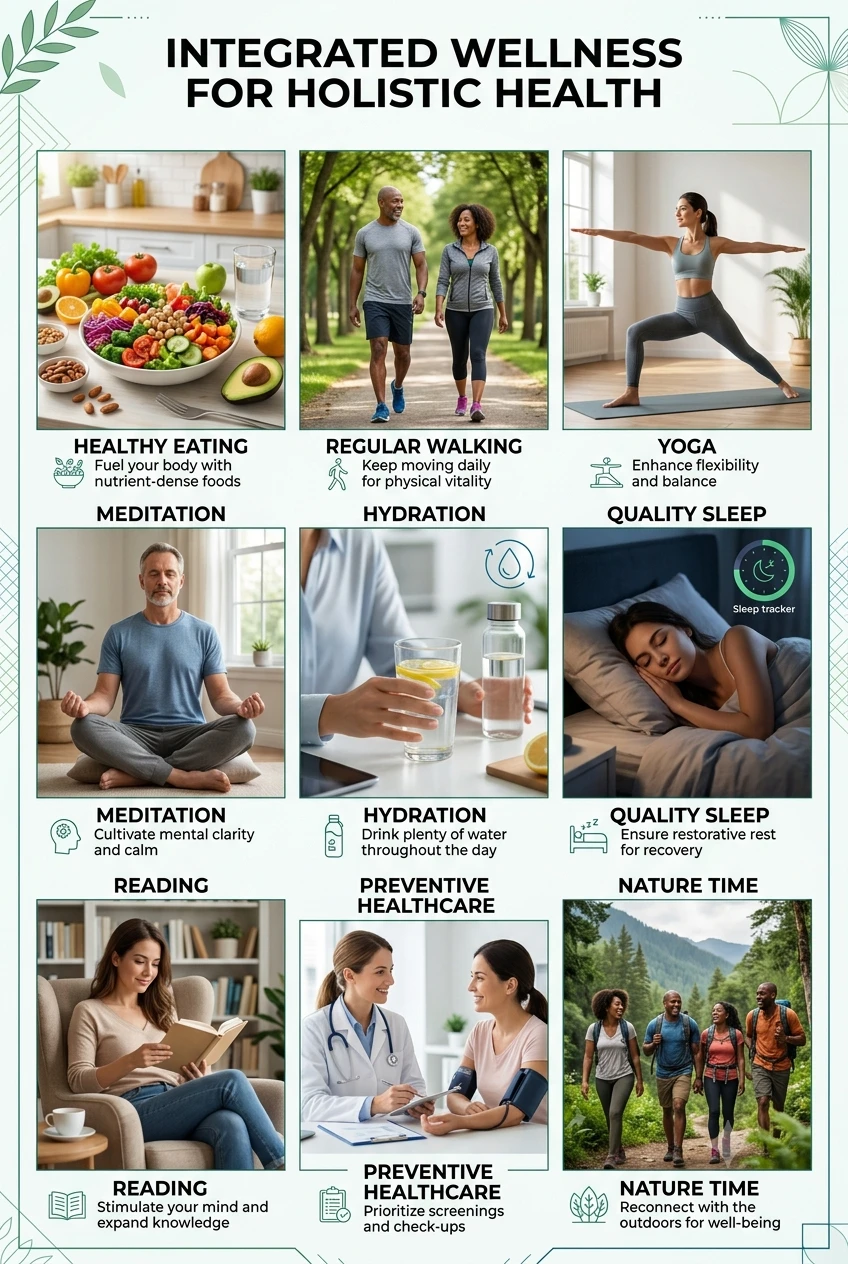
Wellness Model: Understanding the Interconnected Dimensions
To help explain holistic health, many public health organizations and educational institutions use a wellness model. A wellness model provides a structured framework showing how different areas of life contribute to overall well-being. Although several models exist, the most widely recognized is the 8 Dimensions of Wellness.
Rather than treating health as a single concept, this model demonstrates that long-term well-being depends on maintaining balance across multiple dimensions.
When one dimension becomes neglected—such as chronic stress, poor financial health, or limited social connection—it can affect other areas of wellness. This is why experts often encourage gradual improvements across several dimensions instead of focusing exclusively on fitness or nutrition.
Transition to the 8 Dimensions of Wellness
Now that we've explored the wellness definition, the meaning of wellness, the difference between health and wellness, and the importance of physical and holistic wellness, it's time to examine the framework that brings these concepts together.
The 8 Dimensions of Wellness provide a practical model for understanding how different aspects of life contribute to overall health and quality of life. Each dimension plays a unique role, yet they work together to support resilience, personal growth, and long-term well-being.
In the next section, we'll explore each dimension in detail, explain why it matters, and provide practical strategies to strengthen every area of your wellness journey.
The 8 Dimensions of Wellness
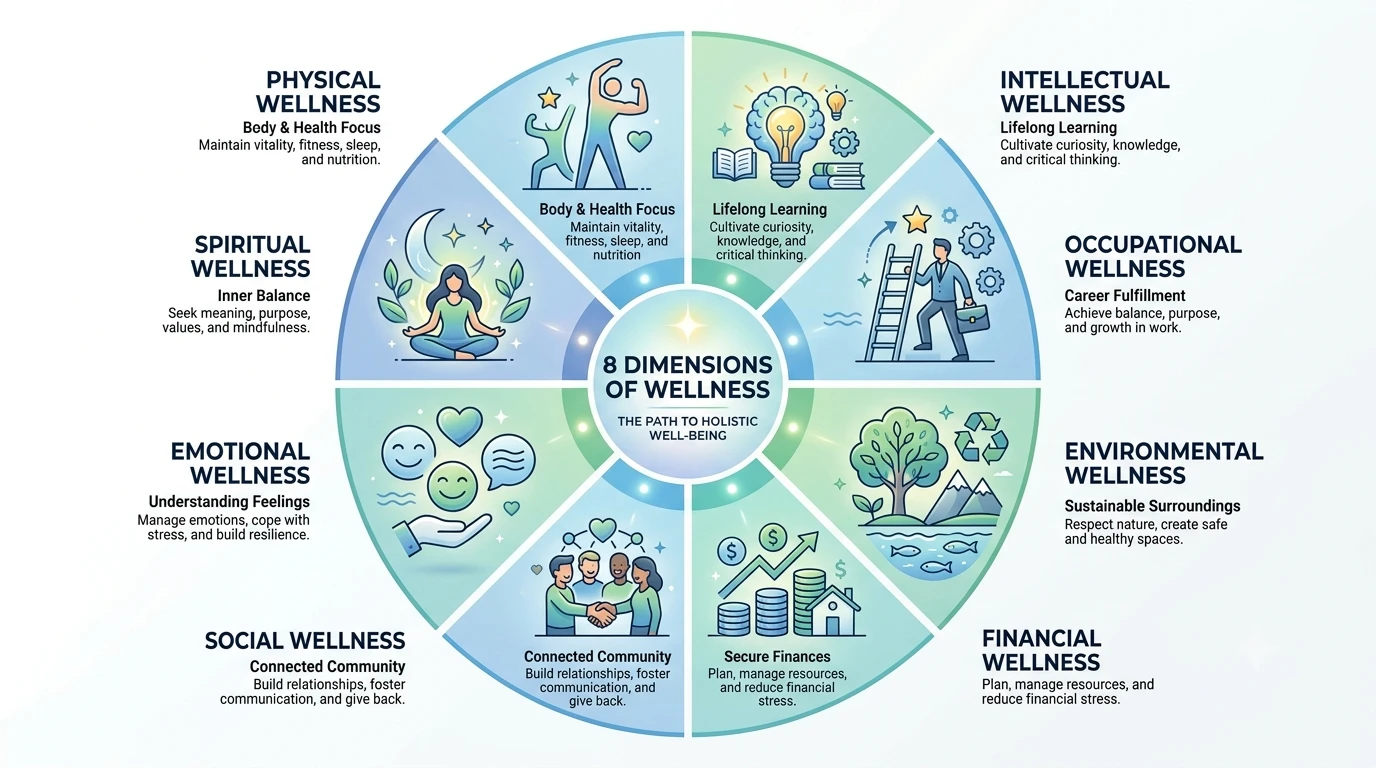
One of the most widely recognized frameworks for understanding overall well-being is the 8 Dimensions of Wellness. Originally developed to encourage a more comprehensive approach to health, this model demonstrates that wellness extends far beyond physical fitness.
Each dimension contributes to your quality of life, and they are closely interconnected. Improving one area often creates positive changes in others, while neglecting one dimension may affect your overall well-being.
Let's explore each dimension and understand why it matters.
1. Physical Wellness
Physical wellness refers to maintaining a healthy body through regular movement, balanced nutrition, quality sleep, hydration, and preventive healthcare.
It forms the foundation for many other dimensions because good physical health supports energy, mental clarity, and resilience.
Examples of Physical Wellness
- Eating nutrient-rich foods
- Exercising regularly
- Maintaining a healthy body weight
- Getting sufficient sleep
- Staying hydrated
- Avoiding tobacco and excessive alcohol
- Scheduling regular medical checkups
Benefits
- Improved cardiovascular health
- Better immune function
- Increased energy
- Stronger muscles and bones
- Reduced risk of chronic disease
2. Emotional Wellness
Emotional wellness is the ability to recognize, understand, and manage emotions while responding to life's challenges in healthy ways. It does not mean feeling happy all the time. Instead, it involves developing resilience, emotional awareness, and healthy coping strategies.
Emotional Wellness Examples
- Expressing emotions appropriately
- Managing stress effectively
- Practicing gratitude
- Maintaining self-confidence
- Building healthy relationships
- Seeking support when needed
Strong emotional wellness contributes to healthier relationships and better decision-making.
3. Mental Wellness
Many people ask, "What is mental wellness?" Mental wellness refers to maintaining healthy cognitive function while supporting emotional balance, learning, concentration, and psychological resilience.
Healthy mental wellness habits include:
- Reading regularly
- Learning new skills
- Solving problems
- Practicing mindfulness
- Limiting chronic stress
- Maintaining social connections
- Seeking professional support when appropriate
Mental wellness allows individuals to adapt to change, solve problems, and make informed decisions throughout life.
4. Social Wellness
Humans naturally thrive through meaningful relationships. Social wellness focuses on building supportive connections with family, friends, coworkers, and the broader community.
Healthy social wellness includes:
- Active listening
- Healthy communication
- Mutual respect
- Community involvement
- Strong support systems
- Positive conflict resolution
Research consistently links strong social relationships with improved physical health, reduced stress, and longer life expectancy.
5. Intellectual Wellness
Intellectual wellness involves continuously expanding knowledge, developing creativity, and remaining curious throughout life. Healthy intellectual habits include:
- Reading books
- Learning new skills
- Taking educational courses
- Solving puzzles
- Exploring different perspectives
- Developing critical thinking
Lifelong learning helps maintain cognitive health while improving confidence and adaptability.
6. Occupational Wellness
Occupational wellness refers to finding satisfaction, purpose, and balance in work or meaningful daily activities. Healthy occupational wellness includes:
- Positive work-life balance
- Career development
- Job satisfaction
- Safe working environments
- Professional growth
- Healthy workplace relationships
This dimension recognizes that meaningful work contributes significantly to overall well-being.
7. Financial Wellness
Financial wellness involves managing money responsibly while reducing unnecessary financial stress. Key habits include:
- Budgeting
- Saving regularly
- Managing debt responsibly
- Planning for emergencies
- Setting realistic financial goals
Financial stability supports emotional health and reduces chronic stress.
8. Environmental Wellness
Environmental wellness recognizes how our surroundings influence physical and mental health. Examples include:
- Clean living spaces
- Safe neighborhoods
- Access to green spaces
- Clean air and water
- Sustainable living practices
- Reducing unnecessary waste
Healthy environments support healthier lifestyles and improve overall quality of life.
Is There a 9th Dimension of Wellness?
Some educational institutions and organizations now discuss a 9 dimensions of wellness model by adding an additional category, such as cultural wellness or digital wellness.
While these expanded models can provide valuable perspectives, the 8 dimensions of wellness remain the most widely recognized framework used in health promotion and wellness education.
The Health and Wellness Wheel
The health and wellness wheel is a visual model illustrating how the different dimensions of wellness are interconnected. Rather than functioning independently, each dimension influences the others. For example:
- Poor sleep may affect emotional wellness.
- Chronic stress can reduce physical wellness.
- Financial difficulties may influence mental and social wellness.
- Strong relationships often improve emotional resilience.
The wellness wheel reminds us that achieving balance across multiple areas of life generally produces better long-term health than focusing on only one aspect.
Wellness Activities That Support Better Health
Healthy lifestyle improvements do not require dramatic changes. Consistent daily habits often have the greatest long-term impact.
Physical Wellness Activities
- Walking
- Cycling
- Strength training
- Stretching
- Swimming
- Yoga
Mental Wellness Activities
- Reading
- Journaling
- Meditation
- Mindfulness
- Learning a new language
Emotional Wellness Activities
- Gratitude journaling
- Deep breathing
- Talking with supportive friends
- Counseling when needed
Social Wellness Activities
- Volunteering
- Family gatherings
- Community events
- Joining hobby groups
Intellectual Wellness Activities
- Online courses
- Educational podcasts
- Books
- Creative hobbies
Evidence-Based Health and Wellness Tips
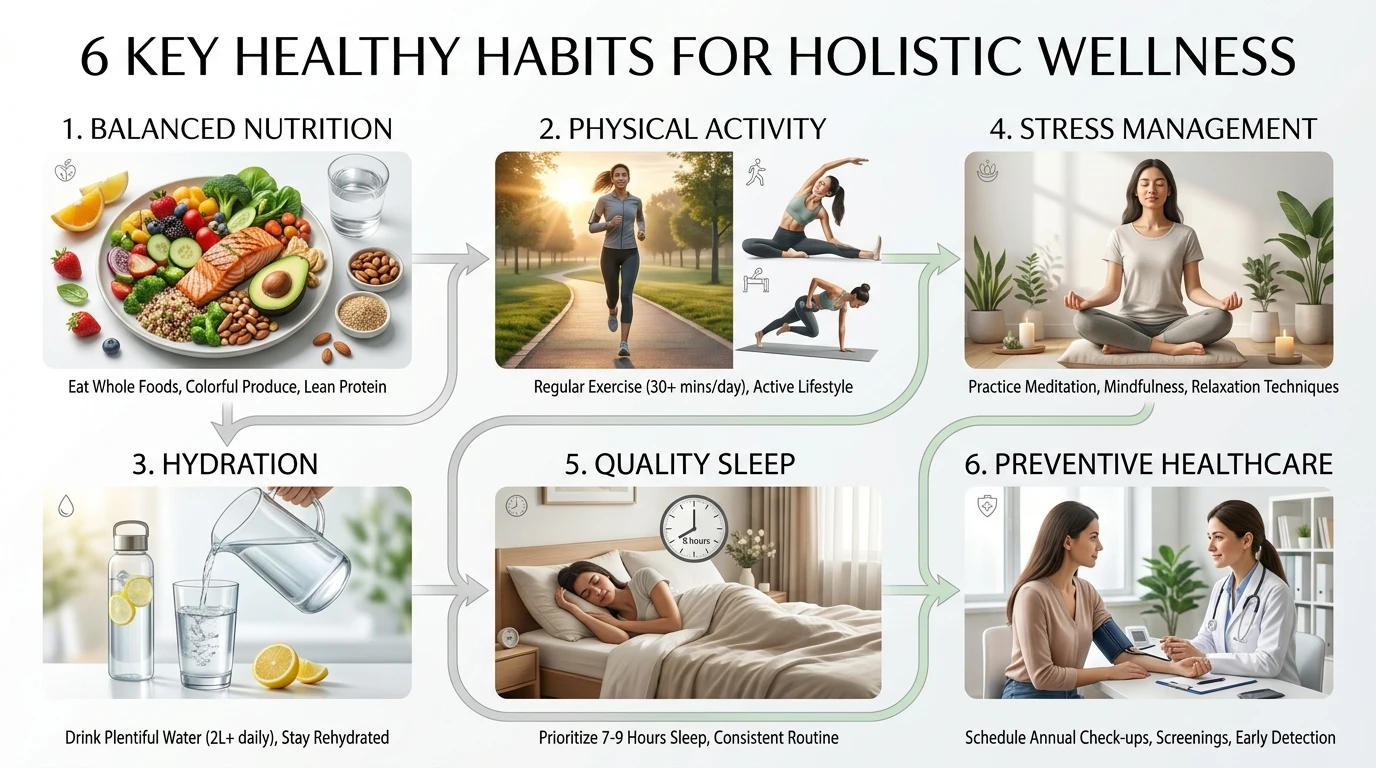
Improving wellness rarely requires expensive programs or dramatic lifestyle changes. Small, consistent actions often produce meaningful long-term benefits. Consider these evidence-informed habits:
- Eat a balanced, nutrient-rich diet.
- Stay physically active throughout the week.
- Prioritize 7–9 hours of quality sleep.
- Drink enough water daily.
- Manage stress through mindfulness or relaxation techniques.
- Maintain healthy relationships.
- Schedule regular preventive healthcare visits.
- Limit smoking and excessive alcohol consumption.
- Continue learning and developing new skills.
- Spend time outdoors whenever possible.
These habits work together to support physical, mental, and emotional well-being.
Holistic Wellness Practices
Holistic wellness encourages caring for the whole person rather than focusing on individual symptoms. Examples of holistic wellness practices include:
- Mindful eating
- Daily physical activity
- Meditation
- Yoga
- Adequate sleep
- Spending time in nature
- Practicing gratitude
- Building supportive relationships
- Limiting digital overload
- Maintaining work-life balance
When combined, these practices create a strong foundation for lifelong health.
Common Wellness Mistakes
Many people unintentionally make choices that limit long-term progress.
Common Mistake | Better Approach |
Following extreme diets | Build sustainable eating habits. |
Exercising inconsistently | Aim for regular movement throughout the week. |
Ignoring sleep | Treat sleep as a health priority. |
Expecting quick results | Focus on gradual improvement. |
Neglecting mental health | Care for both body and mind equally. |
Relying only on supplements | Prioritize a balanced diet first. |
Modern wellness is no longer viewed simply as a fitness trend. Healthcare organizations increasingly recognize wellness as a comprehensive strategy for preventing chronic disease, improving quality of life, and supporting healthy aging.
The most successful wellness plans are realistic, sustainable, and personalized. Rather than pursuing perfection, focus on building healthy habits that you can maintain consistently over time.
Practical Daily Wellness Framework
Wellness Area | Daily Action |
Physical | Move your body for at least 30 minutes. |
Nutrition | Eat vegetables and fruit with every main meal. |
Hydration | Drink water consistently throughout the day. |
Mental | Read, learn, or practice mindfulness. |
Emotional | Reflect on your emotions and practice gratitude. |
Social | Connect with family or friends. |
Financial | Review spending and save consistently. |
Environmental | Keep your home and workspace clean and organized. |
Daily Wellness Checklist
✔ Eat nutritious foods.
✔ Exercise regularly.
✔ Stay hydrated.
✔ Sleep 7–9 hours.
✔ Practice stress management.
✔ Spend time outdoors.
✔ Maintain healthy relationships.
✔ Continue learning.
✔ Schedule preventive healthcare.
✔ Practice gratitude.
Frequently Asked Questions
What is the difference between health and wellness?
Health generally refers to your current physical and mental condition, while wellness is the ongoing process of making choices that improve overall well-being.
What are the 8 dimensions of wellness?
The eight dimensions include physical, emotional, mental, social, intellectual, occupational, financial, and environmental wellness.
How can I improve my wellness?
Start with small, sustainable habits such as eating a balanced diet, exercising regularly, sleeping well, staying hydrated, managing stress, and maintaining meaningful relationships.
Why is physical wellness important?
Physical wellness supports energy, disease prevention, mobility, immune function, and overall quality of life.
What is holistic wellness?
Holistic wellness is an approach that considers the whole person by recognizing the connection between physical, mental, emotional, social, and environmental health.
Conclusion
Understanding the wellness definition is the first step toward creating a healthier, more balanced life. Wellness is not simply the absence of disease but a lifelong commitment to improving your physical, mental, emotional, social, occupational, financial, and environmental well-being.
The 8 dimensions of wellness provide a practical framework for recognizing how different aspects of life influence one another. By making consistent, evidence-based choices—such as eating nutritious foods, staying active, managing stress, prioritizing sleep, and nurturing healthy relationships—you can strengthen each dimension and improve your overall quality of life.
Remember that wellness is a journey rather than a destination. Every small positive habit contributes to better health, greater resilience, and long-term well-being.
About the Author
Dr. Aamir is a Herbal Physician with a Bachelor of Eastern Medicine & Surgery (Silver Medal) and an MPhil in Phytomedicine (Gold Medal). He previously served as a faculty member at The Islamia University of Bahawalpur and Kohat University of Science & Technology (KUST). Through aamirwellness.com and aamirnaturals.com, he publishes evidence-based educational content on skincare, hair care, herbal medicine, nutrition, and wellness, drawing on peer-reviewed scientific research and established clinical guidelines.
References
- World Health Organization (WHO). Health Promotion and Well-Being.
- S. Centers for Disease Control and Prevention (CDC). Healthy Living.
- American Heart Association. Life's Essential 8.
- S. Department of Health and Human Services. Physical Activity Guidelines for Americans.
- National Institutes of Health (NIH). Nutrition and Healthy Eating Resources.
- American Academy of Sleep Medicine. Recommended Sleep Duration for Adults.
- Harvard T.H. Chan School of Public Health. The Nutrition Source.
- American Psychological Association (APA). Stress Management and Resilience.