

Hair Growth Supplements: An Evidence- Based Guide to What Actually Works
Quick Answer:
If you're wondering what supplements for hair growth are actually backed by research, the short answer is that supplements may help only when hair thinning or shedding is linked to a nutritional deficiency or inadequate dietary intake. Current evidence suggests that nutrients such as iron, vitamin D, zinc, protein, vitamin B12, and folate play important roles in maintaining normal hair growth, while biotin supplementation appears most beneficial for people with a confirmed deficiency rather than the general population.
Table of Contents
A 2023 systematic review published in the Journal of the American Academy of Dermatology evaluated clinical studies on nutritional supplements for hair loss. The researchers concluded that some supplements may improve hair growth in selected individuals, but the overall quality of evidence varies and many commercial products require more rigorous clinical testing. The review also emphasized that supplementation should ideally be guided by an individual's nutritional status rather than marketing claims.
What this means for you
Hair growth supplements are not a universal solution. If your hair loss is caused by iron deficiency, low vitamin D, inadequate protein intake, or another nutritional imbalance, correcting that deficiency may help support healthier hair. However, if your hair thinning is primarily due to genetics, hormonal changes, or certain medical conditions, supplements alone are unlikely to produce significant regrowth.
Why Are Hair Growth Supplements So Popular?
Millions of people experience increased hair shedding or gradual thinning each year, making hair growth supplements one of the fastest-growing categories in the health and wellness industry.
Social media, celebrity endorsements, and aggressive marketing often promote supplements as a simple solution for stronger, thicker hair. While some products contain ingredients supported by scientific evidence, others rely on claims that have not been consistently validated in well-designed clinical studies.
This is why understanding how hair grows—and what nutrients actually contribute to healthy follicles—is far more valuable than choosing a supplement based solely on advertising.
Before You Buy Hair Growth Supplements, Understand Why Hair Loss Happens
One of the biggest misconceptions is that all hair loss has the same cause. In reality, hair thinning can result from many different factors, including:
- Nutritional deficiencies
- Genetics
- Hormonal changes
- Thyroid disorders
- Chronic stress
- Certain medications
- Autoimmune diseases
- Rapid weight loss
- Illness or surgery
- Aging
Because the causes vary so widely, the most effective approach is identifying the underlying reason for hair changes rather than assuming a supplement will solve every problem.
The American Academy of Dermatology advises that persistent or sudden hair loss should be evaluated to determine its cause, as treatment depends on the underlying diagnosis rather than symptoms alone.

According to a review published in Dermatology Practical & Conceptual, dermatologists Dr. Rajani Katta and Dr. Emily L. Guo emphasize that nutritional supplements are most beneficial when they correct an existing deficiency. They caution that taking supplements without evidence of deficiency offers limited benefit and may expose people to unnecessary risks.
What does this mean for you?
If you already consume adequate amounts of vitamins and minerals, taking higher doses is unlikely to make your hair grow faster. Instead, focus on meeting your nutritional needs through a balanced diet and use supplements only when a deficiency has been identified or a healthcare professional recommends them.
How Hair Grows? Understanding the Biology Before Choosing Supplements
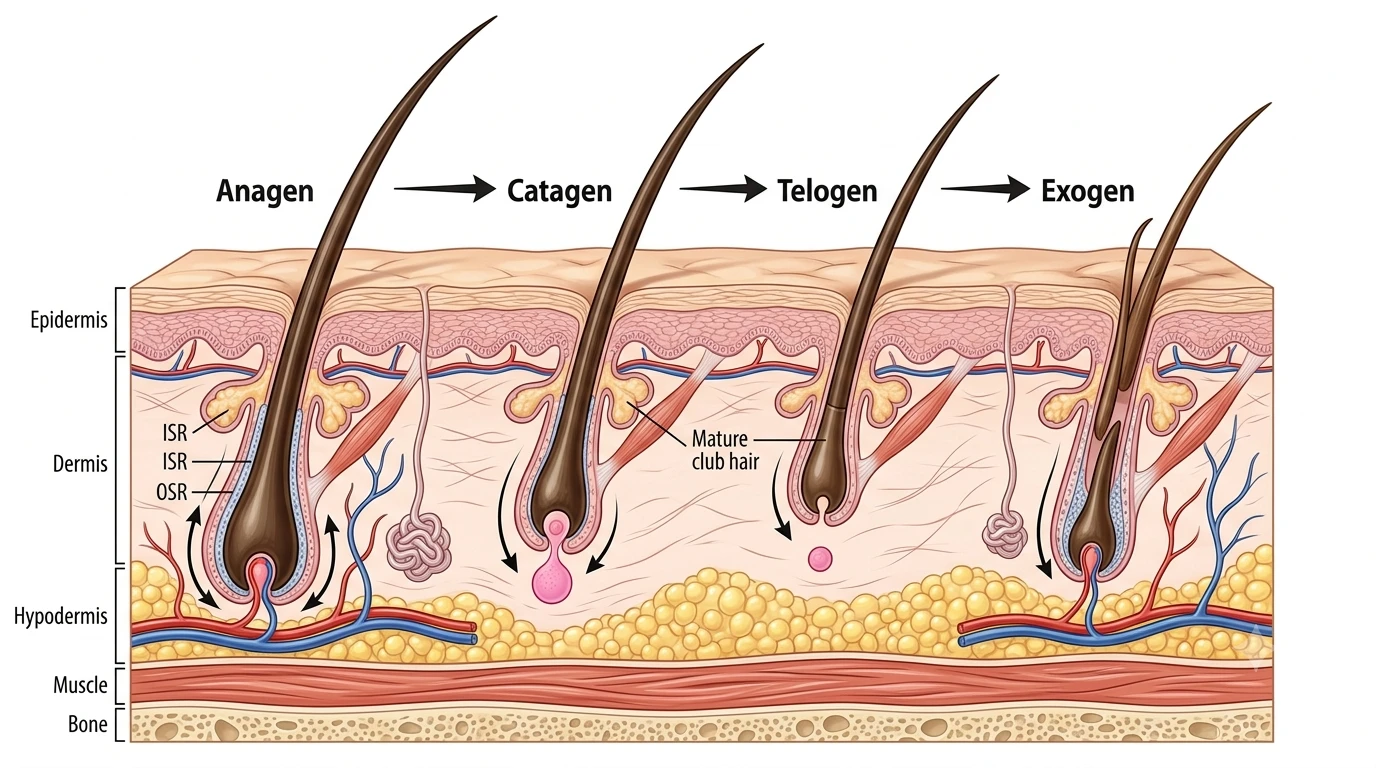
To understand whether hair growth supplements can help, it's important to know how hair grows.
Every strand of hair develops inside a tiny structure beneath the skin called a hair follicle. Hair follicles are among the body's most metabolically active tissues, meaning they require a continuous supply of oxygen, amino acids, vitamins, minerals, and energy to produce healthy hair.
Because hair follicles divide rapidly, they are often among the first tissues affected when the body experiences nutritional deficiencies, illness, or prolonged physiological stress.
The Hair Growth Cycle
Hair does not grow continuously. Instead, each follicle progresses through four distinct phases.
Anagen (Growth Phase)
This is the active growth stage, during which hair cells divide rapidly and the hair shaft lengthens.
- Lasts approximately 2–7 years
- Around 85–90% of scalp hairs are normally in this phase
- Longer anagen phases generally allow hair to grow longer
Healthy nutrition is especially important during this stage because rapidly dividing follicle cells require a steady supply of nutrients.
Catagen (Transition Phase)
Catagen is a brief transition period lasting about two to three weeks.
During this stage:
- Hair growth slows
- The follicle begins to shrink
- Blood supply to the follicle decreases
Only a small percentage of hairs are in this phase at any given time.
Telogen (Resting Phase)
During the telogen phase, the follicle rests while retaining the existing hair strand.
Approximately 10–15% of scalp hairs are in this stage under normal conditions.
Exogen (Shedding Phase)
Exogen is the natural shedding phase, during which older hairs fall out to make room for new growth.
Losing 50–100 hairs per day is generally considered part of a normal hair cycle.
Excessive shedding, however, may indicate an underlying nutritional deficiency, medical condition, or other factor that should be evaluated.
Why Nutrition Matters for Healthy Hair
Unlike many tissues, hair is not essential for survival. During periods of nutrient shortage, the body prioritizes vital organs such as the brain, heart, and liver over hair production. As a result, hair follicles may slow their activity when key nutrients are lacking.
Research has linked deficiencies in several nutrients—including protein, iron, zinc, vitamin D, vitamin B12, and folate—to changes in normal hair growth in susceptible individuals. While supplementation can help correct these deficiencies, it is most effective when tailored to an individual's specific nutritional needs.
In the next section, we'll examine which hair growth supplements have the strongest scientific evidence, what leading dermatology research says about each nutrient, and who is most likely to benefit from supplementation.
Which Hair Growth Supplements Actually Work?
Quick takeaway: If you're searching for what supplements for hair growth actually work, the strongest scientific evidence supports correcting nutritional deficiencies rather than taking large doses of vitamins "just in case." Below, we examine the nutrients with the best available evidence and explain who is most likely to benefit.
Which Hair Growth Supplements Have the Strongest Scientific Evidence?
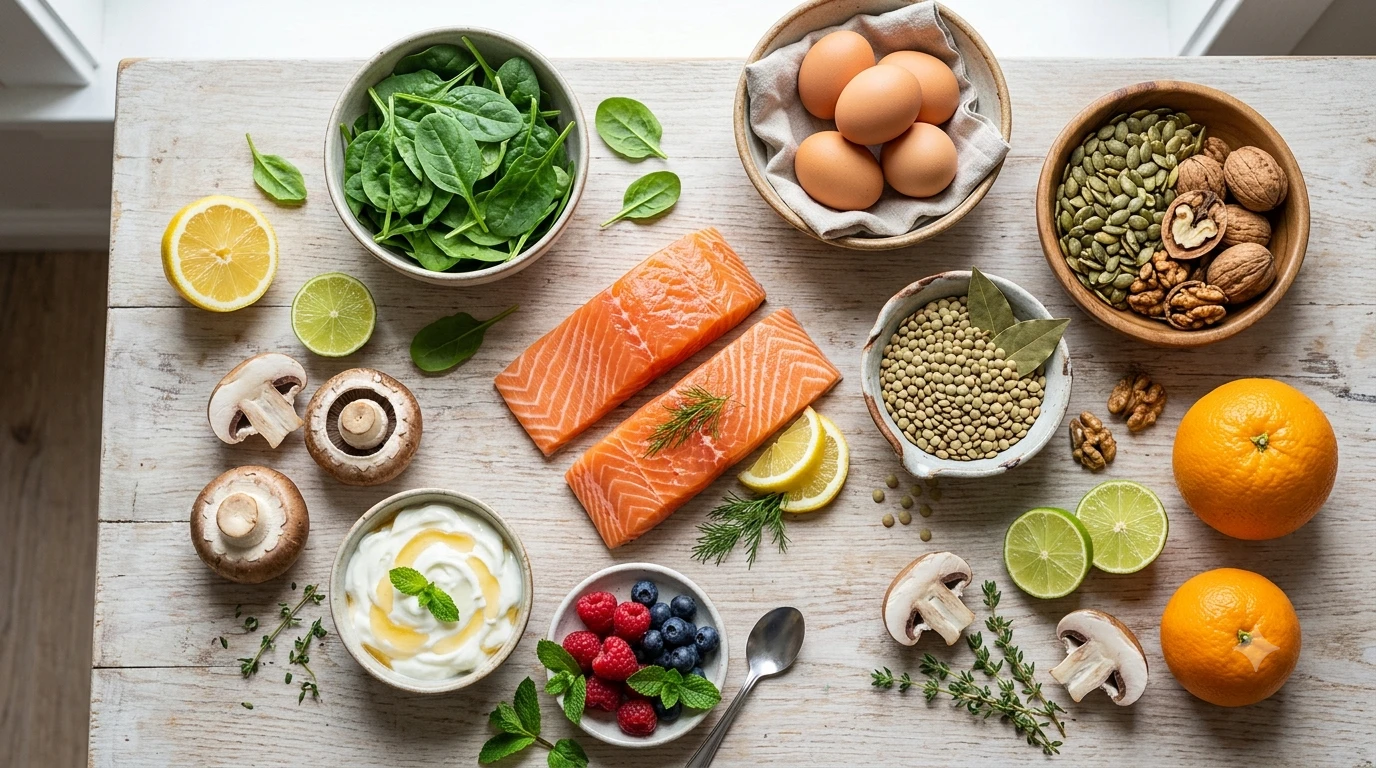
Not all ingredients found in hair growth supplements are supported by the same level of research. Some nutrients are essential for normal hair follicle function, while others are included primarily because of marketing trends rather than strong clinical evidence.
The table below summarizes the current evidence.
Nutrient | Evidence Strength | Who May Benefit Most |
Protein | ⭐⭐⭐⭐⭐ Strong | Low dietary protein intake |
Iron | ⭐⭐⭐⭐⭐ Strong | Confirmed iron deficiency |
Vitamin D | ⭐⭐⭐⭐ Moderate | Vitamin D deficiency |
Zinc | ⭐⭐⭐⭐ Moderate | Zinc deficiency |
Vitamin B12 | ⭐⭐⭐⭐ Moderate | Confirmed deficiency |
Folate | ⭐⭐⭐ Moderate | Folate deficiency |
Biotin | ⭐⭐ Limited | Rare biotin deficiency |
Omega-3 Fatty Acids | ⭐⭐ Emerging | General nutritional support |
Collagen Peptides | ⭐⭐ Emerging | Evidence still developing |
The key message is that supplements work best when they address an identified nutritional need—not when they are taken indiscriminately.
Protein: The Most Important Nutrient for Healthy Hair
Hair is composed primarily of keratin, a fibrous protein that gives each strand its strength and structure. Because hair follicles produce keratin continuously during the growth phase, they require a steady supply of dietary protein.
When protein intake is insufficient, the body conserves amino acids for essential organs and tissues. Hair production becomes a lower priority, which may contribute to increased shedding or slower growth.
According to a review published in Dermatology Practical & Conceptual, dermatologists Dr. Rajani Katta and Dr. Emily L. Guo highlight that inadequate protein intake can contribute to diffuse hair shedding because hair follicles require a steady supply of amino acids to produce keratin, the primary structural protein in hair. The authors emphasize that correcting dietary protein deficiencies is an important part of managing hair loss when nutritional factors are involved.
What this means for you:
If your daily diet is consistently low in protein, even the most expensive hair growth supplements are unlikely to deliver meaningful results. Prioritizing protein-rich foods—such as eggs, fish, lean poultry, dairy products, legumes, and soy-based foods—can provide your hair follicles with the essential building blocks they need to support normal hair growth and strength.
Foods Rich in Protein
- Eggs
- Salmon
- Chicken
- Greek yogurt
- Cottage cheese
- Lentils
- Chickpeas
- Tofu
- Lean beef
- Quinoa
Iron: One of the Best-Studied Nutrients for Hair Growth
Iron plays a vital role in transporting oxygen to tissues throughout the body, including the rapidly dividing cells inside hair follicles.
Low iron stores—particularly low serum ferritin—have been associated with increased hair shedding in some individuals, especially women of reproductive age.
Several observational studies have reported lower ferritin levels among patients with diffuse hair shedding compared with healthy controls. While not every study reaches the same conclusion, correcting confirmed iron deficiency is widely recommended as part of appropriate medical management.
The National Institutes of Health Office of Dietary Supplements also recognizes iron as an essential nutrient required for normal oxygen transport and cellular metabolism.
Iron: One of the Best-Studied Nutrients for Hair Growth
Dermatologists generally recommend testing your iron status before taking iron supplements, as excessive iron intake can be harmful. Current evidence also suggests that iron supplementation is most beneficial for people with a confirmed deficiency, while taking extra iron without a medical need has not been shown to improve hair growth.
What this means for you: If you suspect low iron may be contributing to hair shedding, speak with your healthcare provider about whether blood tests—such as serum ferritin and other iron studies—are appropriate before starting supplements. This helps ensure that treatment is based on your individual needs rather than guesswork.
Symptoms of Iron Deficiency
- Fatigue
- Pale skin
- Weakness
- Brittle nails
- Frequent headaches
- Increased hair shedding
Foods Rich in Iron
- Lean red meat
- Spinach
- Lentils
- Pumpkin seeds
- Chickpeas
- Fortified cereals
Vitamin D: More Than a Bone Health Vitamin
Vitamin D helps regulate many biological processes, including those involved in skin and hair follicle function.
Researchers continue to investigate its role in different forms of hair loss, and several studies have found that people with certain hair disorders often have lower vitamin D levels than unaffected individuals.
Research suggests that vitamin D plays an important role in maintaining normal hair follicle function. A review published in the International Journal of Molecular Sciences found that vitamin D receptors are involved in regulating the hair growth cycle and supporting healthy follicle biology. However, the authors also noted that while vitamin D deficiency has been associated with certain types of hair loss, more high-quality clinical trials are needed to determine when vitamin D supplementation can reliably improve hair growth outcomes.
What this means for you: If blood tests show that you're deficient in vitamin D, correcting that deficiency may support overall health and help maintain normal hair follicle function. However, taking high-dose vitamin D supplements without a confirmed deficiency has not been proven to speed up hair growth or prevent hair loss in otherwise healthy individuals.
Food Sources
- Salmon
- Sardines
- Egg yolks
- Fortified milk
- Fortified plant-based beverages
Zinc: Supporting Hair Follicle Function
Zinc contributes to DNA synthesis, cell division, tissue repair, and immune function—all essential processes for healthy hair follicles.
A deficiency can interfere with normal hair cycling and may contribute to increased shedding.
A review in the Journal of Clinical and Aesthetic Dermatology noted that zinc deficiency has been associated with several forms of hair loss. The authors emphasized that supplementation should be considered when deficiency is documented rather than used routinely.
Foods Rich in Zinc
- Oysters
- Beef
- Pumpkin seeds
- Cashews
- Chickpeas
- Dairy products
Evidence Strength
Moderate
Vitamin B12 and Folate: Supporting Rapidly Dividing Cells
Hair follicle cells divide rapidly, making them dependent on nutrients involved in DNA synthesis and red blood cell production.
Vitamin B12 and folate help maintain these functions by supporting healthy cell division and oxygen delivery.
People at greater risk of deficiency include:
- Vegetarians
- Vegans
- Older adults
- Individuals with gastrointestinal disorders
- People taking certain medications that affect B12 absorption
Foods Rich in Vitamin B12
- Fish
- Eggs
- Dairy products
- Meat
- Fortified cereals
Foods Rich in Folate
- Spinach
- Lentils
- Avocados
- Citrus fruits
- Beans
Biotin: The Most Popular Hair Supplement—But Is It Necessary?
Among all hair growth supplements, biotin is probably the most heavily marketed ingredient.
Biotin plays an important role in normal fat, carbohydrate, and protein metabolism and contributes to keratin production. However, true biotin deficiency is uncommon in healthy individuals consuming a balanced diet.
A 2023 systematic review published in the Journal of the American Academy of Dermatology found that while some nutritional supplements may improve hair outcomes in selected populations, there is limited evidence supporting high-dose biotin supplementation for people without a documented deficiency.
High doses of biotin can interfere with laboratory tests, including some used to diagnose thyroid disorders and heart attacks. Always tell your healthcare provider if you're taking biotin supplements before having blood work performed.
Limited for individuals without deficiency
Omega-3 Fatty Acids
Omega-3 fatty acids contribute to overall skin health and help maintain normal cell membrane function.
Although omega-3 supplements have been investigated for hair health, current evidence is still emerging.
Some small studies suggest they may improve hair density or reduce shedding when combined with other nutrients, but larger randomized controlled trials are needed.
Best Food Sources
- Salmon
- Sardines
- Walnuts
- Chia seeds
- Flaxseeds
- Mackerel
Collagen Peptides: Hype or Helpful?
Collagen supplements have become increasingly popular for skin, nails, and hair.
Collagen provides amino acids that the body can use to produce structural proteins, including keratin. However, direct evidence demonstrating significant improvements in hair growth remains limited.
Reviews published in dermatology and nutrition journals suggest that collagen peptides may support skin health, but high-quality clinical trials specifically evaluating hair growth remain limited.
What This Means for You
Collagen may be a useful component of a balanced diet, but it should not be viewed as a proven treatment for hair loss.
Food First, Supplements Second
One of the most consistent messages across dermatology guidelines is that whole foods should remain the foundation of healthy hair nutrition.
A balanced diet naturally provides vitamins, minerals, protein, healthy fats, antioxidants, and plant compounds that work together to support overall health—benefits that isolated supplements cannot fully replicate.
Should Everyone Take Hair Growth Supplements?
One of the most common misconceptions is that hair growth supplements are beneficial for everyone. In reality, most dermatologists and nutrition experts recommend supplements only when there is a documented nutritional deficiency, increased nutritional need, or difficulty obtaining adequate nutrients from food.
Healthy hair depends on many factors—including genetics, hormones, age, medical conditions, stress, and overall nutrition. Because of this, supplements should be viewed as one part of a broader approach to hair health, not a guaranteed solution.
The American Academy of Dermatology advises that treatment for hair loss should begin with identifying its underlying cause. Hair thinning related to genetics, autoimmune disorders, or hormonal conditions often requires treatments beyond nutritional supplementation.
Who May Benefit from Hair Growth Supplements?
Research suggests that supplementation is most likely to help people who have identified nutritional deficiencies or increased nutritional requirements. You may benefit if you:
- Have a medically confirmed iron, vitamin D, vitamin B12, folate, or zinc deficiency.
- Follow a restrictive diet (such as a poorly planned vegan or very low-calorie diet).
- Have digestive conditions that reduce nutrient absorption.
- Are recovering from prolonged illness or surgery.
- Have inadequate protein intake.
- Have been advised by a healthcare professional to correct a nutritional deficiency.
According to a review published in Dermatology Practical & Conceptual, dermatologists Dr. Rajani Katta and Dr. Emily L. Guo recommend evaluating a patient's dietary habits and considering nutritional deficiencies when clinically appropriate, rather than routinely recommending supplements for everyone experiencing hair loss. Their review emphasizes that identifying the underlying cause of hair thinning is an important first step in selecting the most appropriate treatment.
What this means for you:
Before purchasing multiple hair growth supplements, consider speaking with a healthcare professional—especially if your hair loss is sudden, severe, or persistent. In some cases, simple blood tests can identify nutritional deficiencies or medical conditions that may be contributing to hair shedding, allowing for more targeted and effective treatment.
When Hair Growth Supplements Are Unlikely to Help
Even the highest-quality hair growth supplements cannot correct every cause of hair thinning. Supplements alone are unlikely to produce significant improvement if hair loss is primarily caused by:
- Genetic hair loss (androgenetic alopecia)
- Autoimmune conditions such as alopecia areata
- Certain medications (for example, some chemotherapy drugs)
- Untreated thyroid disease
- Hormonal disorders
- Scarring alopecias
In these situations, medical evaluation and evidence-based treatment are usually required.
How to Choose Hair Growth Supplements Safely?
The supplement market is crowded with products promising dramatic results, but labels and marketing claims do not always reflect scientific evidence.
When evaluating a supplement, consider the following:
✔ Choose Evidence-Based Ingredients
Look for formulations that contain nutrients with recognized roles in normal hair health, such as:
- Protein (or amino acid support where appropriate)
- Iron (only when deficiency is confirmed)
- Vitamin D
- Zinc
- Vitamin B12
- Folate
✔ Avoid Mega-Dose Formulas
More is not always better.
High doses of certain nutrients—including vitamin A, selenium, and zinc—may actually contribute to hair shedding or other adverse effects when consumed in excess.
The National Institutes of Health Office of Dietary Supplements notes that excessive intake of several vitamins and minerals can exceed established upper intake levels and increase the risk of toxicity.
✔ Look for Third-Party Quality Testing
Dietary supplements are not all manufactured to the same standard.
Independent certifications from organizations such as USP (United States Pharmacopeia), NSF International, or Informed Choice can provide additional confidence that a product contains the ingredients listed on its label and meets certain quality standards.
✔ Discuss Supplements with Your Healthcare Professional
This is especially important if you:
- Are pregnant or breastfeeding
- Have kidney or liver disease
- Take blood thinners or other prescription medications
- Have a chronic medical condition
- Plan to take multiple supplements together
Common Myths About Hair Growth Supplements
Myth | Fact |
Hair growth supplements make hair grow overnight. | Hair grows gradually—on average about 0.5 inch (1.25 cm) per month. Even when supplementation is appropriate, visible improvements typically take 3–6 months, depending on the underlying cause of hair loss and individual health. |
Biotin is the best supplement for everyone. | Biotin is essential for healthy hair, but true deficiency is uncommon. Current evidence does not support routine high-dose biotin supplementation for healthy individuals with normal biotin levels. |
Taking more vitamins leads to faster hair growth. | More isn't always better. Excessive intake of certain nutrients, such as vitamin A, selenium, and zinc, may be ineffective or even contribute to hair shedding and other health risks. |
Expensive hair supplements work better. | Price does not guarantee effectiveness. The quality of ingredients, scientific evidence, appropriate dosage, and manufacturing standards are far more important than premium branding or marketing claims. |
Hair supplements can replace a healthy diet. | Supplements are designed to complement—not replace—a balanced diet. Whole foods remain the best source of protein, vitamins, minerals, healthy fats, and antioxidants needed to support normal hair growth and overall health. |
Frequently Asked Questions

What supplements for hair growth have the strongest scientific evidence?
Current research suggests that the strongest evidence supports correcting deficiencies in:
- Iron
- Protein
- Vitamin D
- Zinc
- Vitamin B12
- Folate
Biotin may be helpful when deficiency is present, but evidence is limited for people who already have adequate levels.
How long do hair growth supplements take to work?
Because hair grows gradually, meaningful improvement usually requires three to six months after correcting an underlying nutritional deficiency. The exact timeline depends on the cause of hair loss, the individual's health, and adherence to treatment.
Should I get blood tests before taking supplements?
If you are experiencing persistent or unexplained hair loss, blood tests may help identify nutritional deficiencies or underlying medical conditions. A healthcare professional can determine which tests are appropriate based on your symptoms and medical history.
Can hair growth supplements stop genetic hair loss?
No.
Supplements may support overall hair health, but they do not reverse androgenetic alopecia. Individuals with hereditary hair loss should consult a dermatologist to discuss evidence-based treatment options.
Are hair gummies better than capsules or tablets?
Not necessarily.
The form of a supplement does not determine its effectiveness. The quality of ingredients, dosage, and whether they address a genuine nutritional need are more important than whether the supplement comes as a gummy, capsule, powder, or tablet.
Can taking too many vitamins cause hair loss?
Yes.
Excessive intake of nutrients such as vitamin A, selenium, or zinc has been associated with hair shedding and other health concerns. Always follow the recommended dosage and seek medical advice before taking high-dose supplements.
Key Takeaways
If you're searching for what supplements for hair growth actually work, the evidence points to a clear conclusion:
- Hair growth supplements are most effective when they correct a documented nutritional deficiency.
- Protein, iron, vitamin D, zinc, vitamin B12, and folate have the strongest evidence for supporting normal hair follicle function when deficiencies are present.
- High-dose supplementation without a medical reason is unlikely to improve hair growth and may, in some cases, be harmful.
- A nutrient-rich diet, healthy lifestyle, and proper medical evaluation remain the foundation of long-term hair health.
Rather than relying on marketing claims, focus on evidence-based decisions that support your overall well-being. If hair thinning persists or worsens, consult a qualified healthcare professional or dermatologist to identify the underlying cause and discuss appropriate treatment options.
Medical Disclaimer
This article is intended for educational purposes only and should not be interpreted as medical advice. It does not replace professional diagnosis, treatment, or guidance from a qualified healthcare provider.
Hair loss can result from nutritional deficiencies, hormonal changes, genetics, medications, autoimmune diseases, or other medical conditions. If you experience sudden, severe, or persistent hair loss, seek evaluation from a licensed physician or dermatologist.
Do not begin high-dose vitamin or mineral supplementation without professional guidance, as excessive intake may cause adverse effects or interact with medications.
References
- Katta R, Guo EL. Diet and Hair Loss: Effects of Nutrient Deficiency and Supplement Use. Dermatology Practical & Conceptual.
- Drake L, Reyes-Hadsall S, Martinez J, et al. Evaluation of the Safety and Effectiveness of Nutritional Supplements for Treating Hair Loss: A Systematic Review. Journal of the American Academy of Dermatology.
- Almohanna HM, Ahmed AA, Tsatalis JP, Tosti A. The Role of Vitamins and Minerals in Hair Loss: A Review. Dermatology and Therapy.
- National Institutes of Health (NIH), Office of Dietary Supplements. Fact Sheets for Iron, Vitamin D, Zinc, Vitamin B12, Folate, and Biotin.
- American Academy of Dermatology Association (AAD). Hair Loss: Diagnosis and Treatment.
- Mayo Clinic. Hair Loss: Symptoms and Causes.
- Cleveland Clinic. Hair Loss and Healthy Hair Nutrition Resources.
- International Journal of Molecular Sciences. Reviews on Vitamin D and Hair Follicle Biology.
- Journal of Clinical and Aesthetic Dermatology. Nutrition and Hair Health Reviews.
- National Library of Medicine (PubMed). Peer-reviewed literature on nutrition, micronutrients, and hair disorders.